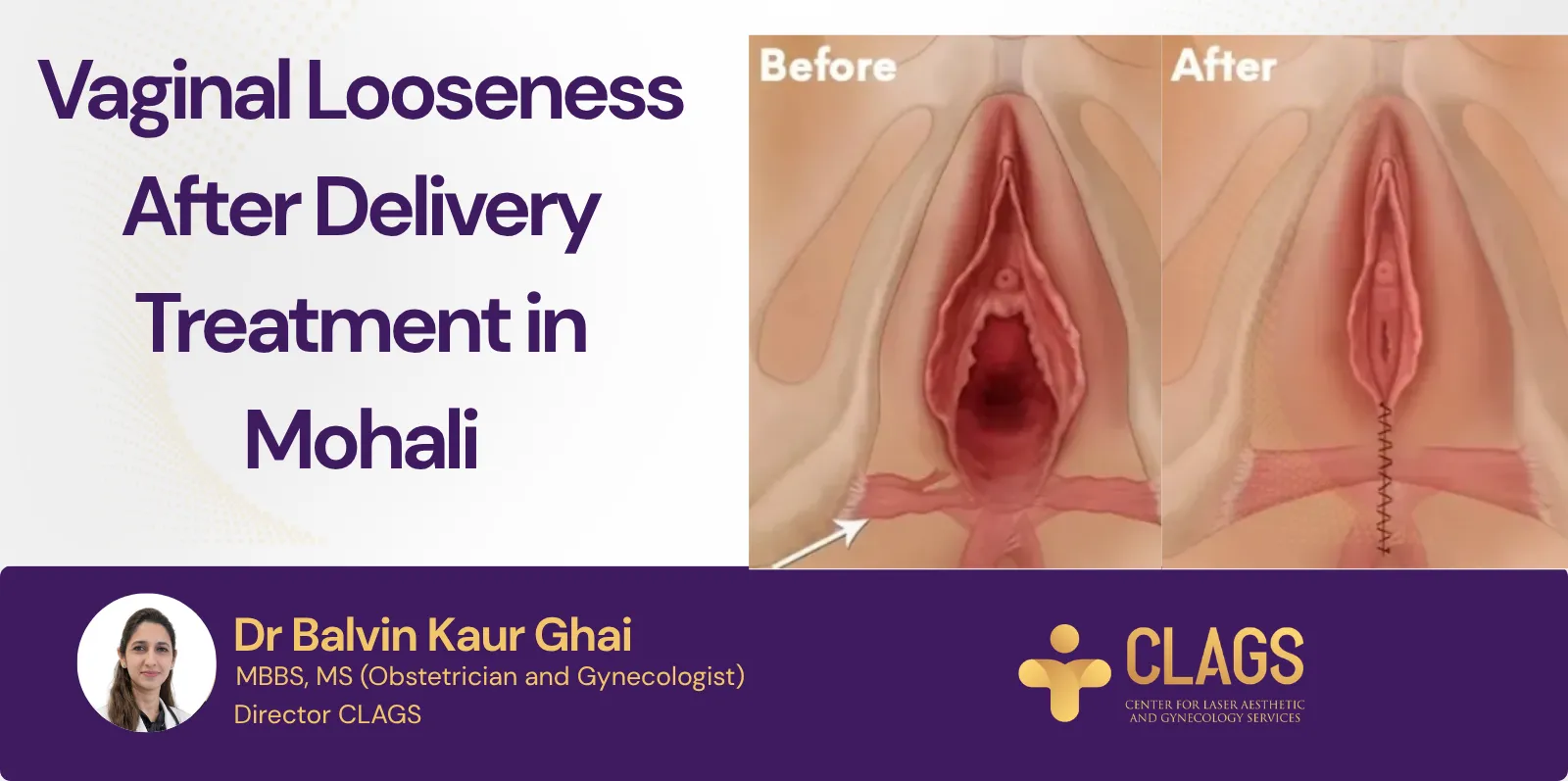
After having a baby, your body changes in ways nobody really prepares you for. You are busy with the newborn, adjusting to a new routine, running on less sleep than you thought humanly possible - and in the middle of all of that, you start noticing something different about your body. Not your waistline. Something more personal. A feeling of looseness that was not there before. Maybe intimacy does not feel the same. Maybe you notice a small leak when you laugh or cough. Maybe you just feel like something has changed and you are not sure what to do about it.
This is vaginal looseness after delivery, and it is one of the most common things women experience after a vaginal birth. It is also one of the least talked about. Most women quietly wonder if it is normal, feel embarrassed to bring it up even with their doctor, and end up just accepting it as part of life after children.
Many women feel this after delivery but rarely talk about it. That silence is not because the problem is uncommon - it is because nobody told them it was okay to ask.
So let us be honest and clear about everything: what causes vaginal looseness after delivery, what the real treatment options are, what actually works and what does not, and when it makes sense to see a specialist. This is the guide you wished someone had handed you at your six-week checkup.
During a vaginal delivery, your body does something extraordinary. Your pelvic floor muscles, vaginal walls and surrounding connective tissue stretch significantly to allow the baby to pass through the birth canal. This stretching is natural and necessary. But it does leave the vaginal muscles in a weakened, lengthened state after the birth.
The pelvic floor is a group of muscles that form a supportive base at the bottom of your pelvis. They hold up your uterus, bladder, and bowel, and they are also responsible for the muscular tone of your vaginal walls.[1] When these muscles are stretched during delivery, several things can happen:
Several factors affect how significant this looseness feels. A larger baby, a prolonged pushing phase, multiple deliveries, an episiotomy or significant tearing, and natural differences in tissue elasticity all play a role. Hormonal changes during breastfeeding also reduce estrogen levels, which can make vaginal tissue feel thinner and less firm. Age is another factor - the older you are at the time of delivery, the slower the natural recovery tends to be.
Vaginal laxity after childbirth is a physical result of the body doing exactly what it was built to do. It is not a flaw. It is a starting point for recovery.
Not every woman experiences vaginal looseness the same way. Some notice it immediately after the six-week recovery period. Others only start noticing it months later, often after they resume intimacy. Some women notice one specific symptom, others notice several together.
The most commonly reported signs include:
These symptoms are not just cosmetic concerns. Pelvic floor weakness is a recognised medical condition that affects bladder control, sexual function and long-term pelvic health. Ignoring it does not make it better - and in some cases, untreated pelvic floor weakness can progress to pelvic organ prolapse later in life.
The first and most important step for most women is pelvic floor rehabilitation through vaginal tightening exercises - specifically kegel exercises. These are the foundation of postpartum recovery for pelvic floor muscles, and when done correctly and consistently, they can produce real, measurable improvement in vaginal muscle tone and bladder control.[2]
The most common mistake women make with kegel exercises is either targeting the wrong muscles or not doing them consistently enough. Here is the right way:
For women who have had an uncomplicated vaginal delivery, gentle kegel exercises can usually be started within a few days of giving birth. If you had an episiotomy, significant perineal tearing or a C-section, check with your doctor before starting.
Kegels are the core, but combining them with other movements can speed up overall pelvic floor recovery:
Kegel exercises are not a quick fix. They are a long-term investment in your pelvic floor health. The women who see the best results are the ones who make them as routine as brushing teeth. Based on clinical guidance from Mayo Clinic, Department of Women's Health
For some women, consistent kegel exercises produce meaningful improvement. For others, particularly after multiple deliveries, a difficult birth, or when significant muscle stretching has occurred, exercises alone do not restore the level of vaginal muscle tone they want. This is not a failure on the woman's part. It is simply a reflection of how much structural change occurred during delivery.
Research published in PubMed confirms that while postpartum pelvic floor exercises reduce urinary incontinence effectively, their impact on significant vaginal laxity is limited without additional support - especially when muscle tone loss is substantial.[4]
Signs that exercises alone may not be sufficient include:
This is the point where medical treatment options become worth discussing with a gynaecologist. And the good news is that several very effective options exist - both non-surgical and surgical.
Non-surgical vaginal tightening has advanced considerably in the last decade. Two approaches are most widely used and have clinical evidence supporting their effectiveness: laser vaginal rejuvenation and radiofrequency (RF) treatment.
Laser vaginal tightening works by delivering controlled thermal energy to the internal vaginal mucosa. This heat stimulates the body's natural collagen production inside the vaginal walls. As new collagen forms over 4 to 8 weeks following each session, the vaginal tissue gradually becomes firmer and more structured, restoring a degree of tone that exercises alone cannot achieve in cases of moderate laxity.
The procedure is performed internally using a specially designed probe. There is no cutting, no stitches and no real recovery period. Most women return to normal activities the same day. Mild warmth or a slight pressure sensation during the session is common, but the procedure is not painful. A course of 3 sessions spaced 4 to 6 weeks apart is typically recommended for best results.
For women in Mohali and Kharar looking for a non-surgical option, laser vaginal rejuvenation at CLAGS Centre is performed by our cosmetic gynaecologist under clinical protocols that prioritise both safety and patient comfort.
Radiofrequency treatment uses RF energy rather than laser to heat deeper layers of vaginal tissue. The mechanism is similar - stimulating collagen and elastin remodelling - but RF can penetrate slightly deeper tissue layers. Some patients combine laser and RF treatment depending on the degree of laxity and the specific tissue changes present. Your gynaecologist can advise on which approach fits your situation best.
| Feature | Kegel Exercises | Laser / RF Treatment | Vaginoplasty Surgery |
|---|---|---|---|
| Invasiveness | None | Minimally invasive (probe only) | Surgical |
| Best for | Mild laxity, bladder control | Mild to moderate laxity | Moderate to significant laxity |
| Results timeline | 3 to 6 months with consistency | Visible after 2nd to 3rd session | Immediate structural change |
| Downtime | None | None | 2 to 4 weeks recovery |
| Duration of results | Maintained with ongoing exercise | 1 to 2 years, maintenance sessions | Long lasting / permanent |
| Suitable after | First delivery, mild cases | Any stage, no further pregnancies planned preferred | Family complete, significant laxity |
For women where vaginal looseness after delivery is significant - particularly those who have completed their family and want a permanent structural solution - vaginoplasty is the most effective treatment available. It is not something to rush into, and it is not a first-line option for every woman. But for the right candidate, it produces results that no exercise or laser treatment can replicate.
Vaginoplasty for postpartum vaginal laxity is a procedure that surgically tightens the vaginal canal by removing excess stretched tissue and bringing the vaginal muscles back together. The result is a structurally narrower and firmer vaginal canal, with improved muscle tone and restored sensation in most patients.
If you are considering this option, you can read about the full procedure, candidacy criteria, what to expect and recovery details on our advanced surgical options for vaginal tightening at CLAGS Centre Mohali.
Surgeons recommend that women considering vaginoplasty have completed their family, since a subsequent vaginal delivery can reverse the results of the procedure. It is a decision that deserves time, a proper consultation and an honest conversation with your gynaecologist about your goals and expectations.
CLAGS Centre is located on Airport Road, Sector 79, Mohali - easily accessible to patients from Kharar, Chandigarh, Panchkula and across Punjab. Our women's health team includes Dr Balvin Kaur Ghai, a cosmetic gynaecologist and certified laser specialist who has treated many women with postpartum pelvic floor concerns.
We understand that this is a private and sensitive concern. That is exactly why our consultations are completely confidential, conducted by female specialists, and structured to give you clear information without pressure. The goal of your first appointment is to assess your specific situation, explain your realistic options and answer every question you have - not to push you toward any particular treatment.
Women from Mohali and Kharar often tell us they had been putting off this conversation for months or even years, assuming nothing could be done or feeling hesitant to bring it up. Most leave their first consultation feeling relieved simply to have spoken about it openly with a qualified doctor.
Your body has done something extraordinary. Looking after it - including the parts that nobody talks about - is not vanity. It is health.
Speak confidentially with our female gynaecologist at CLAGS Centre. We will assess your situation, explain your treatment options clearly and answer every question without any pressure.
Book Your Consultation NowYou can also reach us directly at +91-8800188334. Our clinic is at 2nd Floor, SCO-24, Sector-79, Airport Road, Mohali, Punjab. You can also view our patient gallery or find us on the clinic map and contact page.
No, it is not permanent in most cases. The pelvic floor muscles are responsive to rehabilitation, especially when exercises are started early in postpartum recovery. Many women see significant improvement through consistent kegel exercises alone. For those with moderate or significant laxity, non-surgical laser treatments and surgical options like vaginoplasty provide lasting results. The key thing to understand is that doing nothing is the one approach that does not work.
Most women begin feeling a difference in pelvic floor control within 4 to 6 weeks of starting kegel exercises. For noticeable improvement in vaginal muscle tone, the general timeframe is 3 to 6 months of consistent daily practice. Results vary depending on how much muscle stretching occurred during delivery, how consistently exercises are done, and whether there was any perineal injury during birth. If you see no change after 4 months of regular kegels, it is worth discussing other treatment options with your gynaecologist.
The best treatment depends entirely on the degree of vaginal laxity and your personal goals. For mild looseness, kegel exercises and pelvic floor physiotherapy are the first recommendation. For moderate laxity where exercises have not delivered enough improvement, laser vaginal rejuvenation or radiofrequency treatment at a clinic like CLAGS Centre in Mohali offers a safe, non-surgical route. For significant structural looseness, particularly after multiple deliveries, vaginoplasty provides the most complete and lasting result. A consultation with a female gynaecologist is the right starting point to determine what fits your situation.
Laser vaginal tightening is a non-surgical procedure that does not involve cutting or stitches. Most women experience mild warmth or slight pressure during the session, but not significant pain. The procedure is clinically safe when performed by a trained cosmetic gynaecologist using certified equipment. There is no recovery downtime - most women return to regular activities the same day. A course of 3 sessions is typically recommended for optimal results in cases of mild to moderate vaginal laxity.
For most women after an uncomplicated vaginal delivery, gentle kegel exercises can be started within a few days of giving birth. However, if you had an episiotomy, significant perineal tearing, or a C-section, it is important to wait for your doctor's clearance before starting any pelvic floor exercises. Starting too early after a complicated delivery can delay healing. When in doubt, ask your gynaecologist at your postnatal visit - they can assess whether you are ready and guide you on the right starting point.
Postpartum vaginal laxity can temporarily affect sensation and intimacy satisfaction for some couples. This is a recognised concern and you are not alone in experiencing it. The important thing is that it is treatable. Pelvic floor exercises improve muscular tone and sensation over time. For women with more significant laxity, non-surgical or surgical treatments provide a more complete restoration of vaginal muscle tone and sensation. Open communication with your partner and with your doctor both matter here. Many women find that addressing the physical concern also restores confidence and improves intimacy significantly.
Cost varies depending on the type of treatment chosen. Laser vaginal rejuvenation sessions are generally more affordable than surgical options and are priced per session or as a package. Vaginoplasty is a one-time surgical cost that depends on the complexity of the procedure and the level of correction needed. For an accurate estimate specific to your condition, a consultation at CLAGS Centre Mohali is the right first step. The team will explain all options and their costs clearly before you make any decision.
This is an important question. Kegel exercises can be done safely whether or not you plan to have more children. For non-surgical laser or radiofrequency treatments, results may be affected by a subsequent vaginal delivery, so timing matters. Vaginoplasty surgery is generally recommended only for women who have completed their family, since another vaginal birth can reverse the surgical correction. Discuss your family planning with your gynaecologist during the consultation - it directly affects which treatment approach is most suitable for you.
Laser vaginal rejuvenation is a non-surgical treatment that uses controlled laser energy to stimulate collagen production inside the vaginal walls, improving tissue firmness gradually over a series of sessions. Vaginoplasty is a surgical procedure that physically tightens the vaginal canal by removing excess tissue and bringing the vaginal muscles back together. Laser treatment suits mild to moderate laxity with no downtime. Vaginoplasty suits significant or structural laxity and provides a more complete, lasting correction but requires 2 to 4 weeks of recovery.
This is one of the most common things women say when they finally come in. The hesitation is understandable - this is not the kind of thing most of us grew up talking about openly. But from a medical standpoint, vaginal laxity after delivery is a straightforward and very common concern that gynaecologists discuss with patients every day. At CLAGS Centre in Mohali, consultations for this concern are with a female gynaecologist, conducted in complete privacy. There is no judgment. There is no pressure. You can ask every question you have been holding back and leave with clear answers. The first step is always the hardest - and it is usually the most worthwhile.
References
[1] NHS UK. Pelvic floor exercises. nhs.uk/conditions/pelvic-floor-exercises. Updated 2023.
[2] Cleveland Clinic. Kegel Exercises: What They Are and How to Do Them. my.clevelandclinic.org/health/articles/14611-kegel-exercises
[3] Mayo Clinic. Exercise after pregnancy: How to get started. mayoclinic.org/healthy-lifestyle/labor-and-delivery/in-depth/exercise-after-pregnancy/art-20044596
[4] Harvey MA et al. Pelvic floor exercises during and after pregnancy: a systematic review of their role in preventing pelvic floor dysfunction. PubMed. PMID: 12806450. ncbi.nlm.nih.gov/pubmed/12806450


Quick Links
| Home |
| Photo Gallery |
| Video Gallery |
| Book Appointment |
| Contact Us |
Services
| Hymen Repair |
| Vaginoplasty |
| Lap Gynec Surgery |
| MTP / Abortion |
| Antenatal Management |
| Pathology Lab |
| Laser Hair Removal |
Follow Us
 |
 |
 |
 |
 |
 |

