

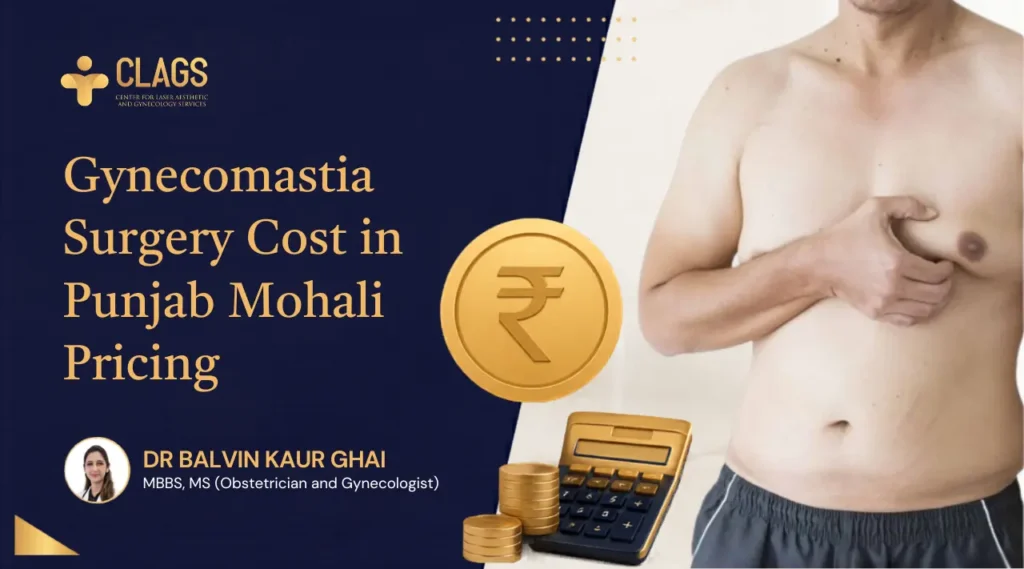
One in three men will develop enlarged breast tissue at some point in their lives. Most stay quiet about it for years.
Gynecomastia, the medical term for enlarged male breast tissue, is common, benign, and in most cases completely treatable with a single surgical procedure. Yet the number of men walking around Punjab today who have been carrying this condition for five, ten, sometimes twenty years is significant. Not because surgery is unavailable. But because nobody tells them what it costs, what to expect, or where to go.
This article fixes that.
If you are looking for gynecomastia surgery cost in Punjab, specifically in Mohali, Chandigarh, Ludhiana, or elsewhere in the region, here is the complete, honest picture: what drives the price, what the different grades mean for your bill, which technique you are likely to need, and what the full recovery looks like before you commit to anything.
What Is Gynecomastia and Why Does It Happen?
Gynecomastia is not the same as chest fat from being overweight. That condition is called pseudogynecomastia, where excess adipose tissue accumulates in the chest without any change to the glandular tissue underneath. True gynecomastia involves actual enlargement of the mammary gland tissue in men, the same tissue that would develop into breast tissue in a woman if triggered by the right hormones.
The underlying cause is almost always a hormonal imbalance: too much estrogen relative to testosterone. This imbalance can happen at multiple points in a man’s life.
The most common triggers include:
- Puberty, the most frequent cause in teenagers, as temporary estrogen surges occur during development
- Aging, as testosterone naturally declines with age and shifts the hormonal ratio
- Obesity, where fat cells convert testosterone to estrogen and higher body weight worsens the hormonal imbalance
- Medications including antidepressants, antifungals, prostate treatments, some antibiotics, and chemotherapy drugs that can all trigger breast tissue growth
- Anabolic steroid use, extremely common in gym-going men in Punjab and across India
- Liver or kidney disease, which affects how the body metabolizes hormones
- Thyroid disorders and tumours affecting hormone-secreting glands
In teenage boys, gynecomastia that develops during puberty often resolves on its own within two years. In adult men, it rarely goes away without intervention. Once glandular tissue has formed, no amount of exercise or dieting will remove it. Surgery is the only definitive solution.
The 4 Grades of Gynecomastia: Why Your Grade Determines Your Cost
Before any surgeon quotes you a price, they will classify the severity of your condition. This classification, known as Simon’s grading system, is the single most important factor in determining which surgical technique you need and what it will cost.
| Grade | What It Looks Like | Surgery Typically Required | Estimated Cost in Punjab |
|---|---|---|---|
| Grade 1 | Small puffiness around the nipple; button-like lump under areola | Liposuction or gland excision alone | ₹35,000 – ₹60,000 |
| Grade 2A | Moderate breast enlargement, no extra skin | Liposuction with gland excision | ₹50,000 – ₹80,000 |
| Grade 2B | Moderate enlargement with some skin excess | Liposuction plus excision, possible skin correction | ₹60,000 – ₹90,000 |
| Grade 3 / 4 | Significant enlargement resembling female breast with sagging | Combined excision, skin resection, possible nipple repositioning | ₹80,000 – ₹1,50,000 |
Most men who come in for evaluation in Punjab fall between Grade 1 and Grade 2B. Severe Grade 3 and 4 cases are less common and typically involve men who have lived with untreated gynecomastia for many years or who have had significant weight fluctuation.
Gynecomastia Surgery Cost in Punjab: City-by-City Comparison
Punjab has a strong cluster of cosmetic surgery facilities, from Mohali and Chandigarh in the east to Ludhiana and Amritsar further west. Pricing across these cities reflects a combination of clinic overheads, surgeon seniority, and the technology used.
| City | Typical Cost Range | Notes |
|---|---|---|
| Mohali | ₹60,000 – ₹1,00,000 | Specialist cosmetic surgery clinics with advanced equipment; day-care procedures |
| Chandigarh | ₹40,000 – ₹1,00,000 | Wide range of providers from budget to premium; average ₹40,000 at established clinics |
| Ludhiana | ₹35,000 – ₹60,000 | More affordable market; large volume clinics keep prices competitive |
| Amritsar | ₹30,000 – ₹1,20,000 | Wide variation depending on clinic and surgeon credentials |
| Jalandhar / Patiala | ₹30,000 – ₹70,000 | Smaller market; fewer specialists; may require referral for complex grades |
Men from Ludhiana, Amritsar, Jalandhar, and even from Himachal Pradesh and Haryana regularly travel to Mohali for gynecomastia surgery. The reason is straightforward: specialist cosmetic surgery centres in Mohali combine surgical experience with proper clinical infrastructure, including operation theatres, post-operative care, and follow-up protocols, that many smaller-city clinics lack. The price difference between Ludhiana and Mohali for a Grade 2 case may be ₹20,000 to ₹30,000, but the outcome quality and peace of mind that comes with choosing a specialist often justify it.
At CLAGS Mohali, gynecomastia surgery is performed as a day-care procedure with costs ranging from ₹60,000 to ₹90,000 depending on the amount of tissue involved. The surgery is done under anaesthesia in a proper clinical setting, with one-day discharge and complete post-operative follow-up included.
Liposuction vs Gland Excision: Which Technique Do You Need?
This is the question that determines both your surgical outcome and your cost. The two main techniques used in gynecomastia surgery serve different purposes and work best in different situations.
Liposuction Alone
Liposuction for gynecomastia involves making a small keyhole incision near the chest and using a thin cannula to suction out the fatty tissue. It is minimally invasive, leaves virtually no visible scarring, and has a faster recovery.
The limitation is that liposuction only removes fat. If your gynecomastia involves actual glandular breast tissue, the firm disc-like tissue you can feel as a hard lump under the nipple, liposuction alone will not fully remove it. Many men who undergo liposuction-only procedures for true gynecomastia end up with residual puffiness around the nipple because the dense fibroglandular core was not addressed.
Liposuction is the right choice for pseudogynecomastia (chest fat without glandular growth) and for very mild Grade 1 cases where fatty tissue is the dominant component.
Gland Excision
Gland excision involves making a small incision along the lower border of the areola and surgically removing the glandular disc of breast tissue. Research published on PubMed confirms that even in Grade 1 cases, liposuction alone cannot fully remove dense retroareolar glandular tissue, and excision is required for complete correction.
The incision is placed at the areola border, which heals with minimal visible scarring in most patients. For higher-grade cases, excision may also include skin resection and nipple repositioning if the breast has developed ptosis (sagging).
Combination Approach
For most Grade 2 cases, the most common presentation, the best results come from combining liposuction and gland excision. Liposuction first removes the surrounding fatty tissue and creates a cleaner surgical plane, making the gland excision more precise and reducing the risk of contour irregularities. A 2025 study from Aligarh Muslim University published in PubMed found that combining liposuction with glandular excision produces comparable cosmetic results while reducing the need for redo surgeries compared to liposuction alone.
| Technique | Best Suited For | Scarring | Recovery | Cost Implication |
|---|---|---|---|---|
| Liposuction Only | Pseudogynecomastia / fatty Grade 1 | Minimal (keyhole) | 1 to 2 weeks | Lower end of price range |
| Gland Excision Only | Pure glandular Grade 1 | Peri-areolar scar | 2 to 3 weeks | Mid-range |
| Liposuction + Excision | Grade 2 and 2B, most cases | Minimal + peri-areolar | 3 to 4 weeks | Mid to upper range |
| Excision + Skin Resection | Grade 3 and 4 | Larger chest scar | 4 to 6 weeks | Upper price range |
What Is Included in the Surgery Cost and What Usually Is Not
Clinics quote different things as their base price. Before you compare costs across facilities in Punjab, understand exactly what is and is not included in each quote.
Usually Included at Reputable Clinics
- Surgeon’s fee for the procedure
- Anaesthesia charges (local or general)
- Operation theatre time
- One-day hospital stay (day care)
- Post-operative compression vest
- Medications prescribed at discharge
- One or two follow-up consultations
Charged Separately at Many Clinics
- Pre-operative blood tests, typically ₹1,500 to ₹4,000
- Hormonal panel (testosterone, estrogen, LH, FSH) if not already done, typically ₹2,000 to ₹5,000
- Chest ultrasound or mammogram if required for diagnosis, typically ₹1,500 to ₹3,000
- Additional compression garments if prescribed for longer wear
- Scar treatment creams post-procedure
- Any additional follow-up visits beyond the standard two
A clinic quoting ₹35,000 for the base procedure may end up costing ₹50,000 once diagnostics and consumables are added. Always ask for a written estimate covering all components before you commit.
Is Gynecomastia Surgery Covered by Insurance in India?
In most cases, no. Gynecomastia surgery is classified as a cosmetic procedure by Indian insurers when the condition does not present a medical necessity. Because it is not life-threatening and is performed primarily for aesthetic improvement, standard health insurance policies do not cover it.
There are two exceptions worth knowing:
- If gynecomastia is caused by an underlying medical condition, such as a hormone-secreting tumour, liver cirrhosis, or a medication-induced hormonal disorder, the treatment of that underlying condition may be covered. The cosmetic surgical correction of the breast itself may still fall outside coverage.
- If gynecomastia is being treated in the context of male breast cancer, surgical treatment is typically covered under standard health insurance.
For the vast majority of men undergoing gynecomastia surgery in Punjab, where the cause is puberty-related, steroid-related, or idiopathic hormonal, the full cost is an out-of-pocket expense. Several clinics in Mohali and Chandigarh offer EMI plans through financing partners, which can make the procedure more manageable over three to six monthly installments.
What Recovery Actually Looks Like After Gynecomastia Surgery
Men often underestimate recovery. Not because it is especially painful, it typically is not, but because the chest remains sensitive and swollen for longer than most expect. Understanding the recovery timeline helps you plan realistically.
Week 1
You will be discharged the same day or the next morning. The chest will be wrapped in a compression bandage, which transitions to a compression vest within two to three days. Mild to moderate soreness, swelling, and bruising are normal. Most men can walk around comfortably and handle light daily tasks within two to three days. Avoid lifting anything above shoulder height.
Weeks 2 to 4
Visible bruising clears. Swelling reduces gradually. You can return to a desk job or light work within 7 to 10 days in most cases. Gym activity, heavy lifting, and chest exercises should be avoided for at least four weeks. The compression vest is typically worn for three to six weeks depending on the grade of surgery.
Months 2 to 6
The final result becomes fully visible around the three to six month mark, once residual swelling has completely resolved and the skin has contracted around the new chest contour. Results from gynecomastia surgery are permanent. The removed glandular tissue does not grow back unless the triggering hormonal imbalance returns, for example from resumed steroid use or a new medication.
Men considering chest correction alongside other body contouring goals can discuss combined approaches during consultation. Understanding liposuction cost Mohali gives a clear picture of what a combined procedure session would involve and cost overall.
Why Men in Punjab Prefer Specialist Cosmetic Surgery Centres Over General Hospitals
General surgery departments in district hospitals can technically perform gynecomastia surgery. But there is a meaningful difference between a procedure done in a general surgery setting and one performed by a cosmetic surgeon who specialises in chest aesthetics.
The difference shows up in three areas:
- Scar placement and technique: A cosmetic surgeon positions incisions within the natural border of the areola or in skin creases that heal with minimal visible scarring. A general surgeon may prioritize functional access over cosmetic outcome.
- Contour management: Achieving a flat, masculine chest contour rather than simply removing tissue requires understanding of how the skin will contract and how the nipple-areola complex sits in the final result. This nuance comes from experience specifically in aesthetic chest surgery.
- Combining techniques: For Grade 2 cases, knowing when and how to combine liposuction with excision, and how much fat to leave for a natural-looking result, is a skill built through volume of gynecomastia cases specifically.
This is why men across Punjab travel to Mohali to have this done at centres focused on cosmetic surgery rather than booking at the nearest general hospital for a lower price. For women accompanying partners or family members to CLAGS for gynecomastia consultations, the same centre also handles cosmetic gynecology including vulvar whitening and related procedures.
Frequently Asked Questions About Gynecomastia Surgery Cost in Punjab
1. What is the average gynecomastia surgery cost in Punjab?
Gynecomastia surgery in Punjab costs between ₹35,000 and ₹1,20,000 depending on the city, grade of the condition, and technique required. In Mohali at specialist cosmetic centres, the typical range is ₹60,000 to ₹90,000 for Grade 1 to Grade 2B cases. Grade 3 and 4 cases with skin excision run higher.
2. How do I know what grade of gynecomastia I have?
A surgeon diagnoses your grade by physical examination. You can get a general sense by checking whether you have a small firm lump under the nipple (Grade 1), moderate chest fullness (Grade 2), or significant breast-like enlargement with loose skin (Grade 3 or 4). Only a qualified cosmetic surgeon’s assessment is reliable for treatment planning.
3. Will gynecomastia come back after surgery?
In the vast majority of cases, no. Once glandular tissue is removed through excision, it does not regenerate. However, if the hormonal cause is not addressed, for example if a man continues using anabolic steroids after surgery, new glandular tissue can develop. Correcting the underlying cause before or alongside surgery produces the most durable outcome.
4. Is gynecomastia surgery painful?
The procedure is performed under anaesthesia, so you feel nothing during surgery. Post-operative soreness is mild to moderate and typically managed well with standard pain medication for the first three to five days. Most men rate post-operative discomfort as significantly less than they expected.
5. Can gynecomastia be treated with exercise or medication alone?
Exercise reduces the fat component of the chest but has no effect on glandular breast tissue. Once glandular tissue has formed and stabilized, no medication can reverse it. Medications may sometimes be used in early-stage pubertal gynecomastia where the tissue is very new, but established adult gynecomastia requires surgery for correction.
6. How long should I wear the compression vest after surgery?
Most surgeons recommend wearing a compression vest continuously for the first three weeks, then during the day only for an additional two to three weeks. The compression supports skin contraction and reduces the risk of fluid accumulation (seroma). Following this instruction closely improves final contour results.
7. Can both sides be operated in a single session?
Yes. Most men have bilateral gynecomastia, meaning both sides are affected, and both are corrected in a single surgical session. This is the standard approach and does not significantly increase cost compared to unilateral correction in most clinics.
8. Is there visible scarring after gynecomastia surgery?
For liposuction-only procedures, scarring is minimal. The entry points are 3 to 4mm and virtually invisible. For procedures involving gland excision, the incision is placed along the lower border of the areola, where the colour change between areola and chest skin naturally conceals the scar line. In most patients, scars are undetectable after six months.
9. At what age can gynecomastia surgery be done?
Most surgeons recommend waiting until at least 18 years of age when puberty is complete and hormone levels have stabilized. Operating before this age risks recurrence if hormonal changes continue. For teenagers with severe gynecomastia causing significant psychological distress, some surgeons consider surgery from 16 with parental consent, depending on the maturity of the breast tissue.
10. How long does gynecomastia surgery take and when can I return to work?
The surgery itself takes 45 minutes to 2 hours depending on the grade and technique. Discharge is typically the same day. Most men return to a desk-based job within 7 to 10 days. Physical labour, gym work, and chest exercises are restricted for four weeks post-surgery.