

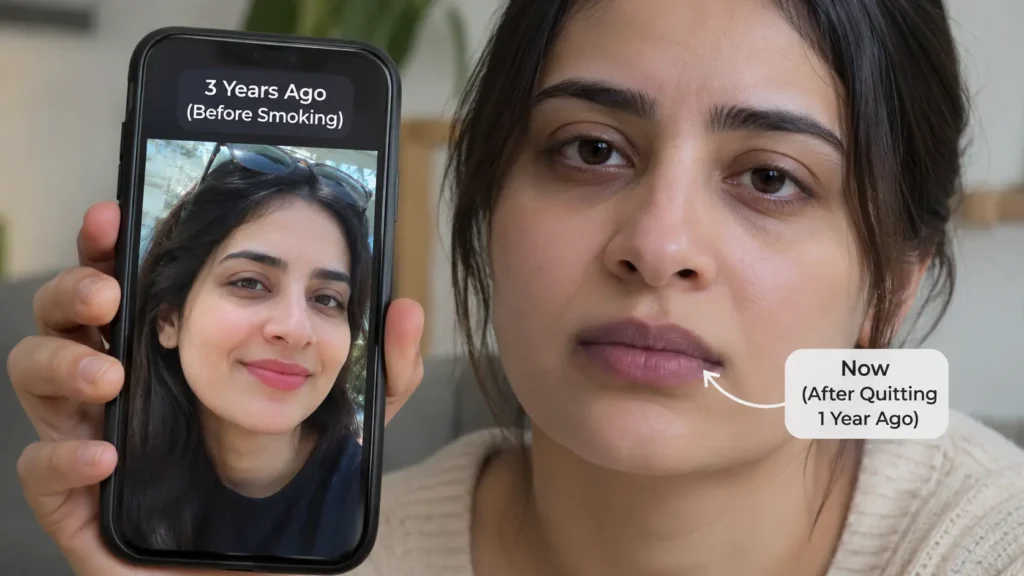
She pulled out her phone and showed me a photo from three years ago. “This was my lip colour before I started smoking,” she said. “I stopped a year ago, but the colour never came back.”
That conversation happens more often than you would expect. Dark lips sit right in the centre of your face. You notice them every time you look in a mirror, every time lipstick does not sit right anymore. And the internet is full of advice that sounds helpful but changes nothing: lemon juice, beetroot paste, expensive lip serums.
This article covers the actual medical reasons lips darken, which treatments work for which cause, what it costs realistically, and when home remedies are a waste of time versus when they genuinely help.
Key Takeaways
- Lip darkening happens when melanin production increases in the thin skin of the lips. The most common triggers in Indian patients are smoking, sun exposure, hormonal changes, and allergic reactions to lip products.
- Home remedies like lemon, turmeric, and beetroot have limited clinical evidence. They may help mild surface discolouration but cannot reverse deep melanin deposits from years of smoking or chronic sun damage.
- Medical treatments include Q switched Nd:YAG laser (532 nm), chemical peels (TCA, glycolic acid), and topical depigmenting agents (kojic acid, arbutin, vitamin C). According to a study published in the Journal of Lasers in Medical Sciences, Q switched Nd:YAG laser at 532 nm showed significant improvement in lip melanosis with minimal side effects.
- Treatment typically requires 3 to 6 sessions spaced 3 to 4 weeks apart. Results depend on the depth of pigmentation, the original cause, and whether the trigger (like smoking) has been removed.
- Not every dark lip needs laser. A proper clinical assessment identifies the cause first, because treating hormonal pigmentation differently from smoker’s melanosis is what separates a result that lasts from one that returns within months.
Why Lips Darken Faster Than the Rest of Your Face
Your lips are structurally different from the skin on your cheeks or forehead. The skin on your lips is thinner, has fewer melanocytes (the cells that produce pigment), and has almost no sebaceous glands. This means your lips have less natural protection against UV radiation, chemical irritants, and dehydration.
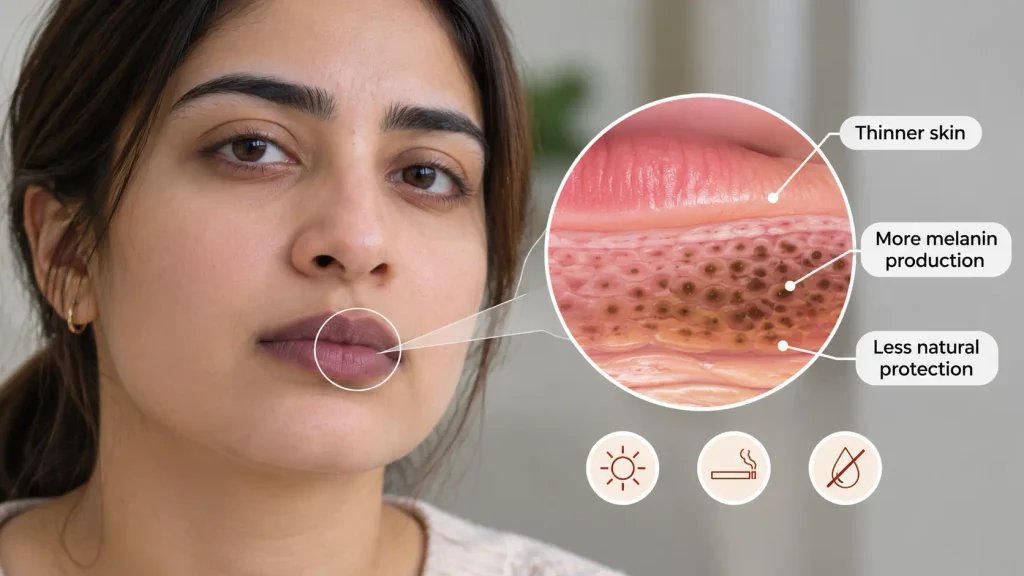
When the lip skin is repeatedly exposed to a trigger, melanocytes go into overdrive. They produce excess melanin, and this melanin gets deposited in the superficial and sometimes deeper layers of the lip tissue.
This is why lip darkening is almost always gradual. By the time you notice it, the pigment has usually settled deep enough that surface level remedies cannot reach it.
The 8 Real Causes Behind Dark Lips in Indian Patients
Not all lip darkening has the same cause. Understanding your specific trigger is the first step before choosing any lip pigmentation treatment in Mohali or elsewhere.
| Cause | How It Darkens the Lips | Reversible? |
|---|---|---|
| Smoking or tobacco chewing | Nicotine restricts blood flow. Tar and chemicals trigger melanin overproduction. Called “smoker’s melanosis.” | Partially. Deep deposits often need laser even after quitting. |
| Sun exposure without SPF | UV radiation directly stimulates melanocytes. Lips have almost no natural sun protection. | Yes, with treatment and consistent SPF use afterward. |
| Hormonal changes | Pregnancy, oral contraceptives, and thyroid disorders can trigger melasma that extends to the lips. | Often improves after the hormonal trigger resolves. |
| Allergic reaction to lip products | Certain lipsticks, lip balms, and even toothpaste ingredients cause contact cheilitis, leaving dark marks after inflammation heals. | Yes, once the offending product is removed. |
| Chronic lip licking or biting | Saliva enzymes repeatedly irritate the lip border, causing post inflammatory hyperpigmentation. | Yes, but the habit needs to stop first. |
| Vitamin B12 or folate deficiency | Nutritional deficiency can cause hyperpigmentation of the lips, mouth corners, and gums. | Yes, once the deficiency is corrected. |
| Medications | Antimalarials, tetracyclines, chemotherapy drugs can darken the lips as a side effect. | Usually reverses after stopping the medication. |
| Genetic predisposition | Conditions like Peutz Jeghers syndrome cause dark spots on lips from childhood. | Manageable but needs ongoing treatment. |
The most common combination we see at our clinic is smoking plus no SPF. These two together cause the fastest and deepest lip darkening.
Why Home Remedies for Dark Lips Fail Most People
Search for “dark lips treatment” online and you will find dozens of articles recommending lemon juice, beetroot paste, coconut oil, and turmeric. Some of these have mild skin brightening properties. None of them can fix deep melanin deposits.
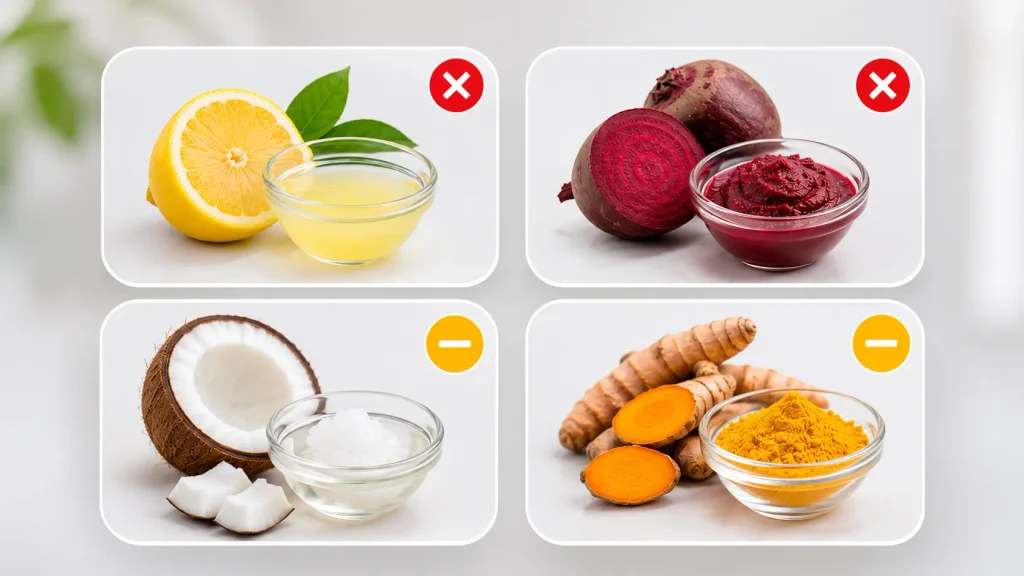
Lemon juice is a mild exfoliant but can irritate lip skin and worsen pigmentation if used before sun exposure. Beetroot paste temporarily tints the lips but washes off with no effect on melanin. Coconut oil moisturises dry lips but does not reduce pigment. Turmeric has mild tyrosinase inhibiting properties, but the concentration in a paste is too low for clinical effect.
The honest answer: if your lip darkening is from mild dryness or light sun exposure, home remedies can help speed recovery. If the pigmentation is from years of smoking, deep hormonal melasma, or genetic predisposition, you need a clinical approach.
If you have been using home remedies for more than 8 weeks without visible improvement, the pigment is deeper than surface level. It is time to consult a specialist. You can read more about lip pigmentation treatment in Mohali and the clinical options available at CLAGS.
Medical Treatments That Actually Work for Dark Lip Correction
Once the cause is identified, the right treatment targets the melanin at its actual depth. Here are the clinically proven options.
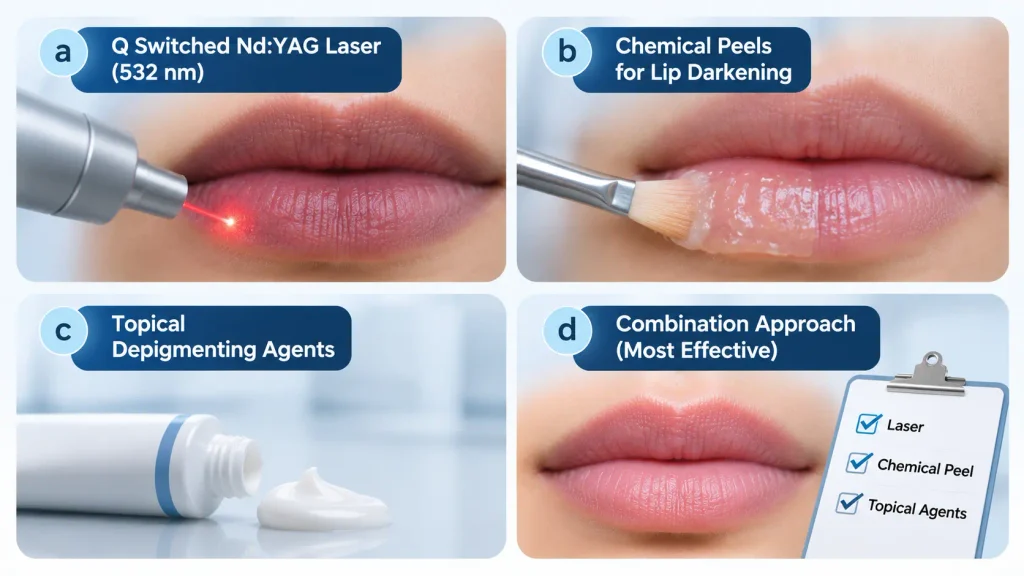
a. Q Switched Nd:YAG Laser (532 nm)
This is the gold standard for treating lip melanosis. The 532 nm wavelength specifically targets melanin without damaging surrounding tissue. The laser delivers short, high energy pulses that shatter melanin into tiny fragments, which your body clears over the following weeks.
Sessions needed: 3 to 6, spaced 3 to 4 weeks apart
Downtime: mild swelling for 1 to 2 days, dryness for 3 to 5 days
Results: gradual lightening starts after session 2. Final results visible 4 to 6 weeks after the last session.
According to Healthline, laser treatments and depigmenting agents like hydroquinone and kojic acid are the most commonly used medical approaches for lip hyperpigmentation.
b. Chemical Peels for Lip Darkening
Chemical peels use controlled acid solutions to remove the outer pigmented layers, allowing lighter skin to surface.
- a. TCA (trichloroacetic acid) peel: stronger, reaches deeper pigmentation. Best for smoker’s melanosis.
- b. Glycolic acid peel: milder, good for surface level darkening.
- c. Lactic acid peel: gentlest option, suitable for darker Indian skin tones.
Sessions needed: 4 to 8, spaced 2 to 3 weeks apart. Works well standalone or as a complement to laser. If you are exploring chemical peels at CLAGS in Mohali, the treating doctor will recommend the right acid type and concentration for your skin.
c. Topical Depigmenting Agents
Prescription strength topicals are used between laser or peel sessions, or as first line treatment for mild cases: kojic acid, arbutin, vitamin C serum, and retinoids. Over the counter “lip lightening creams” sold online often contain unlisted ingredients including mercury and high dose steroids. Never use a depigmenting product on your lips without a doctor’s prescription.
d. Combination Approach (Most Effective)
For moderate to severe pigmentation, the best results come from combining laser sessions with chemical peels and prescribed topicals. A typical protocol runs 3 to 4 months: laser sessions every 3 weeks, chemical peels alternating between, home care topicals daily, and mandatory SPF 30+ lip balm every 2 hours during daytime.
Lip Pigmentation Treatment Cost in Mohali: What Affects the Price
| Treatment | Cost Per Session | Sessions Needed |
|---|---|---|
| Q switched Nd:YAG laser | Rs. 3,000 to Rs. 8,000 | 3 to 6 |
| Chemical peel (lip area) | Rs. 2,000 to Rs. 5,000 | 4 to 8 |
| Topical agents (full course) | Rs. 1,500 to Rs. 3,000 | 8 to 12 weeks |
| Combination (laser + peel + topicals) | Rs. 5,000 to Rs. 12,000 per visit | 4 to 6 visits |
What changes the price: depth and extent of pigmentation, number of sessions required, whether laser alone is enough or a combination approach is needed, and package pricing (packages usually save 15 to 20%). An accurate estimate requires an in person consultation. Any clinic quoting a fixed price over the phone without seeing you is guessing.
What Dr. Balvin Checks Before Starting Any Treatment
When a patient walks in asking for lip lightening, the first thing I do is examine the pattern of pigmentation. It tells me more than any photograph.
Three things I check before choosing a treatment plan:
- Is the darkening uniform or patchy? Uniform darkening usually points to smoking or chronic sun exposure. Patchy or border darkening is more likely from lip licking dermatitis or contact allergy. The treatment approach is different for each.
- Does the pigmentation extend beyond the lip border? When darkening crosses the vermillion border onto surrounding skin, it often indicates a deeper hormonal or systemic cause. These cases need a blood workup before cosmetic treatment.
- Glass slide press test. I press a glass slide gently against the lip. If the dark colour fades under pressure, it is vascular, not melanin. This changes the entire treatment plan.
The assessment takes 15 minutes and prevents months of wasted effort on the wrong treatment.
Dr. Balvin Kaur Ghai, Founder and Lead, CLAGS Centre for Laser Aesthetics and Gynaecology Services, Mohali
5 Mistakes That Bring Dark Lip Pigmentation Back After Treatment
- Going back to smoking. Even occasional smoking reactivates melanocytes. The results will not last if you resume.
- Skipping SPF on the lips. Most people apply sunscreen on their face but forget their lips. Unprotected lips re darken within months.
- Using cheap or irritating lip products. Heavily fragranced lipsticks and unbranded “lightening balms” trigger contact dermatitis, causing fresh pigmentation.
- Not completing the full treatment course. Stopping after 2 laser sessions means deeper melanin deposits are still there. They resurface within 2 to 3 months.
- Ignoring maintenance. One maintenance session every 4 to 6 months keeps results stable. Think of it like a dental cleaning for your lips.
Can Dark Lips Be Permanently Fixed?
It depends on the cause. Smoker’s melanosis responds well if you quit and complete the full treatment course. Sun damage stays corrected as long as you use SPF lip balm consistently. Hormonal pigmentation can recur if the trigger returns. Genetic predisposition needs periodic maintenance every 6 to 12 months. Allergic contact pigmentation is usually permanent once the allergen is removed.
No treatment in the world can overcome a cause that is still active. “Permanent” requires you to manage the trigger. This is exactly why a cause based approach to lip pigmentation treatment in Mohali gives better long term outcomes than a generic laser session at any clinic.
Getting a Lip Pigmentation Assessment in Mohali
If you are in Chandigarh, Mohali, Panchkula, Zirakpur, or anywhere in Punjab, you can get a clinical lip pigmentation assessment at CLAGS. The consultation includes cause evaluation, the glass slide press test, and a personalised treatment plan with a clear cost estimate before any procedure begins.
Dr. Balvin Kaur Ghai sees every patient personally, from the first consultation through every treatment session. Book your appointment here.
Frequently Asked Questions
Is laser treatment for dark lips painful?
Most patients describe it as a mild snapping sensation. A topical numbing cream is applied 20 minutes before the procedure. The session lasts 15 to 20 minutes, and you can drive home immediately after.
How many laser sessions are needed to lighten dark lips?
Typically 3 to 6 sessions, spaced 3 to 4 weeks apart. Smoker’s melanosis usually needs more sessions than sun damage related darkening.
Will my dark lips come back after laser treatment?
If the cause is removed (you quit smoking, you use SPF), results last for years. If the trigger remains active, re darkening will happen regardless of treatment.
Can I get treatment if I still smoke?
Technically yes, but results will be compromised. Most doctors recommend quitting at least 4 weeks before starting treatment.
Is lip lightening treatment safe for Indian skin?
Yes, when performed by an experienced doctor using correct laser settings. Indian skin (Fitzpatrick types III to V) requires lower energy settings to avoid post inflammatory hyperpigmentation.
Can I use lipstick after treatment?
Avoid all lip products (except prescribed gel and SPF lip balm) for the first 5 to 7 days after each session. After healing, choose fragrance free, hypoallergenic formulas.
What is the difference between lip blushing and lip depigmentation?
Lip blushing is a cosmetic tattoo that adds colour. Lip depigmentation removes excess melanin to restore your natural lip colour. They serve opposite purposes.
Can vitamin deficiency cause dark lips?
Yes. Low vitamin B12, folate, and iron can all contribute to lip hyperpigmentation. Correcting the deficiency through supplements often improves lip colour on its own.
Are dark lips a sign of a serious health problem?
Usually no. But sudden lip darkening accompanied by spots on the gums, fingers, or inside the mouth should be evaluated to rule out conditions like Peutz Jeghers syndrome or Addison’s disease.
How do I find the right doctor for lip pigmentation treatment in Mohali?
Look for a doctor who performs a full cause assessment before recommending treatment. Avoid clinics that prescribe laser without diagnosing why your lips darkened first. At CLAGS in Mohali, Dr. Balvin Kaur Ghai conducts this assessment personally for every patient.