


A long wait list back home and a bill that runs into five figures push many Canadian women to look beyond their own borders for care. Affordable vaginoplasty in India for patients from Canada has become a real option for women who want expert surgical care without the private-clinic price tag common in Canada. Below, I have laid out what the procedure involves, what it actually costs, how safe it is, and what to plan for from your first consultation to your final follow-up call.
Key Takeaways
- Private vaginoplasty in Canada can cost CAD 8,000 to 17,000 or more, while treatment in India may be considerably less expensive, even after accounting for flights and accommodation.
- Medical treatment in India can be significantly more affordable than in developed countries, although actual savings vary by procedure, hospital, surgeon, and individual treatment needs.
- Recovery after vaginoplasty can take several weeks to a few months, depending on the surgical technique and individual circumstances. Patients should follow their surgeon’s instructions regarding physical activity, sexual activity, follow-up care, and travel.
- Cost is not the only factor. Surgeon experience, hospital accreditation, quality of care, patient safety, and postoperative support should all be considered before choosing a medical tourism provider.
- Online consultations before travelling can help Canadian patients discuss their medical history, understand the proposed procedure, review expected recovery, and decide whether treatment abroad is appropriate for their circumstances.
What Vaginoplasty Involves
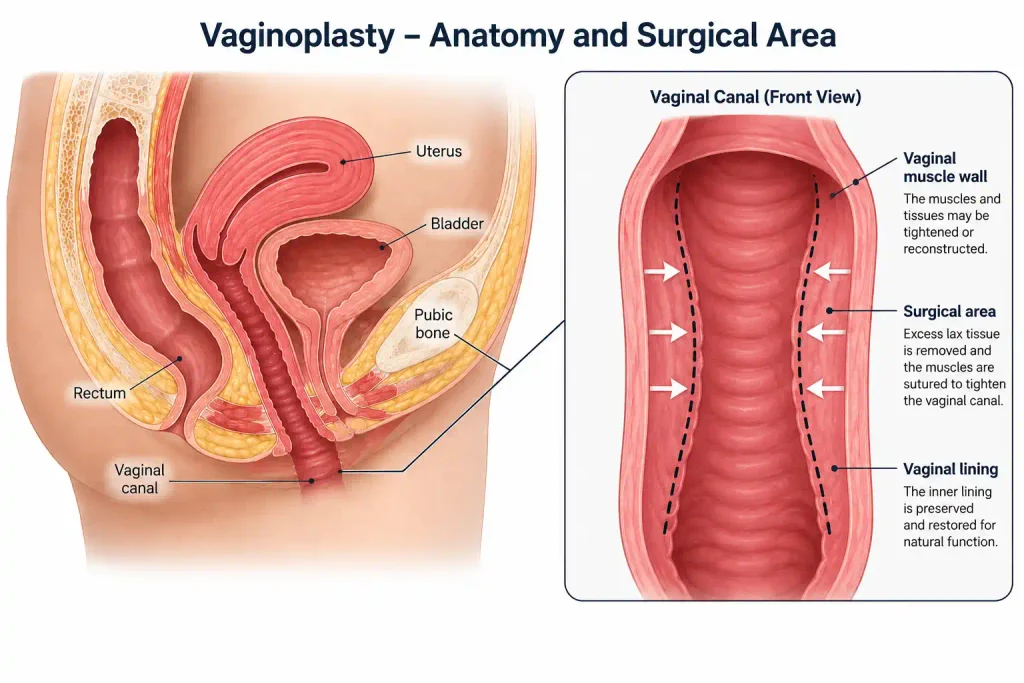
Vaginoplasty is a surgical procedure to repair, reconstruct, or tighten the vaginal canal. Women seek it for different reasons, and no two patients arrive with the same story. Common reasons include:
- Vaginal laxity after childbirth or with age
- Correction of congenital vaginal conditions
- Reconstruction following injury or prior surgery
- Restoration of vaginal tone for comfort and confidence
A qualified gynaecologic surgeon assesses each case individually. There is no single right approach, and a good surgeon explains which technique suits your anatomy and goals rather than pushing one option on every patient.
Vaginoplasty Cost in India vs Canada
Cost is usually the first question Canadian patients ask. Private vaginoplasty in Canada is not covered by provincial health plans in most cases, since it is often classified as elective. Prices at private Canadian clinics commonly start around CAD 8,000 and can pass CAD 17,000 once anaesthesia, facility fees, and follow-up visits are added.
Vaginoplasty surgery in India for Canadians typically costs a fraction of that, even with flights and accommodation included. Treat the figures below as broad estimates, since exact fees depend on your case, technique, and clinic.
| Cost Component | Typical Range in Canada (CAD) | Typical Range in India (CAD equivalent) |
|---|---|---|
| Surgeon and hospital fee | 6,000 – 12,000 | 1,200 – 2,800 |
| Anaesthesia and OT charges | 1,000 – 2,500 | Usually bundled |
| Hospital stay | 800 – 2,000 | Usually bundled |
| Pre-op tests and consultation | 300 – 800 | Usually bundled |
| Flights and accommodation | Not applicable | 1,200 – 2,500 |
| Estimated total | 8,000 – 17,000+ | 2,500 – 5,500 |
This is the core of the vaginoplasty cost India vs Canada gap. Even with travel expenses added, the total for affordable vaginoplasty India packages usually stays well below the Canadian private-pay price.
What’s Included and What Isn’t
A transparent clinic bundles the surgeon’s fee, standard pre-op tests, hospital stay, dressing changes, and one or two follow-up visits into one package. Flights, visa fees, extended hotel stays, and any tests beyond the standard panel are usually separate. Always confirm this breakdown in writing before you book.
“Ask for a written, itemised quote before you travel. A number quoted over email means little if it does not specify what happens if your recovery needs an extra night in hospital.” — Dr Balvin Kaur Ghai
Why Vaginoplasty Is More Affordable in India
The price gap is not a sign of lower quality. It comes down to structural differences between the two healthcare economies.
- Lower operating costs: Hospital overheads and staff wages are lower in India, and this reflects directly in patient billing.
- Currency advantage: The Canadian dollar generally holds strong purchasing power against the rupee.
- Bundled pricing. Many clinics quote one package fee instead of itemising every scan separately, keeping the bill predictable.
- No insurance gap to fill: Since the procedure is usually not covered in Canada either, patients are comparing two out-of-pocket costs, and the Indian one is lower.
This affordability is one reason vaginoplasty medical tourism India Canada travel has grown steadily, alongside cardiac, orthopaedic, and cosmetic procedures that follow the same pattern.
Is It Safe for Canadian Patients?
Safety depends far more on the individual surgeon and hospital than on the country name on the passport stamp. India has both excellent surgical teams and clinics with far less oversight, and the same is true in Canada. The responsibility sits with the patient to vet the provider carefully, rather than assuming a lower price means a compromise, or that crossing a border automatically means better care.
1. Choosing a qualified surgeon. Look for a gynaecologic surgeon with documented experience in vaginal reconstructive procedures, willingness to discuss real cases during consultation, and clear, unhurried answers to direct questions about technique and risk.
2. Vetting the hospital. Check accreditation (NABH or JCI are recognised standards in India), on-site capability to manage complications, a named contact for post-op questions, and reviews that describe the full journey rather than just the surgery day.
Types of Vaginoplasty Available in India
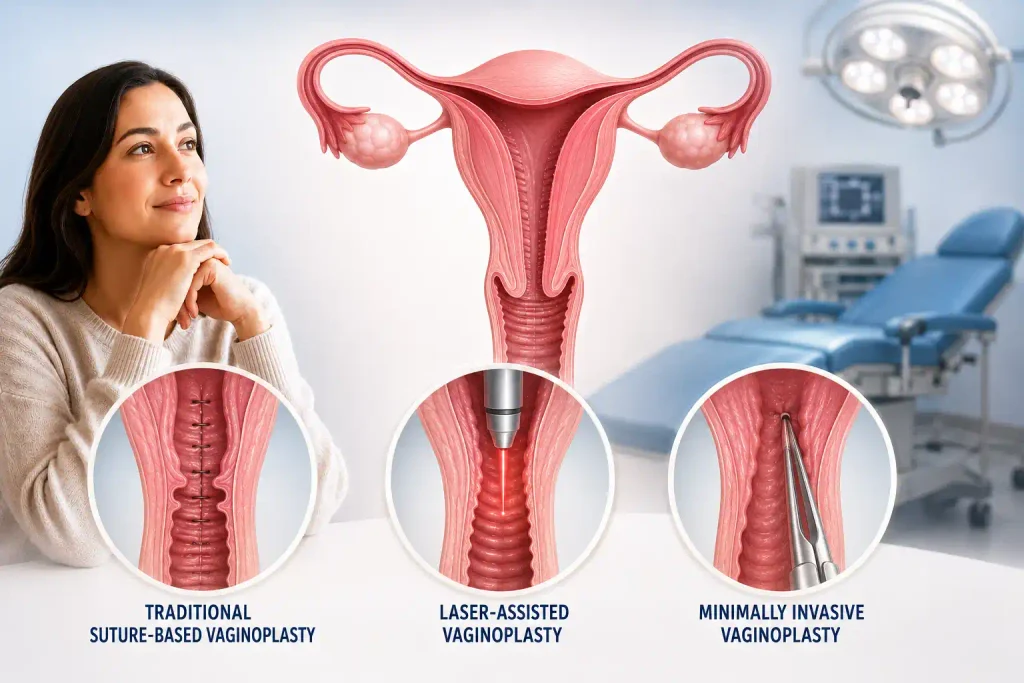
Indian gynaecologic centres generally offer options ranging from traditional suture-based tightening to laser-assisted, minimally invasive techniques. The right choice depends on your anatomy, history, and goals, which is exactly what a proper consultation establishes. Clinics that also offer non-surgical alternatives are useful if you want to compare surgical and non-surgical routes before deciding.
Planning Your Trip
Online consultation first. Most clinics now offer a video consultation before you book flights. Use it to ask about technique, downtime, and total cost, and expect a straightforward conversation rather than a sales pitch.
How long to stay. Most Canadian patients plan for 10 to 14 days, allowing time for a final pre-op check, the surgery and hospital stay, one or two follow-up visits, and a small buffer for schedule changes.
Recovery timeline. Initial healing generally takes two to four weeks, though full recovery depends on the technique used. According to Cleveland Clinic, some patients recover in hospital for up to five days while others go home sooner, with light bleeding, swelling, and numbness common in the days that follow. Expect restrictions on lifting, exercise, and sexual activity during early weeks.
When it’s safe to fly home. Prolonged immobility during a flight raises clot risk after any surgery, and this risk is higher in the weeks right after an operation.
NHS guidance on post-surgical travel notes that the general population risk of deep vein thrombosis is around 1 in 1,000, and this risk increases with recent surgery and long-haul travel.
Your surgeon will give you a specific window based on your recovery, but building extra days into your return schedule is a sensible default.
Follow-Up Care After Returning to Canada
Good clinics do not disappear once you fly home. Reasonable arrangements include a video check-in, written aftercare instructions to share with a local doctor, and a clear contact for urgent questions. It is worth arranging a local doctor before you travel, simply as a safety net.
Risks and Complications of Surgery Abroad
Every surgery carries risk, and travel adds a few considerations on top of the standard ones:
- Limited ability to see the same surgeon quickly if a complication arises after flying home
- Coordinating records with a Canadian doctor if local follow-up is needed
- Standard surgical risks such as infection, bleeding, or scarring, which apply regardless of location
None of these risks are unique to India. Thorough research and clear communication with your surgeon reduce most of them.
Is It Actually Cheaper After Adding Flights and Accommodation?
Yes, in most cases. A round-trip flight from major Canadian cities to India, combined with a two-week hotel stay, typically adds CAD 1,500 to 2,500 to the bill. Even with that added, the combined total for vaginoplasty surgery India for Canadians generally lands well below the private surgical fee alone back home.
“Patients often assume travel costs will cancel out the savings. In practice, the surgical fee difference is usually large enough that even a comfortable trip still costs less overall.” — Dr Balvin Kaur Ghai
Making an Informed Choice
Choosing where to have this surgery is personal, not just financial. A clear-eyed comparison of cost, credentials, and realistic recovery planning serves you better than chasing the lowest quote available. Book a consultation, ask direct questions, and give yourself enough time to travel, heal, and follow up properly.
If you are exploring vaginoplasty in Mohali, a conversation with a female vaginoplasty surgeon is a good place to start, alongside a look at detailed cost breakdowns for your specific case.
Frequently Asked Questions
1. How much does vaginoplasty cost in India compared with Canada?
Private vaginoplasty in Canada commonly runs CAD 8,000 to 17,000 or more, while the equivalent surgery in India, including travel, often totals a few thousand Canadian dollars. A personalised quote after consultation is always more accurate than a general range.
2. Why is vaginoplasty more affordable in India for Canadian patients?
Lower hospital overheads and bundled package pricing bring the surgical fee down compared to Canadian private clinics. The strength of the Canadian dollar against the rupee adds a further advantage.
3. What is included in the cost of vaginoplasty in India?
Most reputable clinics bundle the surgeon’s fee, operating theatre charges, standard pre-op tests, hospital stay, and initial follow-up visits into one package price. Request a written breakdown so you know what falls inside and outside that figure.
4. Are flights, accommodation, medical tests, and follow-up included in the surgery cost?
Flights and hotel stays are almost always separate from the medical package, and extended stays beyond the recommended recovery window usually add cost. Confirm in writing which follow-up visits are covered and which carry an extra charge.
5. Is affordable vaginoplasty in India safe for Canadian patients?
Safety depends on the surgeon’s training, hospital accreditation, and how thoroughly your case is assessed, not on the country alone. A properly credentialed surgeon and an accredited hospital matter far more than the price on the quote.
6. How can Canadian patients choose a qualified vaginoplasty surgeon in India?
Look for documented experience in vaginal reconstructive procedures and a willingness to answer detailed questions during an online consultation. A surgeon who explains risks and alternatives, rather than rushing you toward surgery, is generally a good sign.
7. What should Canadian patients check before choosing a hospital in India?
Confirm accreditation, on-site capability to manage complications, and a named contact for post-operative questions after discharge. Reviews describing the full journey, not just surgery day, give a fuller picture than marketing material alone.
8. What types of vaginoplasty are available in India for Canadian patients?
Options range from traditional surgical tightening to laser-assisted, minimally invasive approaches, depending on your anatomy and goals. Your surgeon recommends the most suitable option after review, ideally starting with an online consultation before you travel.
9. How long should I stay in India after vaginoplasty surgery?
Most Canadian patients plan for 10 to 14 days, covering pre-op checks, surgery, hospital recovery, and at least one follow-up visit before flying. A small buffer for any schedule change is a sensible precaution.
10. How long does recovery take after vaginoplasty in India?
Initial healing typically takes two to four weeks, though full recovery depends on the technique used. Your surgeon gives you a personalised timeline covering rest, activity restrictions, and when it is reasonable to resume daily routines.
11. When is it safe to fly back to Canada after vaginoplasty?
Your surgeon sets a specific timeframe based on your procedure and recovery, since flying too soon raises clot risk. Building extra recovery days into your trip before the return flight is a practical way to reduce that risk.
12. How is follow-up care managed after returning to Canada?
Reputable clinics arrange video check-ins after you return and provide written aftercare instructions to share with a local doctor. Having a Canadian doctor identified in advance, even if you do not expect to need one, adds a useful safety net.
13. What are the risks and complications of having vaginoplasty abroad?
Standard surgical risks such as infection, bleeding, or scarring apply regardless of location, with the added factor of coordinating care if a complication arises after you return. Thorough research and clear communication with your surgeon reduce most concerns.
14. Can Canadian patients have an online consultation with an Indian vaginoplasty surgeon before travelling?
Yes, most clinics offer video consultations so you can discuss your case, ask about technique and recovery, and get a personalised cost estimate before booking travel. This also lets you gauge how thoroughly the surgeon communicates before committing to the trip.
15. Is travelling to India for vaginoplasty actually cheaper after adding flights and accommodation?
In most cases, yes, since the gap between Canadian and Indian surgical fees is usually large enough to absorb travel costs and still leave a meaningful saving. A full-cost comparison is the only way to know your exact numbers.