


You are in the shower, doing a routine check. Your fingers catch on something new. You press it, and it slides slightly under your skin instead of staying put. That single detail, the movement, often brings a small wave of relief. A movable breast lump in Mohali patients bring to my clinic almost always comes with the same question. Does the fact that it moves mean it is safe?
The honest answer is that movement is a helpful clue, not a final answer. It tells us something about the lump’s shape and how it sits in the breast. But it cannot replace a proper exam. This piece covers what a moving lump usually means, its common causes, and why a doctor’s hands still matter more than a check at home.
Key Takeaways
- A movable breast lump is often, though not always, a sign of a benign growth such as a fibroadenoma or cyst.
- About 8 in 10 breast lumps turn out to be noncancerous.
- Fibroadenomas are most common in women aged 15 to 35.
- Movement, size, and pain are only part of the picture. Age, family history, and how a lump changes over time all matter too.
- A breast lump exam paired with imaging is still the most reliable way to confirm what a lump is.
- Cancerous lumps can sometimes feel mobile too. Self-checks alone should never be the final word.
Why a Lump Moving Under Your Skin Feels Reassuring
Breast tissue is not one solid block. It has fat, glands, ducts, and connective tissue layered together. This gives some natural give. A lump that is not stuck to the skin or chest wall tends to slide when you press it. Think of a marble resting in a bowl of jelly.
This kind of movement often points to a well-formed growth with its own clear edge. Fibroadenomas and simple cysts are the classic examples. Both sit as separate lumps inside the breast rather than spreading into nearby tissue. That is why they tend to move so easily.
“Patients often tell me a lump ‘rolls away’ from their fingers, and I understand why that feels comforting. But movement describes shape, not biology. Two lumps can feel almost the same and turn out to be completely different conditions.” — Dr Balvin Kaur Ghai
What a Mobile Breast Lump Usually Means
A movable breast lump in Mohali tends to fall into a few main groups. None of these can be confirmed by touch alone. Knowing them helps you know what to expect at your appointment.
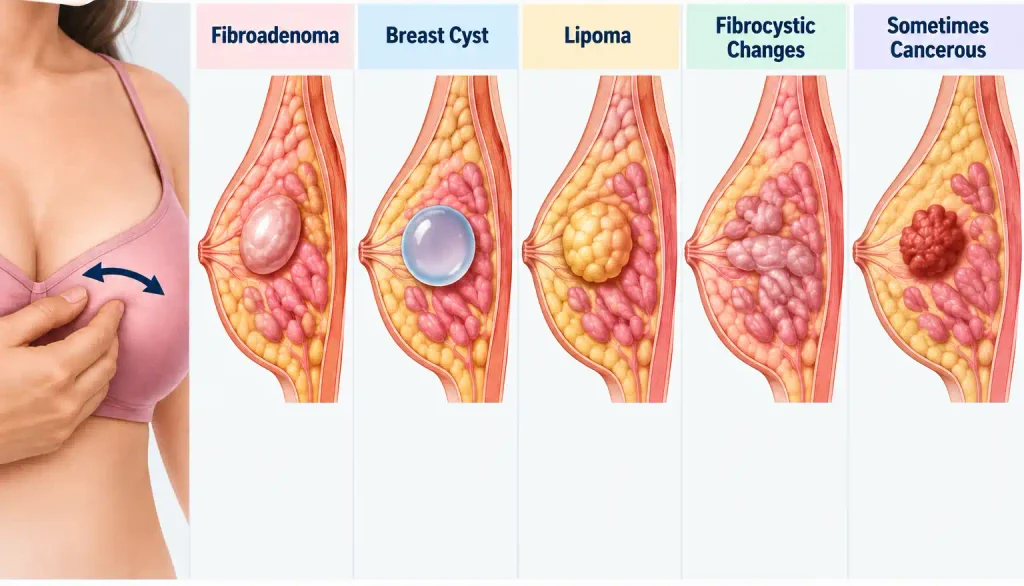
1. Fibroadenoma
This is the most common cause of a smooth, firm lump that shifts easily. A fibroadenoma is a solid, benign growth made of gland and fibrous tissue. It is most common in younger women, though it can appear at any age.
2. Breast Cyst
A cyst is a fluid-filled sac. It can form as hormone levels shift through the month. Cysts often feel soft to firm and can be tender before a period. They tend to move freely because the fluid lets the sac shift within the tissue around it.
3. Lipoma
A lipoma is a soft, painless lump of fatty tissue just under the skin. It feels doughy rather than firm. It moves with light pressure, since fat sits loosely inside its own thin capsule.
4. Fibrocystic Changes
Rather than one clear lump, this tissue can feel rope-like or grainy in small patches. These areas can shift slightly under your fingers. They often feel worse just before a period and settle down after.
5. Occasionally, Something That Needs Closer Attention
Most cancerous lumps feel hard, uneven in shape, and stuck to the skin or tissue below. But movement is not a strict rule. A small number of cancers, especially early ones, can still feel somewhat mobile. That is exactly why an exam and imaging still matter, even when a lump feels reassuringly loose.
What a Movable Breast Lump in Mohali Might Be: Quick Comparison
| Feature | Fibroadenoma | Cyst | Lipoma | Lump Needing Urgent Review |
|---|---|---|---|---|
| Texture | Firm, rubbery | Soft to firm, smooth | Soft, doughy | Hard, uneven |
| Movement | Moves freely | Moves freely | Moves freely | Often fixed, sometimes mobile |
| Pain | Usually painless | Can be tender before periods | Painless | Usually painless |
| Common Age Group | Teens to mid-30s | Any reproductive age | Any age | More common with age |
| Typical Next Step | Ultrasound, monitoring | Ultrasound, possible drainage | Clinical exam, imaging | Ultrasound, biopsy |
These differences are useful background. But only a hands-on breast lump examination Chandigarh or Mohali clinics offer can confirm which one fits your lump.
Fibroadenoma Symptoms Beyond the Lump Itself
Fibroadenoma is the top cause of a mobile lump. It helps to know what else to watch for. Common fibroadenoma symptoms include:
- A smooth, rounded lump with a clear edge
- Little to no tenderness, though mild soreness can show up before a period
- Slow growth over months or years, or sometimes no change at all
- A tendency to grow slightly during pregnancy or while on hormonal birth control
Most fibroadenomas stay a stable size for years. A lump that grows fast or changes shape needs a prompt visit rather than a wait-and-see approach.
Why Mobility Alone Cannot Confirm a Diagnosis
Touch alone cannot sort safe lumps from risky ones. Breast tissue simply does not work that neatly. A clinical exam gives useful clues about size, shape, and movement. But it cannot see inside the lump.
Imaging closes that gap. An ultrasound shows if a lump is solid or filled with fluid. That alone can tell a cyst apart from a fibroadenoma. For women over 30, or when results are unclear, a mammogram adds more detail. A biopsy gives full certainty when imaging still leaves questions.
Most breast lumps turn out to be harmless. Even so, every new lump deserves a doctor’s check rather than a guess based on how a movable breast lump in Mohali happens to feel.
What Happens During a Breast Lump Examination in Mohali or Chandigarh
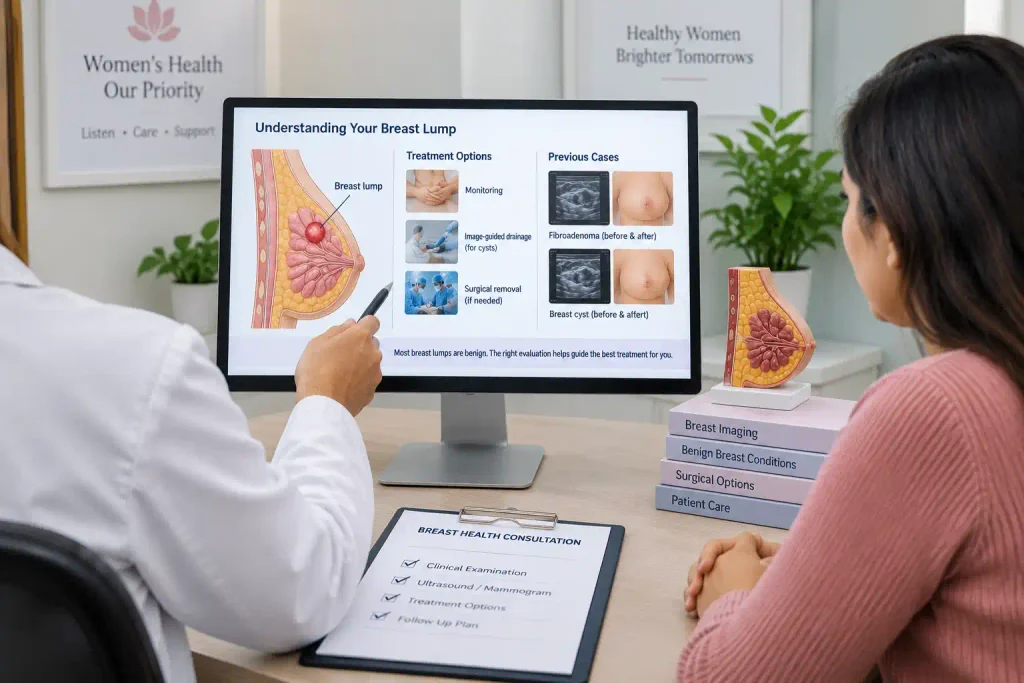
A visit follows a fairly steady pattern. Knowing the steps ahead of time can ease some of the nerves that come with a first appointment.
The doctor asks when you first noticed the lump, whether it has changed, and about any family history of breast issues. A physical exam follows next. The doctor checks the lump’s size, texture, and movement, and feels the nearby lymph nodes too.
Based on your age and the exam findings, your breast specialist Punjab clinic will usually order an ultrasound, sometimes paired with a mammogram. If the images raise any doubt, a needle biopsy may follow to confirm the tissue type with full confidence.
“I tell every patient the same thing before we begin testing. A calm, step-by-step work-up almost always brings relief faster than searching symptoms online at midnight.” — Dr Balvin Kaur Ghai
Will You Need an Ultrasound for a Movable Lump?
In most cases, yes. Ultrasound is painless and quick. It works especially well for younger women, since their breast tissue tends to be denser. It clearly tells solid lumps apart from fluid-filled cysts. This narrows down the diagnosis before any further tests are needed.
A breast ultrasound is often the next step after a clinical exam, especially for a new or changing lump. If results stay unclear, your doctor may add a mammogram or send you for a biopsy through a proper pathology lab.
When a Movable Lump Needs Treatment
Not every fibroadenoma or cyst needs to come out. Small, stable lumps confirmed as benign are often just watched, with regular exams and imaging over time.
Removal becomes worth discussing when a lump grows a lot, causes discomfort, changes the shape of the breast, or when a patient simply wants it gone for peace of mind. Your doctor can walk you through options for a breast lump procedure if that path fits your case.
Signs That Warrant a Prompt Appointment
A few changes with any movable breast lump in Mohali deserve quick attention:
- The lump grows fast over a few weeks
- Skin over the lump dimples, puckers, or changes color
- Nipple discharge shows up, especially if blood-tinged
- The lump feels stuck to the skin or chest wall rather than sliding
- A new lump appears under the arm
None of these signs guarantee something serious. But each one is worth a same-week call to your doctor.
A Final Thought
A lump that moves under your fingers is genuinely good news, and it is fair to feel some relief. But that relief should lead you toward an appointment, not away from one. The only way to know exactly what a movable breast lump in Mohali turns out to be is through a proper exam paired with imaging. It takes someone trained to read the full picture, not just one detail. Found a lump recently? Book a consultation and get it checked properly. Peace of mind is worth far more than a guess.
Frequently Asked Questions
1. What does it mean if a breast lump moves when you touch it?
A lump that shifts under your fingers is usually not stuck to the skin or chest wall. This is a feature more common in benign growths like fibroadenomas or cysts. It is a reassuring sign, but it does not confirm the diagnosis on its own. An exam is still the right next step.
2. Is a movable breast lump usually benign?
Yes, in most cases a lump that moves freely turns out to be benign. It is often a fibroadenoma or a fluid-filled cyst. A small number of early cancers can also feel somewhat mobile, so touch alone should never be the final test.
3. Can a movable breast lump in Mohali be cancerous?
It is uncommon, but it can happen. Some cancerous lumps, especially early ones, can still feel like they move a little. This is exactly why doctors recommend imaging, and a biopsy when needed, rather than relying on touch alone.
4. What are the common causes of a mobile breast lump?
The most common causes are fibroadenomas, simple cysts, and lipomas. Each forms its own distinct lump that can shift within the breast tissue around it. Fibrocystic changes can also create smaller, shifting areas, especially around your period.
5. How can you tell if a breast lump is actually movable?
Gently press two fingers on either side of the lump and see if it slides slightly under light pressure. If it moves and settles back in its original spot, that counts as mobile. Still, a clinical exam gives a far more reliable read than a self-check.
6. Is a painless, movable breast lump something to worry about?
Painless, mobile lumps are often benign, since fibroadenomas and cysts usually cause little to no discomfort. Still, painlessness alone is not a guarantee of safety. Any new lump deserves a proper check rather than being brushed off because it does not hurt.
7. Can fibroadenoma cause a movable breast lump?
Yes, fibroadenoma is the single most common reason behind a smooth, firm lump that moves easily under the skin. It forms as its own self-contained mass of gland and fibrous tissue, which naturally lets it shift when touched.
8. What are the common fibroadenoma symptoms besides a movable lump?
Beyond movement, fibroadenomas typically feel smooth, rubbery, and well-rounded, with a clear edge. Some women notice mild tenderness before their period. The lump can also grow slightly during pregnancy or while using hormonal birth control.
9. Can a breast cyst feel movable under the skin?
Yes, cysts are fluid-filled and often move quite easily, since the fluid lets the sac shift within the tissue around it. They can also feel tender in the days before a period and may change size across your cycle.
10. When should I see a doctor about a movable breast lump in Mohali?
See a doctor as soon as you notice any new lump, no matter how it feels to the touch. Booking an appointment early, rather than waiting to see if it changes, gives you earlier reassurance or earlier treatment if something needs attention.
11. What happens during a breast lump examination in Chandigarh or Mohali?
The doctor asks about your history and how long the lump has been there, then does a physical exam checking size, shape, movement, and nearby lymph nodes. Imaging such as an ultrasound or mammogram is usually arranged next.
12. Will I need a breast ultrasound for a movable lump?
Most patients with a new lump are advised to get an ultrasound, since it clearly shows whether the lump is solid or fluid-filled. It is quick and painless, and works especially well for younger women with denser breast tissue.
13. Can a breast specialist in Punjab tell whether a lump is benign by touch alone?
An experienced specialist can often make an educated guess based on how a lump feels. But touch alone is never used to make a final call. Imaging, and a biopsy when needed, are what actually confirm what the lump is.
14. Does a movable breast lump always need treatment or removal?
No, many movable lumps, especially small and stable fibroadenomas or simple cysts, are simply watched with regular checks rather than removed. Treatment becomes a real discussion if the lump grows, causes discomfort, or if a patient prefers it taken out.
15. What should I do if a movable breast lump gets bigger or changes over time?
Any clear growth or change in shape should prompt a follow-up visit rather than more waiting at home. Your doctor may repeat imaging or suggest removal, depending on how much has changed since your last check.