


Finding a breast lump while breastfeeding can turn a normal day upside down, especially when you’re already running on broken sleep and back to back feeds. A breast lump while breastfeeding in Mohali is often linked to blocked ducts or mild mastitis, and both usually settle within a few days of proper home care.
But a lump that stays firm, keeps growing, or doesn’t shift after a feed deserves a real medical opinion, not a guess based on what you’ve heard from others. As a gynaecologist who sees breastfeeding mothers every week at CLAGS in Mohali, I want to walk you through what’s normal, what’s worth watching, and what needs a same week appointment.
Key Takeaways
- Blocked ducts and mastitis account for most breast lumps during breastfeeding, and both usually improve with frequent feeding and warm compresses.
- Plugged ducts and mastitis together affect roughly 1 in 5 people who start breastfeeding, most often in the first six to eight weeks after delivery.
- A large prospective study found that 20% of breastfeeding women developed mastitis within six months of delivery, and three out of four cases showed up within the first seven weeks.
- Breast cysts (galactoceles) can also form during lactation and are usually painless, round, and movable.
- A lump that doesn’t shrink after feeding, feels fixed to the skin or chest wall, or comes with skin dimpling, nipple retraction, or bloody discharge needs a same week clinical review.
- Breast ultrasound is considered safe during breastfeeding and is often the first imaging test used to check a persistent lump.
- You do not need to stop breastfeeding just because you have a lump, unless a doctor specifically advises it.
Why Breasts Change So Much During Breastfeeding
Your breast tissue is working overtime while you’re nursing. Milk producing glands swell, ducts fill and empty several times a day, and hormone levels shift constantly depending on how often your baby feeds. This is exactly why lumpiness is so common in breastfeeding mothers.
A section of tissue can feel firm before a feed and soft again right after, and that pattern alone usually points to something feeding related rather than something serious. That said, “usually” isn’t the same as “always,” which is why it helps to know the specific patterns for each common cause.
Common Causes of a Breast Lump While Breastfeeding
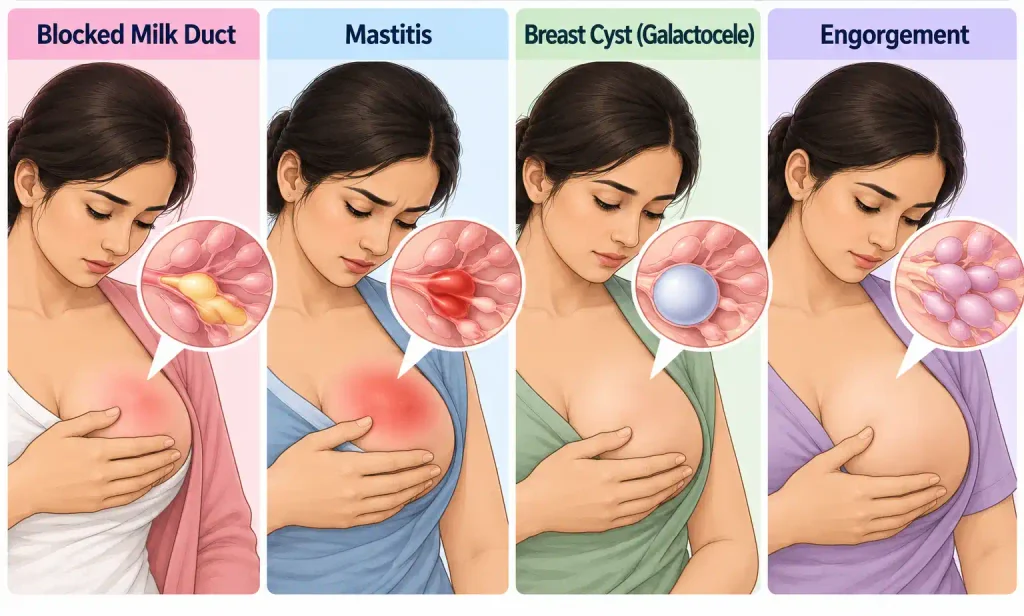
1. Blocked Milk Duct
A blocked duct, sometimes called a clogged or plugged duct, happens when milk isn’t clearing properly from one part of the breast. The tissue around that duct backs up, creating a tender, sometimes hard lump. Typical signs include:
- A localised lump, usually in one spot rather than spread across the breast
- Tenderness that eases somewhat after a feed or pumping session
- No fever or only a very mild, low grade one
- The lump shrinking gradually over a day or two with frequent nursing
Blocked ducts respond well to warm compresses before feeding, gentle massage toward the nipple, and making sure your baby is latching properly. Most clogged ducts clear within a day or two of consistent, effective milk removal.
2. Mastitis
Mastitis is inflammation of breast tissue, and it can happen with or without an actual infection. It often develops when a blocked duct isn’t cleared and the surrounding tissue becomes inflamed.
“Mothers often tell me they thought the lump was ‘just a blocked duct,’ then woke up the next morning with fever and chills. That jump from a sore lump to flu like symptoms is the clearest sign of mastitis, and it’s when I want to see you, not wait it out at home.” — Dr Balvin Kaur Ghai
Mastitis typically brings:
- A wedge shaped, red, warm area on the breast
- Pain that can be sharp or burning
- Fever, chills, and a generally unwell, flu like feeling
- A lump that feels harder and more diffuse than a simple blocked duct
The NHS advises continuing to breastfeed or express through mastitis, since stopping suddenly can make the blockage worse. If symptoms don’t improve within a day of home care, or if you develop a fever, you’ll usually need antibiotics from a doctor.
3. Breast Cyst (Galactocele) While Breastfeeding
A galactocele is a milk filled cyst that forms when a duct gets blocked over a longer stretch of time. Unlike mastitis, these lumps are usually:
- Round and smooth, with well defined edges
- Movable under the skin rather than fixed in place
- Painless, or only mildly tender
- Slow to change, sometimes staying the same size for weeks
Cysts are confirmed with an ultrasound and are often simply monitored, since many shrink or resolve once breastfeeding ends. Larger or uncomfortable ones can be drained with a fine needle in a clinic setting.
4. Engorgement
Engorgement is a full breast fullness and firmness, usually affecting both breasts rather than one small area. It happens when milk builds up faster than your baby is removing it, often in the early weeks or after a missed feed. Frequent nursing, hand expression, and cold compresses between feeds usually bring quick relief.
Blocked Duct vs Mastitis vs Cyst: Quick Comparison
| Feature | Blocked Duct | Mastitis | Breast Cyst (Galactocele) |
|---|---|---|---|
| Location | One small, localised area | Wedge shaped, spreading area | Round, well defined spot |
| Pain | Mild to moderate | Moderate to severe | Usually mild or none |
| Skin changes | Rare | Redness, warmth | Rare |
| Fever | Uncommon | Common | Absent |
| Feel after feeding | Softens or shrinks | May stay firm | Usually unchanged |
| Typical timeline | Clears in 1–2 days | Needs treatment within 24–48 hours | Weeks, often monitored |
When a Breast Lump Needs More Than Home Care
Most breastfeeding lumps are harmless, but a small number aren’t, and self diagnosis is where women run into trouble. Book an appointment promptly if you notice:
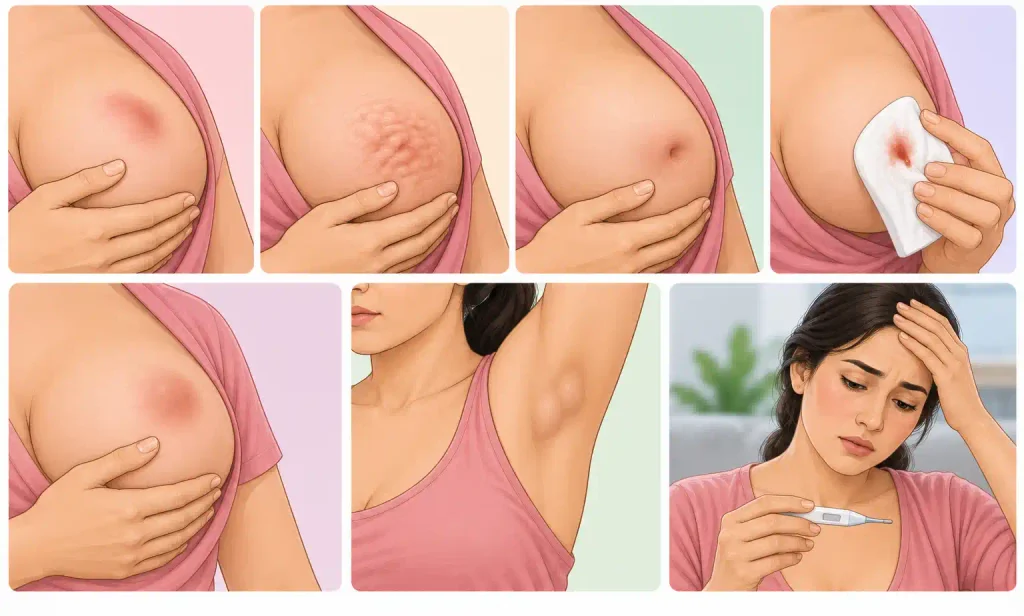
- A lump that hasn’t changed after a full week of frequent feeding and warm compresses
- Skin dimpling, puckering, or an orange peel texture over the lump
- A nipple that has recently turned inward
- Bloody or clear discharge from the nipple, unrelated to milk
- A lump that feels hard, fixed, and doesn’t move under your fingers
- Swollen lymph nodes in the armpit alongside the breast lump
- Fever above 101°F that doesn’t settle within 24 hours despite home care
None of these signs automatically mean cancer. Breast cancer during breastfeeding is uncommon, but it does happen, and inflammatory breast cancer in particular can look a lot like mastitis in its early stages. That overlap is exactly why a lump that doesn’t behave like a typical blocked duct deserves a clinical examination rather than another week of “wait and watch.”
How a Breast Lump Is Diagnosed During Breastfeeding
A proper work up usually starts with a physical exam, where your doctor checks the lump’s size, texture, mobility, and whether it changes before and after a feed. From there, imaging and lab tests fill in the picture. Breast ultrasound is the go to first test for lactating women, since it doesn’t use radiation and is considered safe throughout breastfeeding. It’s particularly good at telling a fluid filled cyst apart from a solid lump, which changes the entire treatment plan.
A local ultrasound centre with experience in breastfeeding patients can usually get you answers within the same visit. If infection is suspected, your doctor may also send milk or blood samples to a lab. Reliable, quick turnaround from a good pathology lab matters here, since starting the right antibiotic early shortens recovery considerably. In rare cases where a lump looks suspicious on ultrasound, a mammogram or a needle biopsy may follow for a definite diagnosis.
Treatment Options for a Breast Lump While Breastfeeding
Treatment depends entirely on the cause, which is another reason a proper diagnosis matters more than home remedies alone.
- Blocked duct: frequent feeding or pumping, correcting latch, warm compresses before feeding, gentle massage
- Mastitis: continued milk removal, rest, fluids, pain relief, and antibiotics if symptoms don’t ease within a day or if fever develops
- Galactocele: observation in most cases, or needle drainage if it’s large or uncomfortable
- Recurrent or unresolved abscess: minor drainage procedure under local anaesthesia
- Suspicious or persistent lumps: further imaging, biopsy, and a clear management plan based on the result
If a lump does need surgical evaluation, it helps to be seen somewhere set up specifically for breast concerns. Our breast lump surgery page covers what to expect from consultation through to procedure, including cost and recovery details for patients in Mohali and across Punjab.
Finding a Breast Specialist in Mohali and Chandigarh
Breastfeeding mothers in Mohali, Chandigarh, and across the tricity often put off getting a lump checked because appointments feel like one more thing to squeeze into an already packed day. A same day or next day slot with a breast specialist Chandigarh families already trust can save weeks of unnecessary worry.
At CLAGS, evaluation for a breast lump typically includes a same visit clinical exam, guidance on whether ultrasound is needed, and a clear next step, whether that’s simple home care, a short course of antibiotics, or referral for imaging. Explore more about our approach and background on our about page, or go ahead and book an appointment directly if you’d rather get it looked at than keep reading about it.
Final Thought
A breast lump while breastfeeding is common, and in most Mohali mothers I see, it turns out to be a blocked duct or straightforward mastitis that clears with the right home care and, occasionally, a short course of antibiotics. The part that matters most is paying attention to how the lump behaves over the following few days.
If it softens with feeding and fades within a week, you’re likely dealing with something routine. If it doesn’t, or if anything about it feels different from what’s described here, get it examined rather than waiting for reassurance from Google. That single decision is usually what separates an easy fix from a delayed diagnosis.
Frequently Asked Questions
1. What Causes a Breast Lump While Breastfeeding?
Most lumps during breastfeeding come from blocked milk ducts, mastitis, engorgement, or milk filled cysts called galactoceles. Less commonly, a lump can be a fibroadenoma or another growth unrelated to lactation, which is why a lump that doesn’t fit the usual pattern still needs a check.
2. Is a Breast Lump While Breastfeeding Normal?
Some lumpiness is genuinely normal, since breast tissue swells and softens throughout the day as milk fills and empties. It only becomes a concern when a lump is persistent, painful, growing, or accompanied by fever, skin changes, or nipple discharge.
3. Can a Blocked Milk Duct Cause a Hard Breast Lump?
Yes, a blocked duct commonly feels like a firm, tender lump in one specific area of the breast. It usually softens or shrinks after a feed or pumping session, which helps tell it apart from other causes.
4. How Can You Tell If a Lump Is From a Blocked Milk Duct?
A blocked duct lump tends to stay in one small spot, feels tender rather than intensely painful, and eases somewhat after feeding. There’s usually little or no fever, and the lump gradually reduces over a day or two with frequent nursing and warm compresses.
5. Can Mastitis Cause a Painful Breast Lump While Breastfeeding?
Mastitis often causes a firmer, more widespread lump along with redness, warmth, and significant pain, sometimes described as burning. It’s frequently paired with fever and flu like symptoms, which sets it apart from a simple blocked duct.
6. Can a Breast Cyst Develop While Breastfeeding?
Yes, a milk filled cyst known as a galactocele can form when a duct stays blocked over time. These lumps are usually round, smooth edged, and movable, and they’re often painless compared to mastitis or an active blocked duct.
7. What Does a Breast Lump During Breastfeeding Feel Like?
The feel of the lump depends on its cause. A blocked duct tends to feel firm and tender in one localised spot, mastitis feels harder and more spread out with warmth and redness, and a cyst often feels round, soft edged, and easy to move under your fingers.
8. Why Does My Breast Lump Not Go Away After Breastfeeding or Pumping?
If a lump stays the same size after several feeding sessions and warm compresses, it may not be a simple blocked duct anymore. This is one of the clearest signals that it’s time for a clinical exam rather than continuing home care alone.
9. Can a Breast Lump While Breastfeeding Be Something Other Than a Blocked Duct or Mastitis?
Yes, though it’s less common. Fibroadenomas, other benign growths, and rarely breast cancer can all occur during breastfeeding, so a lump that doesn’t behave typically, especially one that’s growing or fixed in place, should always be examined properly.
10. When Should You See a Doctor for a Breast Lump While Breastfeeding?
See a doctor if a lump doesn’t improve after a week of home care, if you develop fever that doesn’t settle within a day, or if you notice skin dimpling, nipple retraction, or unusual discharge. A lump that feels hard and fixed rather than movable also needs prompt review.
11. Can Breast Cancer Cause a Lump While Breastfeeding?
Breast cancer during breastfeeding is uncommon but does occur, and inflammatory breast cancer can sometimes mimic mastitis in its early stages. This overlap is exactly why a lump that fails to improve with standard treatment should be reassessed rather than assumed to be infection alone.
12. How Is a Breast Lump Diagnosed During Breastfeeding?
Diagnosis usually starts with a physical exam, followed by an ultrasound if the lump doesn’t have a clear, typical explanation. Depending on findings, your doctor may also order lab tests or, in select cases, a mammogram or needle biopsy for a definite answer.
13. Is Breast Ultrasound Safe While Breastfeeding?
Yes, ultrasound uses sound waves rather than radiation and is considered safe throughout breastfeeding. It’s the preferred first imaging test for lactating women because it clearly distinguishes a fluid filled cyst from a solid lump.
14. How Is a Breast Lump While Breastfeeding Treated?
Treatment depends on the cause. Blocked ducts usually respond to frequent feeding and warm compresses, mastitis is treated with continued milk removal plus antibiotics if needed, and cysts are often simply monitored or drained if uncomfortable. Persistent or suspicious lumps may need further imaging or a minor procedure.
15. Do You Need to Stop Breastfeeding If You Have a Breast Lump?
No, in almost all cases you should keep breastfeeding or expressing, since regular milk removal actually helps clear blocked ducts and mastitis faster. Stopping abruptly can worsen engorgement and increase the risk of infection, so only stop if a doctor specifically advises it for your situation.