
A large number of women who come in for a routine pelvic ultrasound in their 30s learn, almost by accident, that they have at least one uterine fibroid growing quietly inside the womb.
Most never felt a single symptom. This is one of the strange things about fibroids: they can sit inside the uterus for years without announcing themselves, and then suddenly cause heavy bleeding, pressure, or pain that sends a woman searching for answers late at night. Uterine fibroids are extremely common, and understanding them early changes how manageable they turn out to be. If your periods have felt heavier or longer than usual lately, it is worth reading through the signs of uterine fibroids below before assuming it is nothing.
This article is reviewed with input from Dr. Balvin Kaur Ghai, a practising gynaecologist in Mohali who evaluates and treats fibroid cases across the Chandigarh Tricity region.
Key Takeaways
Uterine fibroids are benign growths in or around the uterus, not cancer, and most women who have them never develop symptoms.
Heavy periods, pelvic pressure, and frequent urination are the three symptoms women notice most often, yet many dismiss them as normal period trouble.
Not every fibroid needs surgery. Size, location, and the symptoms it causes decide the right treatment path.
Left unchecked, a fibroid that starts the size of a lemon can grow to a kilogram or more over a few years.
Fibroids rarely stop a pregnancy, but their size and position matter, so evaluation before conception is worth it.
What Are Uterine Fibroids and Why Do They Form in the Uterus?
Uterine fibroids, also called myomas or leiomyomas, are benign growths made of muscle and fibrous tissue that develop within the wall of the uterus. They are not cancer, and they almost never turn into cancer. What makes them tricky is how differently they behave from one woman to the next.
One woman might carry a small fibroid her entire life without knowing it exists, while another develops several that distort the shape of her uterus within a couple of years. Oestrogen and progesterone, the two hormones that control the menstrual cycle, are strongly linked to why fibroids form and grow, which is why they tend to develop during the reproductive years and often shrink after menopause. Cleveland Clinic notes that fibroids affect roughly 40 to 80 percent of people with a uterus at some point, most commonly between the ages of thirty and fifty, which makes them one of the most common gynaecological conditions rather than a rare finding.
What Are the Early Fibroid Symptoms Women Often Ignore?
Symptoms depend heavily on the size and position of the fibroid, and this is exactly why so many women miss the early signs. Recognising early symptoms of fibroids earlier rather than later usually means a simpler treatment path. The most commonly reported signs include:
- Periods that last longer than seven days or soak through pads within an hour
- A dragging or heavy sensation in the lower abdomen, especially by evening
- Needing to urinate frequently, even when very little urine comes out
- Constipation or a feeling of fullness caused by pressure on the bowel
- Pain during intercourse or a dull backache that will not go away
Doctors often group these by how they show up in daily life:
- Silent fibroids that cause no symptoms at all and are found only on a routine scan
- Moderate fibroids that cause heavier periods and mild pelvic discomfort
- Advanced fibroids that cause visible abdominal swelling, anaemia, or sharp pain
Do Different Fibroid Types Affect Treatment Choices?
Yes, and this is one of the most overlooked parts of fibroid care. A fibroid’s location inside the uterus often matters more than its size when a gynaecologist decides on treatment.
| Type | Where It Grows | Typical Effect |
|---|---|---|
| Intramural | Within the muscular wall of the uterus | Most common type, can enlarge the uterus and cause heavy bleeding |
| Submucosal | Just under the inner lining, bulging into the uterine cavity | Strongly linked to heavy bleeding and fertility difficulty |
| Subserosal | On the outer surface of the uterus | Can grow very large and press on the bladder or bowel |
| Pedunculated | Attached by a thin stalk, inside or outside the uterus | Less common, can twist and cause sudden sharp pain |
What Causes Fibroids and Who Is Most at Risk?
No single cause explains every case, but certain patterns show up again and again in clinic. A family history of fibroids, obesity, never having been pregnant, and starting periods before the age of eleven all raise the risk. Vitamin D deficiency, which is extremely common in North Indian women who spend most daylight hours indoors, has also been linked to faster fibroid growth in several studies. Diets heavy in red meat and processed food, combined with chronic stress, appear to accelerate the process as well, though the exact mechanism is still being studied.
How Are Fibroids Diagnosed?
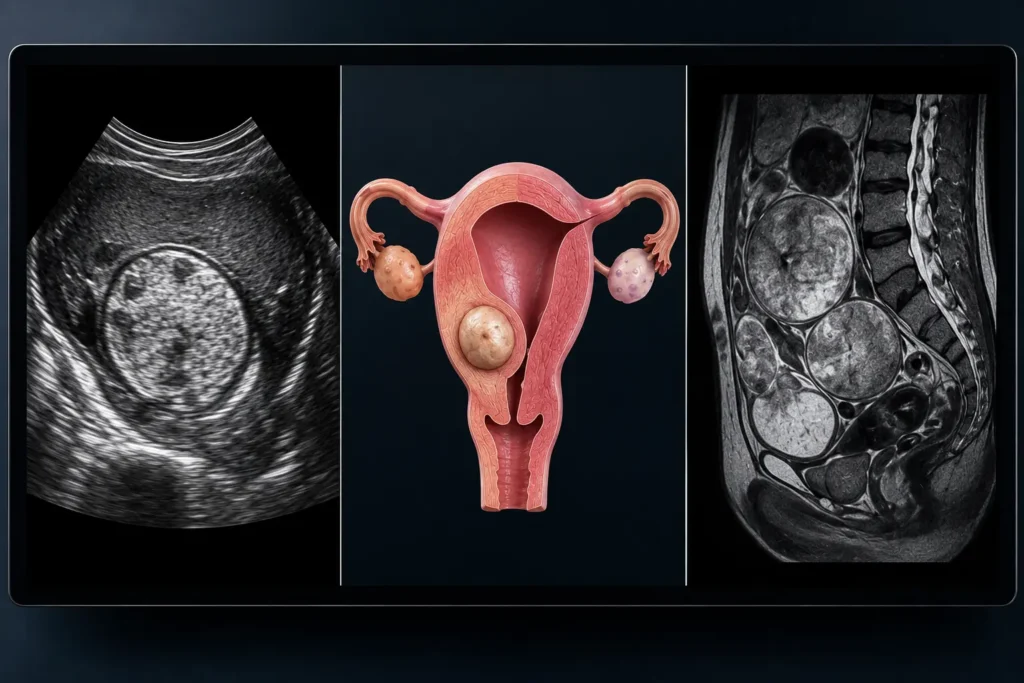
A pelvic ultrasound is usually the first and most reliable step, and it can confirm the number, size, and position of every fibroid in a single sitting. Anyone with a family history of uterine fibroids should consider getting a baseline scan at a well equipped ultrasound centre in Mohali, even without symptoms. When the picture is unclear, or when a fibroid is deep inside the uterine cavity, an diagnostic hysteroscopy gives a direct camera view of the uterine lining. An MRI is occasionally added before major surgery, mainly to map out fibroids that are too numerous or too large for ultrasound alone to measure accurately.
When Do Fibroids Actually Need Treatment, and When Can They Be Left Alone?
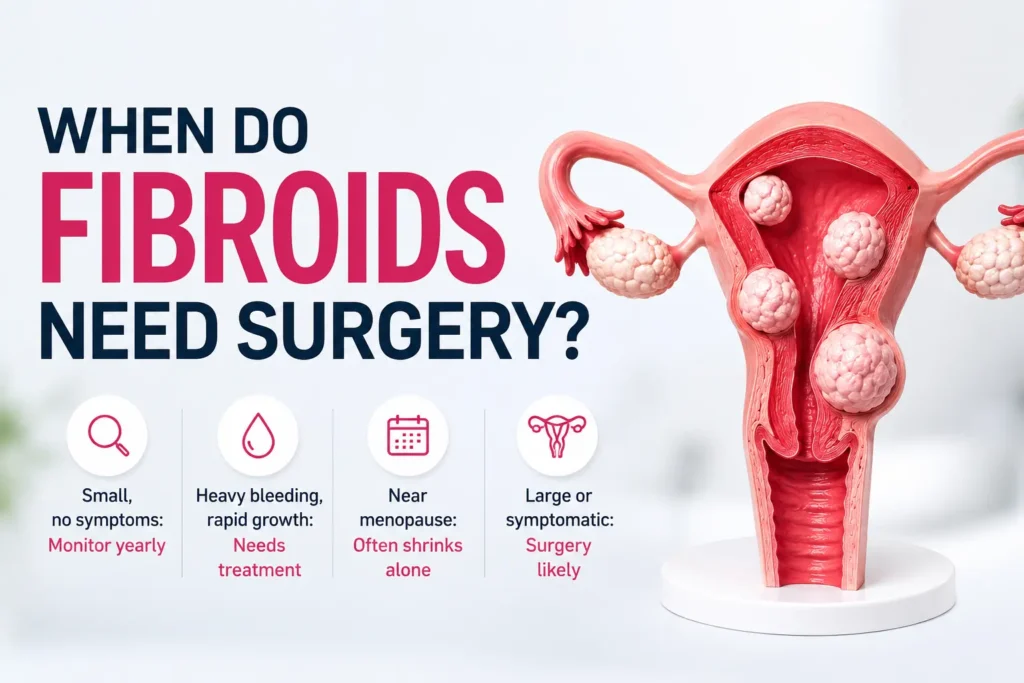
This is the question almost every patient asks first, and the honest answer is that treatment depends entirely on symptoms, not on the mere presence of a fibroid.
- Treatment can usually wait if the fibroid is small, causes no bleeding or pain, and was found incidentally on a scan.
- Treatment becomes necessary once periods start causing anaemia, daily activities are disrupted, or the fibroid is growing rapidly across follow up scans.
- Fibroids close to menopause often shrink on their own as oestrogen levels fall, so watchful waiting is sometimes the wisest option for older patients.
What Are the Treatment Options for Fibroids?
Treatment ranges from simple medication to surgery, and the right choice depends on symptom severity, fibroid size, and whether the woman still wants to conceive.
| Approach | Best Suited For | What It Involves |
|---|---|---|
| Medication | Mild symptoms, smaller fibroids | Hormonal tablets or injections to control bleeding and slow growth |
| Laparoscopic myomectomy | Women who want to preserve fertility | Fibroids removed through small keyhole incisions, uterus is preserved |
| Hysteroscopic resection | Fibroids bulging into the uterine cavity | Removed through the vagina with no external cuts |
| Hysterectomy | Women who have completed their family | Complete removal of the uterus, considered a definitive solution |
Most patients at our clinic who still wish to conceive are guided toward laparoscopic gynaecological surgery, since it removes the fibroid while keeping the uterus intact and recovery is noticeably faster than open surgery.
Can Fibroids Grow Very Large? Understanding 1 kg, 2 kg and Bigger Cases
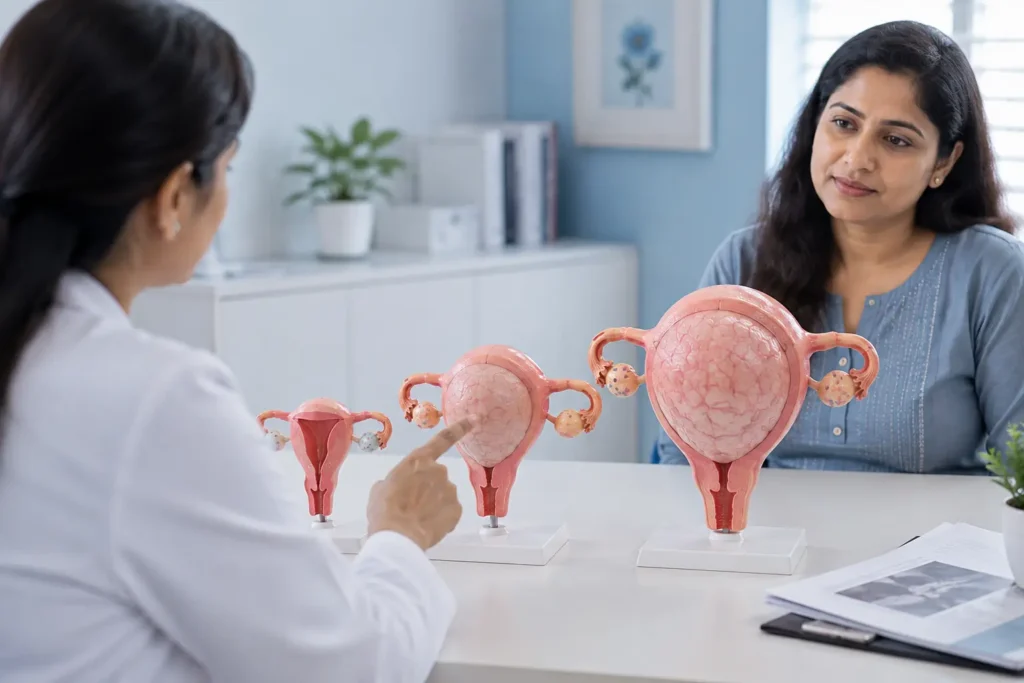
Yes, and this surprises most patients. A fibroid that starts no bigger than a grape can, over several years of being ignored, grow to the size of a small watermelon and weigh well over a kilogram. We have operated on fibroids weighing close to two kilograms in women who assumed their swollen abdomen was simply weight gain. How large fibroids can grow depends mainly on how long they go unmonitored, which is exactly why an annual pelvic scan matters even without symptoms. Once a fibroid crosses a certain size, surgery generally becomes the only realistic option, since medication has little effect on a mass that large.
What Happens If Fibroids Are Left Untreated?
Small, symptom free fibroids rarely cause harm if they are monitored. But fibroids that are already causing heavy bleeding tend to get worse, not better, over time. Chronic blood loss can lead to significant anaemia, leaving a woman constantly fatigued without realising why. Large untreated fibroids can also distort the uterine cavity enough to make conception difficult or increase the risk of miscarriage, which is why ignoring persistent symptoms rarely pays off.
Do Uterine Fibroids Affect Fertility and Pregnancy?
Most women with fibroids conceive and carry a pregnancy without complications. The concern arises mainly with submucosal fibroids, which sit inside the uterine cavity and can interfere with an embryo implanting properly. According to the NHS, fibroids can occasionally change the shape of the uterus in ways that raise the risk of complications such as premature labour, so fibroids and pregnancy planning benefits from an early pregnancy checkup by gynaecologist, particularly for women who already know they have one or more fibroids. Anyone trying to conceive with known uterine fibroids should ideally get this checked a few months ahead rather than after a pregnancy is already confirmed.
What Is the Cost of Fibroid Removal Surgery?
Fibroid surgery cost depends on several factors, and it is worth understanding each one before comparing prices between clinics:
- The surgical approach chosen, since laparoscopic and hysteroscopic procedures are priced differently from open surgery
- The number and size of the fibroids being removed
- Whether the uterus is being preserved or removed entirely
- The hospital’s facilities, theatre time, and the type of anaesthesia used
A personalised estimate after an ultrasound is always more useful than relying on an average figure found online, so anyone budgeting for treatment of uterine fibroids should ask for a written estimate at the first consultation itself.
Recovery After Fibroid Surgery: What to Expect
Recovery timelines vary by procedure, and this is another reason anyone diagnosed with uterine fibroids should discuss the specific approach with their surgeon before comparing notes with someone else’s experience.
| Procedure | Back to Light Activity | Full Recovery |
|---|---|---|
| Hysteroscopic resection | 2 to 3 days | 1 week |
| Laparoscopic myomectomy | 1 to 2 weeks | 4 to 6 weeks |
| Open myomectomy or hysterectomy | 3 to 4 weeks | 6 to 8 weeks |
Why I Recommend Timely Fibroid Evaluation
In my years of practice, the pattern I see most often is a woman who waited two or three years before getting her heavy periods checked, simply because she assumed it was normal. By the time she came in, the fibroid had grown large enough that a simple, fertility preserving procedure was no longer possible. I always tell my patients that a fibroid found early gives you options. A fibroid found late often takes those options away. If your periods have changed, or if you feel unusual pressure low in your abdomen, please do not wait for the next scheduled checkup. Book an ultrasound sooner.
Dr. Balvin Kaur Ghai, Founder and Lead Gynae, CLAGS Centre for Laser Aesthetics and Gynaecology Services, Mohali
Can Diet and Lifestyle Changes Help Manage Fibroids?
Diet will not shrink an existing fibroid, but it can influence how quickly new ones develop. A fibroid diet built around leafy greens, fruit, and fibre, while cutting back on red meat and highly processed food, has been associated with a lower risk of fibroid growth in several studies. Regular movement helps regulate oestrogen levels too, and maintaining a healthy weight remains one of the few genuinely modifiable risk factors available to most women.
Are There Home Remedies for Fibroids That Actually Work?
Search for this topic online and dozens of remedies show up, from turmeric to castor oil packs. The honest truth is that none of these shrink an existing fibroid, though a few, like reducing caffeine and managing stress, can ease symptoms like bloating and cramping. Home remedies for fibroids are worth exploring for comfort, but they should never replace a scan or delay treatment once symptoms are already disrupting daily life.
Fibroid Treatment in Mohali, Chandigarh and the Tricity Region
Women travelling to us from Chandigarh, Panchkula, and even Ambala often tell us the same thing: they struggled to find a gynaecologist locally who treats uterine fibroids as a specific area of focus rather than one item on a long general list. Fibroid treatment in Mohali at our clinic is built around same day ultrasound reporting, so a woman does not have to make a second trip just to get a diagnosis confirmed. For patients from the wider Chandigarh Tricity catchment, we coordinate the ultrasound, consultation, and, where needed, surgical planning within a single visit wherever possible, since we know most women are not travelling from just around the corner.
Frequently Asked Questions
Can a uterine fibroid turn into cancer?
It is extremely rare. The vast majority of fibroids remain benign for life, and the cancerous form, called leiomyosarcoma, is uncommon enough that doctors do not routinely test for it unless a fibroid grows unusually fast.
Can fibroids disappear on their own?
They can shrink, particularly after menopause when oestrogen drops, but they rarely vanish completely while a woman is still menstruating regularly.
Is it normal to have multiple fibroids at once?
Yes, it is actually more common than having just one. Some women have a single dominant fibroid alongside several smaller ones that cause no symptoms at all.
Can a fibroid cause weight gain?
A fibroid itself does not add fat, but a large one can make the abdomen look swollen or bloated, which is often mistaken for weight gain.
Do fibroids come back after myomectomy?
New fibroids can develop over time, since the surgery removes existing growths but does not change the underlying hormonal environment that caused them.
Can I get pregnant naturally with fibroids?
Most women can, especially with fibroids outside the uterine cavity. Submucosal fibroids are the ones most likely to need treatment first.
What size fibroid needs surgery?
There is no fixed number. A small fibroid causing severe bleeding may need surgery, while a much larger one causing no symptoms may not.
Is laparoscopic surgery painful?
Discomfort is usually mild and well controlled with medication, since the incisions are small compared to open surgery.
How soon can I resume work after fibroid surgery?
Most women return to desk based work within one to two weeks after laparoscopic surgery, though physically demanding jobs need a longer break.
Can fibroids affect periods even without pain?
Yes. Heavier or longer periods are often the only sign, especially with intramural or submucosal fibroids, even when there is no pain at all.