
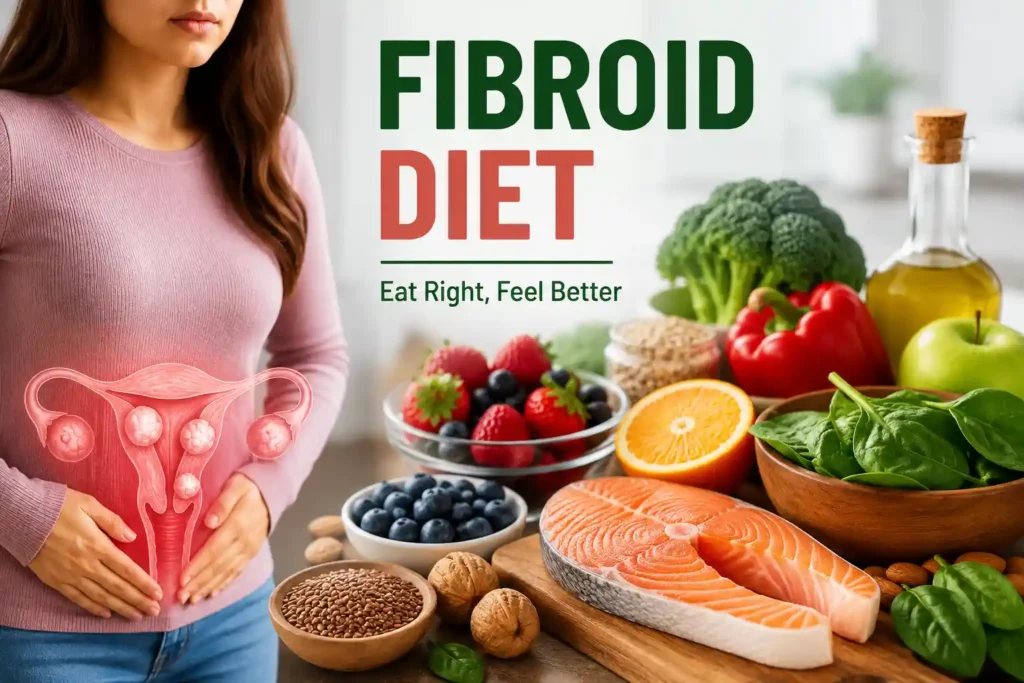
If you have just been told you have uterine fibroids, one of your first questions is probably about food. Can a fibroid diet actually shrink fibroids, or slow them down? It is a fair question and the honest answer is that diet alone cannot cure fibroids. But the right fibroid diet can lower your risk, ease symptoms and support your body while you decide on the best treatment path with your gynaecologist.
At CLAGS in Mohali, we meet women every week who are looking for practical, food-based answers before considering surgery. We explain what to eat, what to limit and why it matters, backed by real research and years of clinical experience.
Key Takeaways
- A fibroid-friendly diet will not cure fibroids, but it can help manage estrogen levels, weight and inflammation, three factors linked to fibroid growth.
- Uterine fibroids are common among women, with research showing that up to 70% to 80% of women may develop fibroids by age 50.
- Diets high in red meat and low in vegetables are linked to higher fibroid risk, while fibre and antioxidant-rich foods appear to offer some protection.
- Fibre helps your body clear excess estrogen, which is one of the main hormones that feeds fibroid growth.
- Body weight, vitamin D levels and stress all play a role alongside diet, so a fibroid-friendly diet works best as part of a broader healthy lifestyle.
Understanding the Fibroid Diet Connection
Fibroids are non-cancerous growths that form in or around the uterus. They are extremely common and most women will never need surgery for them. But their growth is closely tied to estrogen and estrogen levels are shaped by what you eat, how much you weigh and how your body processes hormones.
This is why a fibroid diet matters. Food will not switch fibroids off completely, but it changes the internal environment they grow in. Less estrogen-driving fat, more fibre to clear excess hormones and fewer inflammatory foods can genuinely tip the balance in your favour.
“What you eat changes the internal environment your uterus relies on. By prioritizing high-fibre foods and cutting back on inflammatory triggers, you create an environment that actively resists excessive hormonal stimulation.” – Dr Balvin Kaur Ghai
Can Certain Foods Increase the Risk of Fibroids?
Yes, some foods appear to raise fibroid risk. Research published in the journal Obstetrics & Gynecology compared women with fibroids to women without them and found that regular red meat and ham consumption was linked to a noticeably higher risk, while women who ate more green vegetables had a lower risk.
This does not mean red meat causes fibroids on its own. But it does suggest that a diet heavy in processed and red meat, combined with low vegetable intake, creates conditions where fibroids are more likely to develop or grow faster.
Best Foods for Fibroids
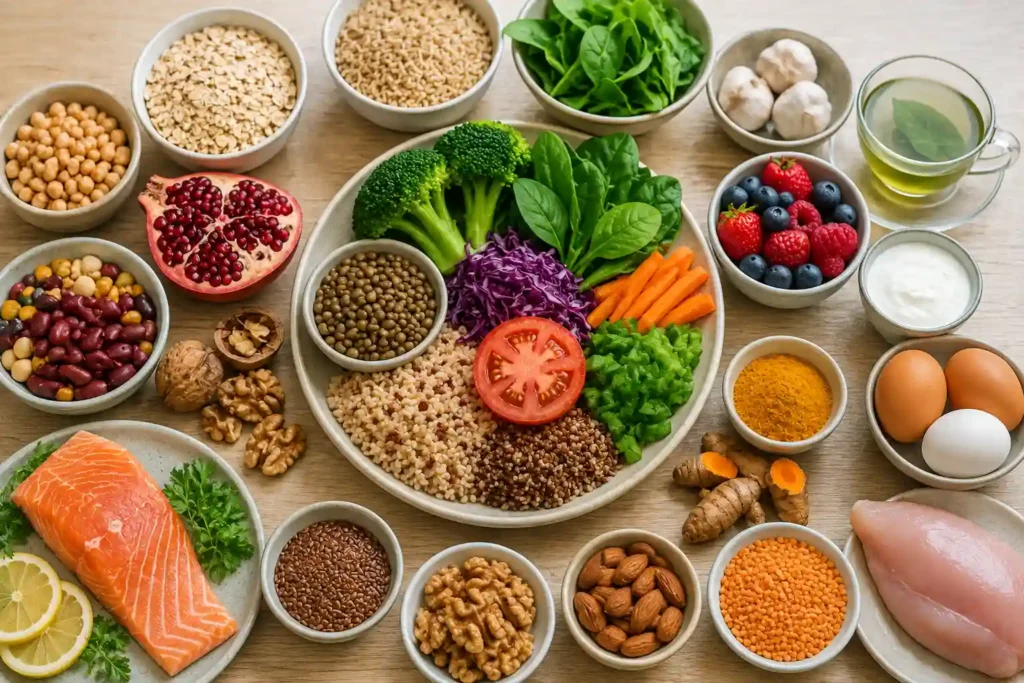
If you are building a fibroid-friendly diet, think in terms of colour, fibre and freshness. These are the food groups worth prioritising every day.
1. Fibre-Rich Foods
Fibre is one of the most important tools in any fibroid diet. It binds to excess estrogen in your gut and helps carry it out of your body before it can be reabsorbed. Good sources include:
- Whole grains such as oats, brown rice and whole wheat roti
- Legumes like rajma, chana and lentils (dal)
- Vegetables such as broccoli, cabbage and leafy greens
- Fresh fruit, especially apples, pears and citrus fruits
2. Antioxidant-Rich Foods
Antioxidants help calm the inflammation and oxidative stress that can encourage fibroid cells to grow. Berries, pomegranate, tomatoes, garlic and green tea are all rich in antioxidant compounds. Turmeric, a staple in most Indian kitchens, contains curcumin, which has shown promise in early research for its effect on fibroid tissue.
3. Vitamin D and Calcium-Rich Foods
Low vitamin D is common among women with fibroids and low-fat dairy, fortified milk and eggs can help. A short walk in the morning sun each day also supports your vitamin D levels naturally.
4. Healthy Fats and Lean Proteins
Fatty fish like salmon and sardines, along with flaxseed and walnuts, provide omega-3 fats that reduce inflammation. Choose lean proteins like fish, dal and skinless chicken over processed or fatty meats.
Foods to Avoid With Fibroids
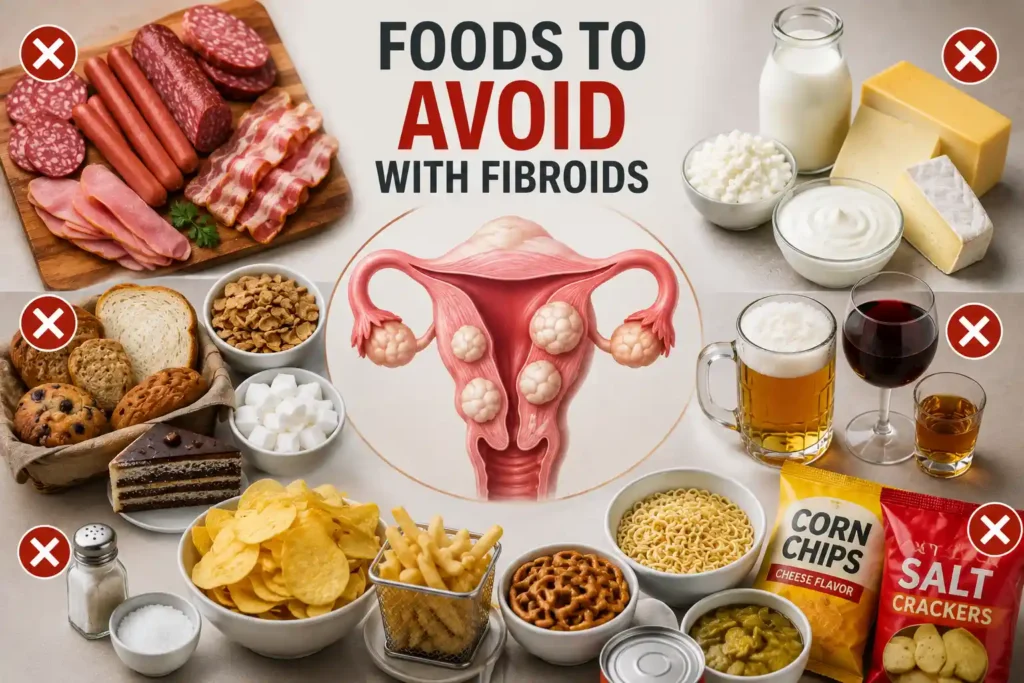
Just as some foods help, others may work against you. If you are managing fibroids, try to limit:
- Red and processed meat, including ham, sausages and bacon
- High-fat dairy, which can carry excess hormones
- Refined carbs and sugar, such as white bread, sweets and sugary drinks, which spike insulin
- Alcohol, particularly beer, which studies link to increased fibroid risk
- Excess salt and packaged snacks, which contribute to weight gain and bloating
None of this means you need to give up your favourite foods entirely. Cutting back gradually and swapping in fibroid-friendly alternatives is far more sustainable than an all-or-nothing approach.
Dietary Comparison: Making the Right Swaps
Making dietary changes does not require strict deprivation. Simple daily swaps can transform your metabolic and reproductive health over time.
| Food Category | Foods to Prioritize | Foods to Limit or Avoid |
|---|---|---|
| Proteins | Fish, dal, lean poultry, tofu | Red meat, ham, processed sausages |
| Dairy & Alternatives | Low-fat curd, fortified plant milk | Full-fat cheese, heavy cream |
| Carbohydrates | Whole oats, brown rice, quinoa | Maida, white bread, sugary cereals |
| Fruits & Veggies | Leafy greens, citrus, berries, broccoli | Sweetened fruit canned in syrup |
| Fats & Oils | Cold-pressed olive oil, flaxseed, walnuts | Deep-fried snacks, trans-fats |
| Beverages | Water, herbal teas, green tea | Alcohol, sugary sodas, energy drinks |
Can a Fibroid-Friendly Diet Help Prevent Fibroid Growth?
A fibroid-friendly diet cannot guarantee that fibroids will never form or grow, since genetics and hormones also play a big part. But it can reduce some of the risk factors within your control, especially excess weight and high estrogen exposure from diet.
“In our clinic, we see a real difference in symptom management when women pair a fibre-rich, antioxidant-rich diet with regular activity,” says Dr Balvin Kaur Ghai. “It will not replace treatment for larger fibroids, but it often makes the wait-and-watch period far more comfortable.”
Fibre and Fibroid Risk: Why It Matters
Fibre does two important jobs in a fibroid diet. First, it slows digestion and helps regulate blood sugar, which keeps insulin levels steady. High insulin has been linked to faster fibroid growth. Second, fibre binds to estrogen in the digestive tract so it leaves the body through stool rather than being recycled back into your bloodstream.
Most Indian diets already include good fibre sources like dal, sabzi, and whole grains. The goal is consistency, aim for fibre at every meal rather than just once a day.
Antioxidants and Fibroids: The Science
Antioxidants protect your cells from oxidative stress, a type of cellular damage that has been associated with fibroid growth. Foods rich in polyphenols and catechins, such as green tea, berries, and pomegranate, appear to have a mild antiproliferative effect on fibroid tissue in early studies.
While antioxidants are not a treatment on their own, adding a colourful mix of fruits and vegetables to your plate every day is one of the simplest, lowest-risk changes you can make.
Beyond Diet: Other Factors That Affect Fibroid Risk
Diet is powerful, but it works alongside other lifestyle factors. Here is what else matters.
1. Can Being Overweight Increase Fibroid Risk?
Yes. Fat tissue produces its own estrogen, so carrying extra weight can raise your overall estrogen levels and increase fibroid risk. Losing even a small amount of weight through diet and movement can help bring hormone levels closer to balance.
2. Can Vitamin D Deficiency Increase Fibroid Risk?
Several studies have linked low vitamin D levels to a higher likelihood of fibroids, and to larger fibroid size. Since much of North India, including Punjab, sees lower vitamin D levels than expected due to indoor lifestyles and pollution, it is worth asking your doctor for a simple blood test.
3. Can Stress Contribute to Fibroid Growth?
Chronic stress raises cortisol, which can disrupt the hormonal balance that keeps estrogen in check. While stress alone does not cause fibroids, poor sleep and constant stress can make symptoms like pain and heavy bleeding feel worse. Simple daily habits like short walks, breathing exercises, or even ten minutes of quiet time can help.
Healthy Lifestyle Changes to Reduce Fibroid Risk
A fibroid diet works best as part of a wider healthy lifestyle. Alongside your food choices, try to:
- Get at least 30 minutes of movement most days, even a brisk walk counts
- Aim for 7 to 8 hours of sleep to support hormone balance
- Cut back on alcohol, especially beer
- Manage stress through activities you actually enjoy
- Keep regular gynaecology check-ups, especially if fibroids run in your family
When Diet Isn’t Enough: Talk to a Gynaecologist
If you are already experiencing heavy periods, pelvic pain, or pressure, diet changes alone may not be enough, and that is completely normal. Understanding the causes of fibroids and recognising early fibroid symptoms early can make treatment simpler and less invasive.
Many women also explore home remedies for fibroids alongside diet before considering procedures. If your fibroids are large or symptomatic, it helps to understand your fibroid surgery options and costs in advance, so you can make an informed decision without pressure.
At CLAGS, women from Mohali, Chandigarh, Zirakpur, Kharar, and across the Tricity region come to us for honest, personalised guidance, whether that means diet counselling, monitoring, or surgical care when it is truly needed.
Final Thoughts
A thoughtful fibroid diet will not replace medical care, but it puts real, everyday power back in your hands. Small, consistent changes, more fibre, more colour on your plate, less red meat and sugar, add up over months and years.
If you are in Mohali, Chandigarh, Kharar, Zirakpur, or anywhere across Punjab and want a personalised diet and treatment plan for fibroids, the team at CLAGS is here to guide you with honest, experience-backed care.
Frequently Asked Questions
1. Can certain foods increase the risk of fibroids?
Yes. Diets high in red meat and processed meat are linked to a higher fibroid risk, while diets rich in vegetables and fruit appear protective. Food alone does not cause fibroids, but it does influence the hormonal environment they grow in.
2. What are the best foods for fibroids?
Fibre-rich whole grains, legumes, leafy greens, fresh fruit, antioxidant-rich foods like berries and green tea, and healthy fats from fish and nuts are among the best foods for fibroids. These support hormone balance and reduce inflammation.
3. What foods should you avoid with fibroids?
Try to limit red and processed meat, high-fat dairy, refined sugar, alcohol, and heavily packaged or fried foods. These can raise estrogen levels or contribute to weight gain, both of which are linked to fibroid growth.
4. Can a fibroid-friendly diet help prevent fibroid growth?
It can reduce some risk factors, particularly excess weight and high estrogen exposure, but it cannot guarantee prevention since genetics also play a role. Diet works best combined with regular monitoring and medical guidance.
5. Can eating more fibre help reduce the risk of fibroids?
Yes. Fibre helps your body remove excess estrogen through digestion instead of reabsorbing it, and it also helps regulate insulin, which is linked to fibroid growth. Whole grains, dal, and vegetables are easy ways to add more fibre daily.
6. Can antioxidant-rich foods help with fibroids?
Antioxidants in foods like berries, pomegranate, and green tea may help reduce the oxidative stress associated with fibroid growth. They are not a cure, but they are a low-risk, helpful addition to a fibroid diet.
7. Can being overweight increase the risk of fibroids?
Yes. Fat tissue produces additional estrogen, and higher estrogen levels are directly linked to fibroid development and growth. Maintaining a healthy weight through diet and activity can help lower this risk.
8. Can vitamin D deficiency increase the risk of fibroids?
Research suggests women with lower vitamin D levels are more likely to develop fibroids, and their fibroids may grow larger. A simple blood test can check your levels if you are concerned.
9. Can stress contribute to fibroid growth?
Chronic stress can affect hormone balance through raised cortisol levels, which may worsen fibroid symptoms like pain and bleeding, even if it does not directly cause fibroids. Managing stress is a useful part of overall care.
10. Can lifestyle changes reduce the risk of developing fibroids?
Yes. Combining a fibre and antioxidant-rich fibroid diet with regular exercise, good sleep, limited alcohol, and stress management gives you the best chance of managing fibroid risk naturally.