
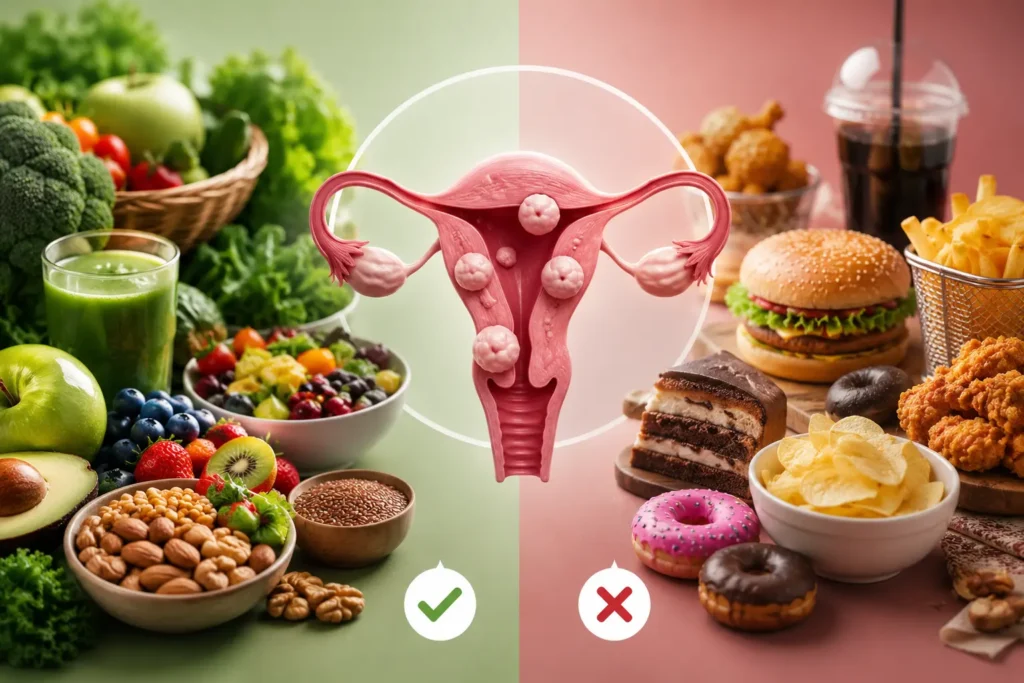
Many women ask us the same thing after a fibroid diagnosis: can I fix this with food? The honest answer is that diet cannot remove a fibroid that already exists, since a fibroid is made of muscle tissue, not something that simply dissolves with better eating. But what you eat can still make a real difference, both in how likely you are to develop new fibroids and in how your symptoms feel day to day. Dr. Balvin Kaur Ghai discusses diet with nearly every fibroid patient she sees, alongside the medical side of treatment.
This article is part of our complete guide to uterine fibroids, and it looks specifically at the fibroid diet, what helps, what to limit, and what the research actually supports.
Key Takeaways
- A fibroid diet will not shrink an existing fibroid, but it can lower your risk of developing new ones.
- Women who eat more fruits and vegetables tend to have a lower risk of fibroids, according to Harvard research.
- Red meat and high fat dairy are linked to higher fibroid risk, mainly through their effect on oestrogen.
- Vitamin D, fibre, and green tea all show promise in early research, though none are a guaranteed fix.
- Diet works best alongside proper diagnosis and treatment, not as a replacement for either.
Can Diet Actually Shrink a Fibroid?
No, and it is worth being upfront about this. Once a fibroid has formed, no food or supplement will make it disappear. What a good fibroid diet can do is support your hormone balance, reduce inflammation, and possibly slow the growth of new fibroids, which is genuinely useful even if it is not a cure.
Foods That May Help Lower Fibroid Risk
Fruits and vegetables come up again and again in fibroid research, and for good reason. A large Harvard study, the Nurses’ Health Study II, followed over 81,000 women and found that those eating four or more servings of fruit a day had a measurably lower risk of developing fibroids compared with women eating less than one serving a day, according to research published on PubMed. The likely reason is fibre. Fruits and vegetables help the body clear excess oestrogen through digestion, and oestrogen is the hormone that fuels fibroid growth in the first place.
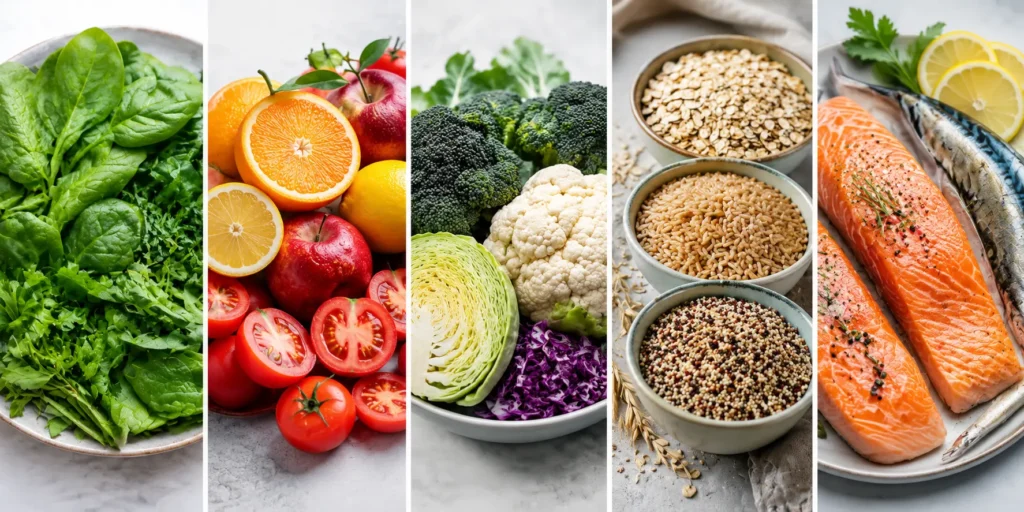
A good fibroid diet usually includes:
- a. Leafy greens such as spinach and methi, which are rich in fibre and antioxidants
- b. Citrus fruits like oranges and lemons, along with tomatoes and apples
- c. Cruciferous vegetables such as broccoli, cabbage, and cauliflower
- d. Whole grains like oats, brown rice, and quinoa in place of refined flour
- e. Fatty fish such as salmon or mackerel a few times a week, for omega 3
Vitamin D and Fibroid Risk
Vitamin D deserves its own mention here, since a growing body of research links low vitamin D levels with higher fibroid risk. Food alone rarely provides enough vitamin D, so most doctors recommend a simple blood test first, followed by safe sun exposure or a supplement if your levels are low. This is especially relevant in Punjab, where indoor working hours often limit natural sun exposure more than people realise.
Which Foods Should You Limit or Avoid?
Just as some foods appear to help, others are linked to higher fibroid risk or worse symptoms. A review of nutrition research published on NLM found that diets low in fruits and vegetables, combined with regular consumption of red meat and processed food, were consistently associated with a higher likelihood of fibroids across multiple studies.
| Food Group | Why It May Worsen Fibroids |
|---|---|
| Red and processed meat | Can raise circulating oestrogen levels over time |
| High fat dairy | Linked to hormone imbalance in some studies |
| Refined sugar and white flour | Spikes insulin, which may fuel fibroid growth |
| Alcohol | Can affect how the body processes oestrogen |
| Heavily processed snacks | Usually high in sodium and unhealthy fats |
Does Red Meat Really Make Fibroids Worse?
The evidence points that way, though it is not entirely settled. Several studies have found that women with fibroids report eating more red meat than women without them, likely because red meat can influence oestrogen levels in the body. Researchers are still working out exactly why, whether it is the saturated fat, the way the meat is processed, or something else entirely. This does not mean giving it up completely is necessary. Most doctors simply suggest cutting back to occasional servings and replacing it with fish, poultry, or plant proteins like lentils and chickpeas most of the week.
What About Dairy?
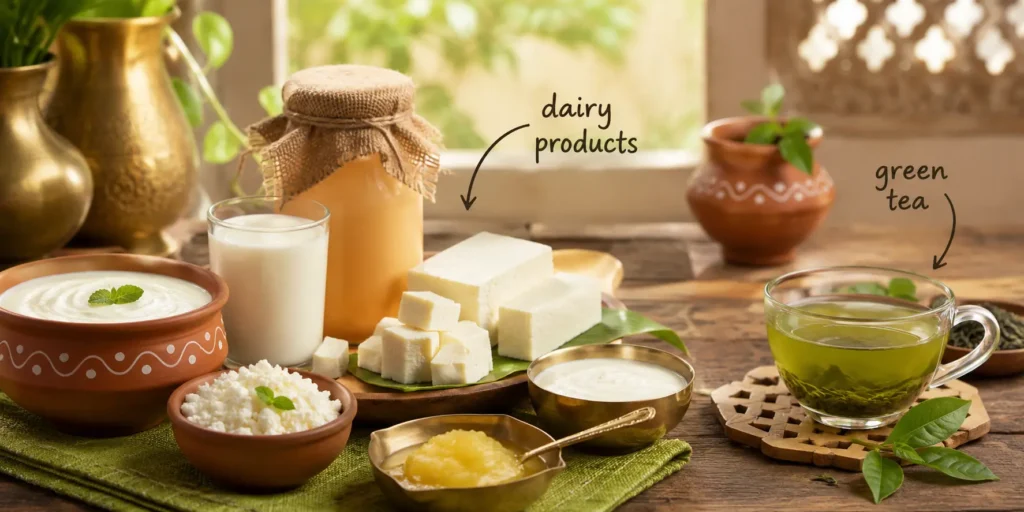
Dairy is a little more complicated than red meat. Some research actually suggests that low fat dairy, taken in moderate amounts, may be protective, while high fat dairy is more often linked to increased risk. If you enjoy dairy, choosing low fat curd, milk, or paneer over full fat versions is a reasonable middle ground.
Green Tea and Fibroids: Is There Real Evidence?
This is one of the more interesting areas of ongoing research. Green tea contains a compound called EGCG, which early laboratory studies suggest may slow the growth of fibroid cells. The research so far has mostly been done in a lab setting rather than in large groups of women, so it is promising rather than proven. Still, a cup or two of green tea a day is a low risk addition to a fibroid diet, even if the final verdict is still a few years away.
Does Weight Matter as Much as Specific Foods?
Yes, arguably more so. Body fat produces its own oestrogen, so maintaining a healthy weight often has a bigger overall effect on fibroid risk than any single food choice. The good news is that the same eating pattern that supports a healthy weight, plenty of vegetables, moderate protein, and fewer processed foods, is also the pattern that research links to lower fibroid risk. The two goals line up naturally, which makes this easier than it might sound.
A Simple Sample Meal Plan
| Meal | What to Include |
|---|---|
| Breakfast | Oats or vegetable poha with a citrus fruit on the side |
| Lunch | Brown rice or roti, dal or fish, and a large portion of green vegetables |
| Evening | Green tea instead of a second or third cup of regular tea or coffee |
| Dinner | Lentils or grilled chicken with a salad, kept light and vegetable heavy |
None of this needs to feel restrictive. Small, steady swaps, like choosing fruit over packaged snacks, tend to stick far better than a strict diet overhaul that is hard to sustain.
Why I Tell Patients Diet Supports Treatment, It Doesn’t Replace It
I see this misunderstanding often. A patient improves her diet, feels genuinely better, and assumes the fibroid itself must be shrinking. Diet can absolutely ease symptoms like bloating and improve your general energy, and I encourage every patient to eat well regardless of their fibroid. But if a fibroid is already causing heavy bleeding or pressing on nearby organs, food alone will not resolve that. I always tell my patients to think of a good fibroid diet as one part of the plan, not the whole plan.
Dr. Balvin Kaur Ghai, Founder and Lead, CLAGS Centre for Laser Aesthetics and Gynaecology Services, Mohali
Does Diet Help With Symptoms Like Heavy Bleeding?
Indirectly, yes. Iron rich foods such as leafy greens, lentils, and lean meat can help offset the anaemia that often comes with heavy periods. Reducing salty, processed food can also ease bloating. None of this stops the bleeding at its source, but it can make the weeks around your period noticeably more manageable while you work with your doctor on the fibroid itself.
Can Diet Help During Recovery After Fibroid Treatment?
Yes, in a supportive way. A diet rich in protein, iron, and vitamin C helps the body heal faster after any procedure, including fibroid surgery. Alongside proper medical care, gentler options like home remedies for fibroids and dietary support can make the recovery period noticeably smoother, even though neither replaces the treatment itself.
Frequently Asked Questions
Can cutting out sugar shrink my fibroid?
No, but it may help slow new fibroid growth and reduce bloating, since sugar spikes can affect hormone balance.
Is a vegetarian diet better for fibroids?
Not necessarily better, but a diet rich in plant foods and lower in red meat is generally associated with lower fibroid risk.
Can I still eat dairy if I have fibroids?
Yes, especially low fat dairy in moderation. High fat dairy is the version more often linked to increased risk.
How much green tea should I drink for fibroids?
One to two cups a day is a reasonable amount, though it should support your diet rather than replace medical treatment.
Does soy affect fibroid growth?
Research is mixed. Some studies suggest moderate soy intake is fine, while very high intake may affect hormone levels.
Can weight loss alone treat fibroids?
No, but maintaining a healthy weight can lower oestrogen produced by fat tissue, which may slow further fibroid growth.
Should I take vitamin D supplements for fibroids?
Only after a blood test confirms you are deficient. Your doctor can recommend the right dose based on your levels.
Are processed foods really linked to fibroids?
Yes, several studies associate diets high in processed food with a greater likelihood of fibroids and worse symptoms.
Can diet alone replace fibroid surgery?
No. Diet supports overall health, but it cannot remove or shrink a fibroid that is already causing significant symptoms.
How soon can diet changes show a difference?
Some symptom relief, like less bloating, can appear within weeks, though fibroid risk changes happen over a much longer period.