
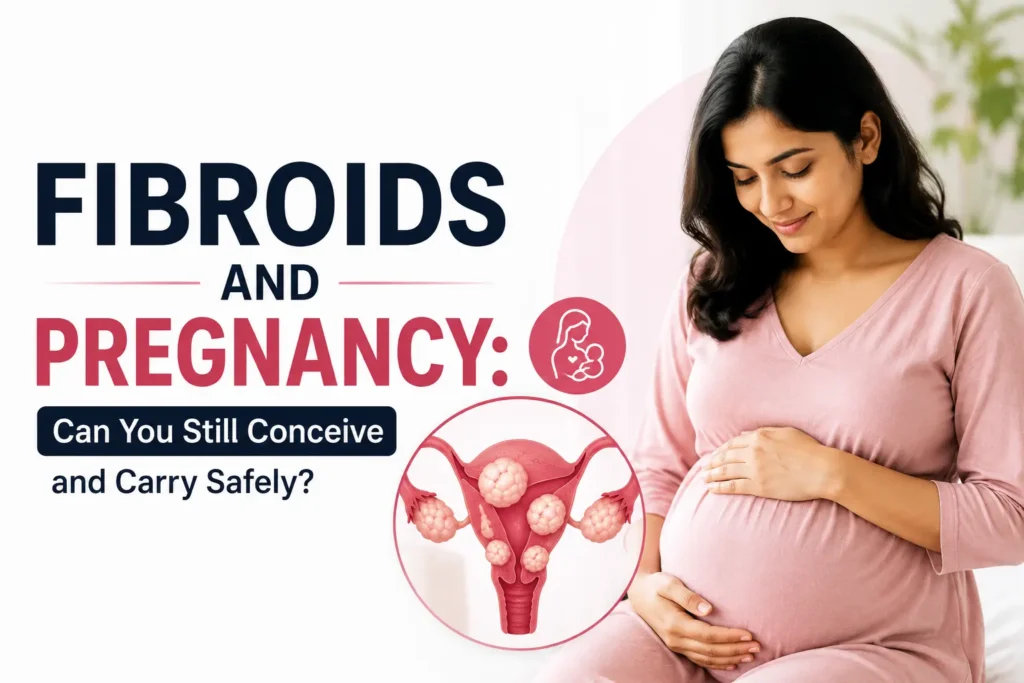
Most women who are diagnosed with a fibroid ask the same question first: will this affect my chances of having a baby? It is a fair worry, and the honest answer is that it depends on where the fibroid sits and how big it is, not just on the fact that it exists. Most women with fibroids go on to conceive and carry a healthy pregnancy without any trouble at all, but a smaller group does need closer attention, and knowing which group you fall into makes all the difference.
This article is part of our complete guide to uterine fibroids, and it looks specifically at fibroids and pregnancy, from conception through delivery. If you already have a diagnosis and are planning a family, this is the part of the guide written for you.
Key Takeaways
- Most fibroids do not stop a woman from getting pregnant or carrying to term.
- Submucosal fibroids, which sit inside the uterine cavity, carry the highest risk to fertility.
- Fibroids raise the chance of miscarriage somewhat, but the overall risk is still low for most women.
- Some fibroids grow during pregnancy because of rising hormone levels, while others stay the same size.
- A preconception scan is the simplest way to know exactly where you stand before you start trying.
Can You Get Pregnant If You Have Fibroids?
Yes, in most cases. The majority of fibroids sit within the muscle wall of the uterus and never interfere with conception at all. Doctors only become concerned when a fibroid changes the shape of the uterine cavity itself, since that is the space where an embryo needs to implant and grow.
This is worth repeating, because so many women assume a fibroid diagnosis automatically means fertility trouble. For most women, fibroids and pregnancy simply are not connected in any meaningful way.
Which Types of Fibroids Affect Fertility the Most?
Location matters more than size when it comes to fibroids and pregnancy. According to Cleveland Clinic, most fibroids do not affect fertility, but submucosal fibroids are the exception. Because they bulge directly into the uterine cavity, they can get in the way of an embryo trying to implant, which is why they are treated differently from other types.
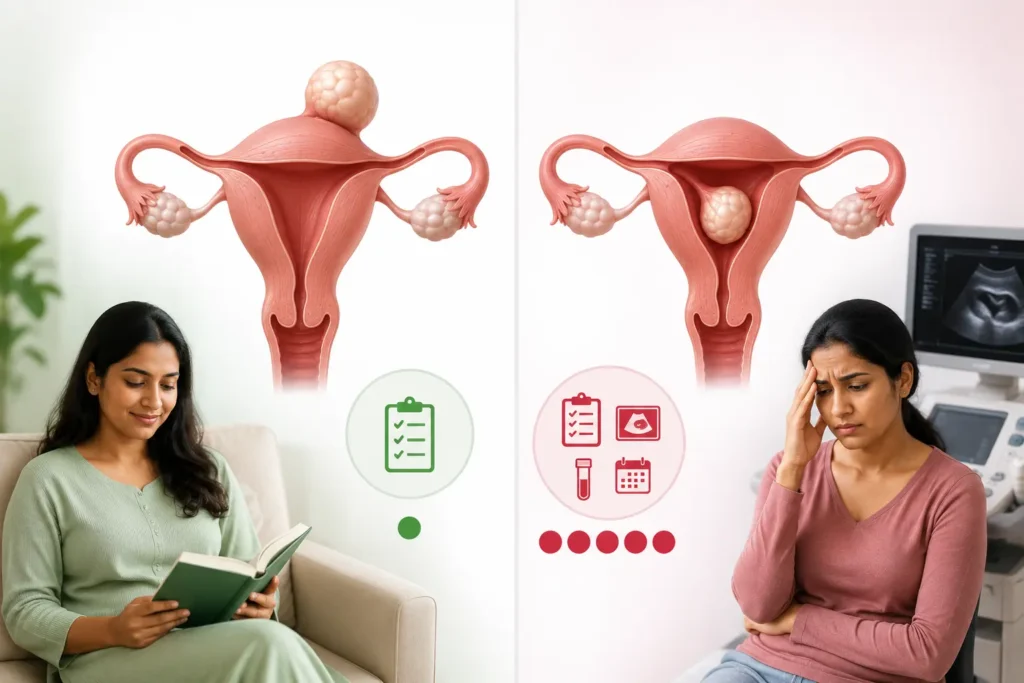
This is one of the more useful things to understand early, because it changes the conversation with your doctor. A woman with a subserosal fibroid usually needs far less monitoring than a woman with a submucosal one, even if the fibroids are similar in size.
| Fibroid Type | Effect on Fertility |
|---|---|
| Submucosal | Highest impact, often linked to implantation trouble and miscarriage |
| Intramural | Can affect fertility if large enough to distort the uterine cavity, otherwise usually fine |
| Subserosal | Rarely affects fertility, since it grows on the outer surface of the uterus |
Do Fibroids Increase the Risk of Miscarriage?
They can, though the increase is smaller than most women fear. A study published on PubMed found that fibroids raise the risk of miscarriage by roughly 60 percent compared to women without fibroids. That sounds alarming on its own, but it helps to see it in context. If a woman without fibroids has, say, an 8 percent chance of miscarriage, a 60 percent increase still leaves most pregnancies with fibroids ending safely. The risk is real, but it is not the same as saying pregnancy is unlikely to succeed. This is the kind of nuance that gets lost when people search for fibroids and pregnancy online and only find worst case numbers without any context.
Can Fibroids Cause Pain During Pregnancy?
Yes, and this catches many women off guard. As the uterus grows, a fibroid can outgrow its own blood supply, which causes a sharp, localised pain called red degeneration. It usually settles with rest and simple pain relief, and it does not typically put the pregnancy at risk, though it should always be reported to your doctor so nothing else is missed.
Should Fibroids Be Removed Before Trying to Conceive?
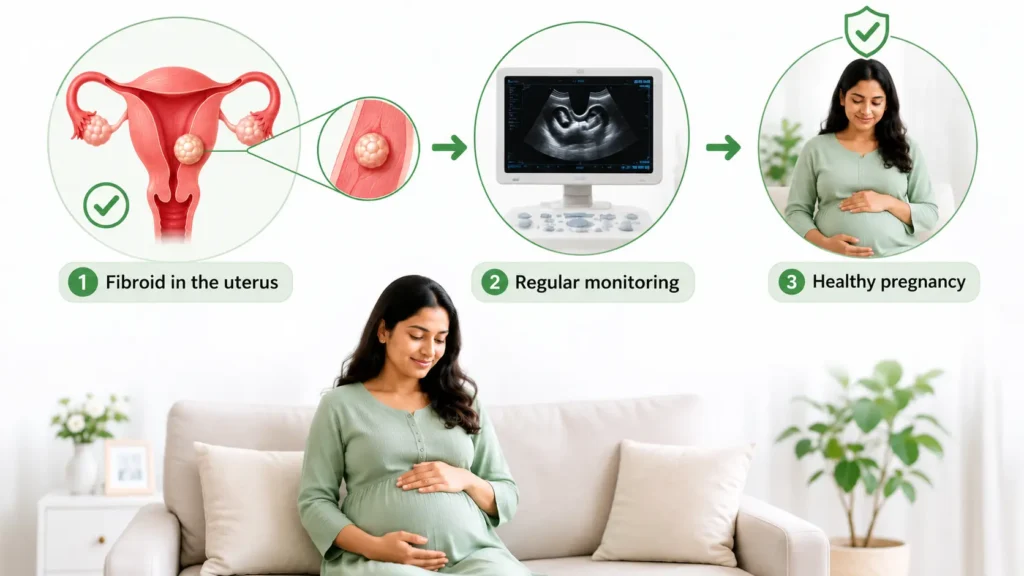
Not always. If a fibroid is small and sits within the muscle wall, most doctors will leave it alone and simply monitor it through pregnancy. But if a submucosal fibroid is found, or if a fibroid has already been linked to a previous miscarriage, removal before conception is often recommended. This is usually done through laparoscopic gynaecological surgery, which preserves the uterus while clearing the fibroid, giving the next pregnancy attempt a cleaner start.
What Happens to Fibroids During Pregnancy?
Fibroids do not behave the same way in every pregnancy. Rising oestrogen and progesterone levels can cause some fibroids to grow larger, especially during the first and second trimesters, while other fibroids barely change at all. There is no way to predict this in advance, which is why doctors usually recommend tracking fibroid size at each routine scan rather than assuming it will stay the same throughout.
Do Fibroids Increase Delivery Risks?
They can raise the likelihood of certain complications, though most women with fibroids still deliver safely. Research shows a higher chance of breech position, placenta previa, and the need for a caesarean section when a large fibroid sits low in the uterus or close to the placenta. Postpartum bleeding is also somewhat more common. None of this means a difficult delivery is guaranteed. It simply means your medical team will plan more carefully around the fibroid’s exact position as your due date approaches.
| Delivery Concern | Why Fibroids Raise the Risk |
|---|---|
| Breech position | A large fibroid can limit the space the baby has to turn head down |
| Placenta previa | Fibroids near the lower uterus can affect where the placenta attaches |
| Caesarean delivery | Fibroids blocking the birth canal or affecting labour progress |
| Postpartum bleeding | The uterus may contract less efficiently after delivery around a fibroid |
Knowing this ahead of time is exactly why fibroids and pregnancy planning benefits from being handled together, rather than treated as two unrelated conversations.
Why I Recommend a Preconception Fibroid Check
I ask nearly every patient who is planning a pregnancy the same thing: have you had a scan recently? Most say no, simply because nothing feels wrong. But a scan before you start trying gives us real information instead of guesswork. If a fibroid needs attention, we can deal with it calmly, long before pregnancy is on the table. Finding out during pregnancy itself is not dangerous, but it does take away some of that planning time, and I would rather my patients have it.
Dr. Balvin Kaur Ghai, Founder and Lead, CLAGS Centre for Laser Aesthetics and Gynaecology Services, Mohali
Can IVF or Fertility Treatment Still Work With Fibroids?
Often, yes, though the fibroid’s location still matters here too. Submucosal fibroids are usually removed before starting IVF, since they can lower implantation success. Intramural and subserosal fibroids are evaluated on a case by case basis, and many women with these types go through IVF successfully without any fibroid related changes to their treatment plan.
Your fertility specialist will usually order an ultrasound or hysteroscopy before starting treatment, specifically to rule out anything that could affect implantation. This single step avoids a lot of guesswork later in the process.
Do Fibroids Shrink After Delivery?
Many do, at least partially. Hormone levels drop sharply after childbirth, and this can cause a fibroid that grew during pregnancy to shrink back down over the following months. It is worth getting a follow up scan around six to eight weeks postpartum, mainly to confirm what state the fibroid is in before deciding on a longer term treatment plan.
What Tests Are Used to Monitor Fibroids During Pregnancy?
An ultrasound remains the main tool throughout. Most obstetricians will check the fibroid’s size and position at each routine scan, alongside the usual checks on the baby’s growth. If a fibroid is large or close to the placenta, your doctor may recommend slightly more frequent scans in the third trimester, simply to keep a closer eye on both the fibroid and the baby’s position as delivery approaches.
Planning a Pregnancy in Mohali or the Chandigarh Tricity Region?
Women from Chandigarh, Panchkula, and Ambala often reach out to us specifically because they want fibroids and pregnancy checked together, rather than as two separate appointments. We coordinate the ultrasound, the fertility discussion, and any preconception fibroid treatment in a single consultation wherever possible, so you are not making multiple trips for what is really one connected question.
This matters especially for women travelling from further away, since fibroids and pregnancy planning often works best when the whole picture is looked at together, rather than piece by piece across several visits.
Frequently Asked Questions
Can a small fibroid stop me from getting pregnant?
Usually not, unless it sits inside the uterine cavity itself. Most small fibroids in the muscle wall do not interfere with conception.
Do fibroids need to be removed during a caesarean?
Not usually. Removing a fibroid during a caesarean can cause heavy bleeding, so doctors generally leave it for a separate procedure later if needed.
Can fibroids cause infertility on their own?
They can, mainly when they are submucosal or large enough to distort the uterine cavity. Many women with fibroids conceive without any issue.
Is bed rest needed if I have fibroid pain during pregnancy?
Short periods of rest often help, but your doctor will guide you based on how severe the pain is and how the pregnancy is progressing.
Can fibroids grow back after pregnancy?
Yes, new fibroids can form over time, since pregnancy does not change the underlying hormonal pattern that caused the first one.
Do all fibroids need monitoring during pregnancy?
Larger fibroids, or those near the placenta, are monitored more closely. Small, stable fibroids often need little more than routine checkups.
Can I have a normal delivery with fibroids?
Yes, many women do. The delivery plan depends mainly on the fibroid’s size and where it sits, not on the diagnosis alone.
Does fibroid size in early pregnancy predict problems later?
Not reliably. Some fibroids that look concerning early on cause no issues later, which is why regular monitoring matters more than one single scan.
Can stress make fibroids worse during pregnancy?
There is no strong evidence that stress alone changes fibroid growth during pregnancy, though managing stress is good for overall wellbeing regardless.
How soon after fibroid surgery can I try to conceive?
Most doctors suggest waiting three to six months after laparoscopic fibroid removal, giving the uterus enough time to heal properly.