
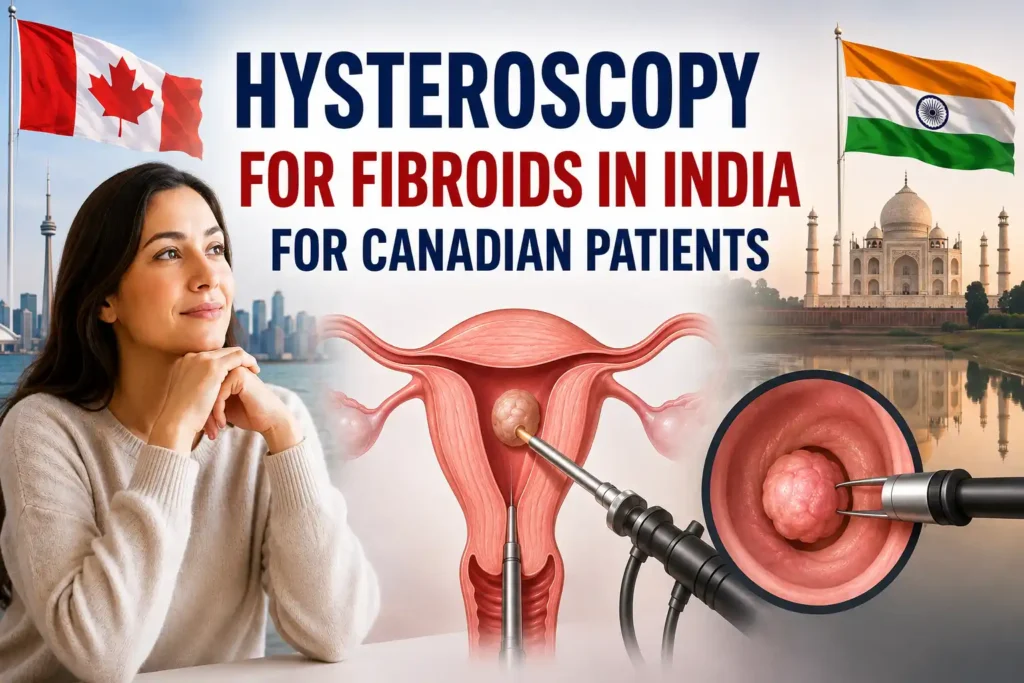
Many Canadian women live with heavy periods, pelvic pressure, or fertility worries for years before they get a firm treatment date. Public wait lists for gynaecological surgery can run past six months, and private surgery at home often costs more than a flight and a full recovery abroad combined. This is exactly why hysteroscopy for fibroids in India for Canadian patients has moved from a niche question into a genuine treatment path.
Hysteroscopy removes fibroids growing inside the uterine cavity through the vagina and cervix, with no abdominal cuts and often a same-day discharge. It does not work for every fibroid, and that distinction matters more than the price tag. Below, I have laid out who actually qualifies, what the procedure and recovery involve, and how the cost compares to Canada, so you can make a fully informed decision before booking a flight.
Key Takeaways
- Hysteroscopy treats fibroids growing inside the uterine cavity, known as submucosal type 0 or type 1 fibroids. It is not the right tool for fibroids sitting deep in the muscle wall or outside the uterus.
- A published study of 125 women found that 90.4 percent had complete relief from abnormal bleeding after hysteroscopic fibroid resection, with no incision involved.
- Fibroids are extremely common, affecting roughly 50 to 60 percent of women at some point, rising toward 70 percent by age 50, according to reproductive health researchers.
- Canadian patients travelling for hysteroscopic fibroid removal in India typically pay 60 to 75 percent less than private surgery costs at home, even after flights and hotel stays.
- Public wait times for hysteroscopic myomectomy in Canada can stretch several months. In India, treatment is usually scheduled within one to three weeks once reports are reviewed.
- A complete trip, from consultation to hospital stay to fitness to fly, generally takes 10 to 14 days.
What Is Hysteroscopy for Fibroids, and Who Is It For?
A hysteroscope is a thin, lit telescope passed through the cervix into the uterus, with no cut on the abdomen at all. Once inside, I can see the fibroid directly on a screen and shave it away using a resectoscope or a mechanical morcellator, piece by piece, until the cavity is clear.
This approach only works for fibroids that bulge into the uterine cavity itself. Gynaecologists classify these using the ESGE system, where type 0 fibroids sit entirely inside the cavity on a stalk, and type 1 fibroids have most of their bulk inside the cavity with a small portion in the muscle wall.
1. Fibroids Hysteroscopy Can Treat
- Type 0 (fully inside the cavity, no muscle wall attachment)
- Type 1 (over 50 percent inside the cavity)
- Selected type 2 fibroids under about 3 to 4 cm, depending on position and surgeon experience
2. When Hysteroscopy Is Not the Right Choice
Fibroids sitting mostly or entirely within the uterine muscle wall (intramural) or on the outer surface (subserosal) cannot be reached safely through the cervix. These usually need laparoscopic or open myomectomy instead, and I always confirm the exact type on ultrasound or MRI before recommending a route.
“The biggest mistake I see in patients arriving from abroad is assuming every fibroid qualifies for the keyhole, no-cuts approach. Getting the classification right before travel saves patients from a wasted trip and an unnecessary anaesthetic.” — Dr Balvin Kaur Ghai
Hysteroscopy for Fibroids in India for Canadian Patients: Why the Interest Is Growing
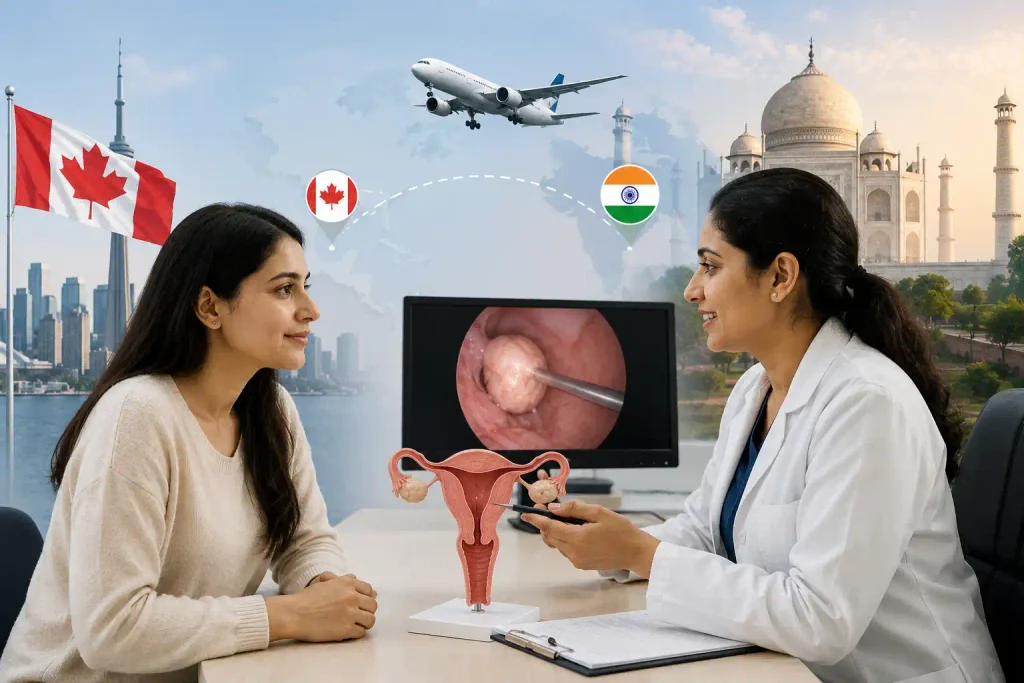
Fibroid treatment medical tourism from Canada to India has grown steadily over the past several years, driven mainly by three things: long public wait lists, high private surgery costs, and a shortage of gynaecologists trained in operative hysteroscopy outside major Canadian cities.
Patients writing to our clinic from Toronto, Calgary, Vancouver, and Brampton usually describe the same pattern. A family doctor confirms fibroids on ultrasound, a specialist referral takes weeks, and the actual surgery date sits months further out. Meanwhile, symptoms like flooding periods, anaemia, and fatigue keep affecting daily life and work.
India offers fellowship-trained gynaecological endoscopists, modern resectoscope and morcellator systems, and accredited hospitals, at a fraction of North American private pricing. For many Canadian patients, especially those of Indian origin visiting family, combining a medical trip with a home visit makes the decision easier.
Hysteroscopic Fibroid Removal India Canada: Cost Comparison
Cost is usually the first question, and rightly so. The table below gives realistic ranges based on current clinic and hospital pricing in India versus typical private-pay costs in Canada, since public coverage rarely applies to non-residents or comes with long delays for residents.
| Cost Component | India (Approx. CAD) | Canada Private (Approx. CAD) |
|---|---|---|
| Consultation and evaluation | $40 – $80 | $150 – $300 |
| Hysteroscopic myomectomy (surgeon +amp; procedure) | $900 – $1,800 | $6,000 – $10,000 |
| Anaesthesia | $150 – $300 | Included, but total stays high |
| Hospital stay (1 day, typical) | $150 – $350 | $1,000+ per day |
| Total package estimate | $1,500 – $3,000 | $7,000 – $12,000+ |
These figures exclude flights and accommodation, which usually add $1,200 to $2,500 depending on season and length of stay. Even with travel costs included, hysteroscopy cost India vs Canada comparisons regularly show total savings of 50 to 70 percent.
Why Is Hysteroscopy for Fibroids More Affordable in India?
Lower cost does not mean lower quality here, it reflects genuine structural differences in healthcare economics. Hospital overheads, staff salaries, and real estate costs are significantly lower in India, and this gets passed on directly in surgical package pricing.
Affordable hysteroscopy India options also exist because surgical volume is high. Gynaecologists in dedicated endoscopy centres perform these procedures routinely, which keeps skills sharp and operating time efficient, both of which reduce cost without cutting corners on safety.
Getting Evaluated Before You Travel
No responsible clinic should ask a patient to book flights before confirming, on imaging, that hysteroscopy is even appropriate. This evaluation step protects you from an unnecessary trip and an unnecessary anaesthetic.
1. Consultation With an Indian Gynaecologist From Canada
Yes, a video consultation is entirely possible and is the standard first step. During this call, we review your symptoms, cycle history, fertility goals, and existing reports, and outline whether hysteroscopy looks appropriate or whether another approach fits better.
2. Reports and Scans to Send Ahead
Before finalising any travel plan, we typically need:
- A recent transvaginal or pelvic ultrasound report, ideally within the last three months
- MRI pelvis, if your fibroids are large or multiple
- Recent complete blood count, and iron studies if you have heavy bleeding
- A short summary of your menstrual and fertility history
Sending these ahead lets us confirm fibroid type, size, and position before you commit to travel, which is the single biggest factor in whether your trip goes smoothly.
Getting a Hysteroscopic Myomectomy Without a Long Wait
Once reports are reviewed and hysteroscopy is confirmed as suitable, scheduling in India moves quickly. Most Canadian patients are offered a surgery date within one to three weeks of sending reports, compared with public wait times in Canada that commonly stretch past three to six months for non-urgent gynaecological surgery.
What Happens During the Procedure
Hysteroscopic fibroid removal is done under general or spinal anaesthesia, and the entire operation typically takes between 20 and 60 minutes depending on fibroid size and number. Fluid is used to gently expand the uterine cavity so the fibroid is clearly visible throughout.
Most patients go home the same day or after one overnight stay for observation. There is no external wound, so pain is usually limited to mild cramping, similar to a heavy period, managed with standard pain relief for a few days.
Recovery, Hospital Stay, and Travel Planning for Canadian Patients
Recovery after hysteroscopic fibroid removal is faster than most patients expect, since there is no abdominal incision to heal. Light spotting or discharge for one to two weeks is normal, and most women feel back to their usual energy within five to seven days.
1. How long should you stay in India? I generally recommend planning for 10 to 14 days total. This covers your initial in-person consultation, the procedure itself, a short observation period, and a follow-up review before you are cleared to fly.
2. How soon can you fly back to Canada? Most patients are medically fit to fly around 5 to 7 days after surgery, provided there are no complications and the follow-up check confirms healthy healing. Long-haul flights before this window raise clot risk unnecessarily, so I never rush this step.
Fibroid Removal and Future Pregnancy
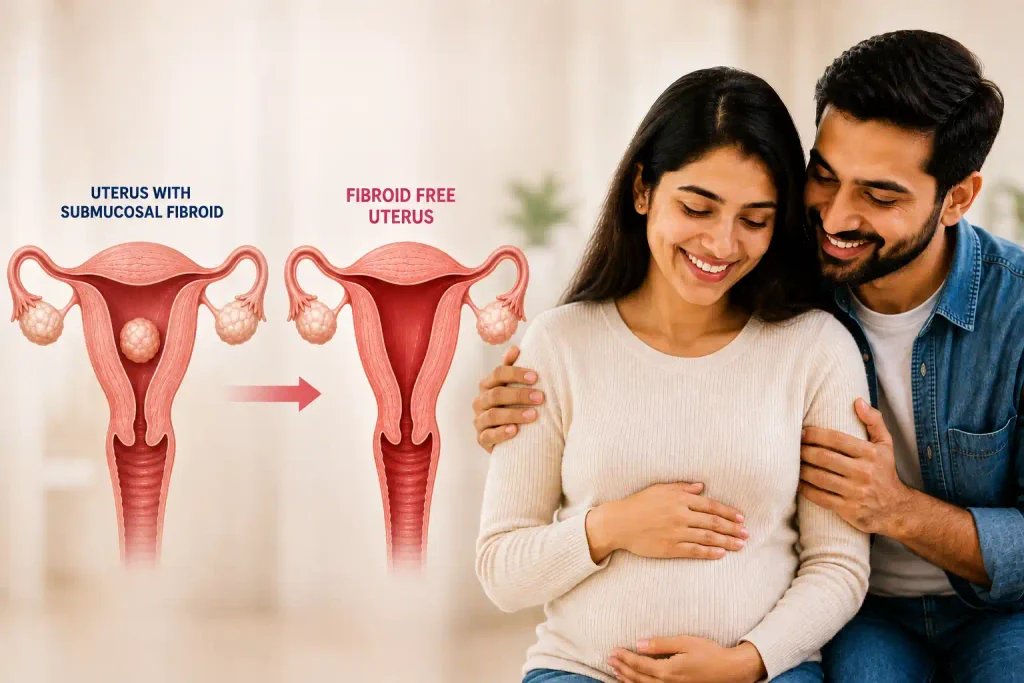
Submucosal fibroids are one of the more common, treatable causes of difficulty conceiving and early pregnancy loss, since they distort the uterine cavity lining where an embryo needs to implant. Removing them through hysteroscopy can genuinely improve pregnancy chances for many women, though outcomes depend on your age, ovarian reserve, and any other fertility factors involved.
I always discuss individual fertility expectations honestly rather than promising outcomes, since fibroids are only one piece of a larger fertility picture. You can read more detail on how fibroids and fertility interact in our dedicated guide on pregnancy with fibroids.
Safety, Risks, and Choosing the Right Hospital in India
Hysteroscopic fibroid removal is considered a low-risk procedure overall, with rare complications including fluid overload, uterine perforation, or infection, all of which trained gynaecological endoscopists actively monitor and prevent during surgery.
Before choosing a hospital, Canadian patients should confirm a few non-negotiable points:
- The surgeon’s specific fellowship or training in operative hysteroscopy, not just general gynaecology
- NABH or JCI accreditation status of the hospital
- Availability of anaesthesia backup and ICU access, even for a routine day-case procedure
- Clear, written pricing with no vague “package” language hiding extra charges
“I tell every patient the same thing before they book: ask for the surgeon’s hysteroscopy-specific case numbers, not just years in practice. Volume in this exact procedure is what keeps complication rates low.” — Dr Balvin Kaur Ghai
Trusted medical bodies such as the NHS and reproductive health researchers confirm hysteroscopic resection as a first-line option for cavity-distorting fibroids, which aligns with how we approach case selection at our centre. For a wider look at fibroid treatment routes beyond hysteroscopy on fibroid surgery cost options covers laparoscopic and abdominal approaches too.
What a Medical Tourism Package Usually Includes
A well-structured package for Canadian patients typically bundles the consultation, pre-operative testing, the surgical procedure, anaesthesia, one hospital stay, and a post-operative review before discharge for travel. Many clinics, including ours, also assist with airport transfers and hotel recommendations near the hospital, though these are arranged separately from the medical fee itself. Always ask for an itemised quote rather than a single bundled number, so you know exactly what is and is not covered if anything unexpected comes up during your stay.
Final Thoughts
Choosing hysteroscopy for fibroids in India for Canadian patients comes down to two honest checks: confirming your fibroid type actually qualifies for this approach, and choosing a surgeon with genuine hysteroscopy-specific experience rather than general gynaecology alone. Get both right, and you are looking at a shorter wait, a faster recovery, and a fraction of the cost you would face at home.
If you would like your reports reviewed and an honest opinion on whether hysteroscopy fits your case, you can book an online consultation with our team, or explore our hysteroscopy cost and procedure at CLAGS for a closer look at what to expect.
Frequently Asked Questions
1. Is hysteroscopic fibroid removal available in India for Canadian patients?
Yes, this is a well-established procedure at accredited Indian hospitals, and international patient coordination, including virtual consultations and visa support letters, is routine at experienced centres like ours.
2. How much does hysteroscopic fibroid removal cost in India compared with Canada?
A complete package in India, including consultation, surgery, and hospital stay, generally runs between $1,500 and $3,000 CAD, against $7,000 to $12,000 or more for equivalent private treatment in Canada.
3. Why is hysteroscopy for fibroids more affordable in India?
Lower hospital overheads, staff costs, and real estate expenses, combined with high surgical volume at dedicated endoscopy centres, allow Indian hospitals to price procedures well below North American private rates without lowering surgical standards.
4. How much should Canadian patients budget for hysteroscopy in India, including hospital and anesthesia costs?
Budgeting $2,000 to $4,000 CAD total, inclusive of the procedure, anaesthesia, one hospital stay, and modest accommodation, covers most straightforward single-fibroid cases comfortably.
5. Can Canadian patients get a hysteroscopic myomectomy in India without a long waiting period?
Yes, once your reports confirm suitability, surgery is typically scheduled within one to three weeks, a sharp contrast to public wait lists in Canada that often extend past several months.
6. Which types of fibroids can be removed through hysteroscopy?
Type 0 and type 1 submucosal fibroids, which sit mostly or entirely inside the uterine cavity, are treatable this way. Deeper intramural or outer subserosal fibroids need a different surgical approach.
7. Is hysteroscopic fibroid removal safe for Canadian patients travelling to India?
Yes, when performed by a fellowship-trained gynaecological endoscopist at an accredited hospital, this is a low-risk, well-studied procedure, though every surgery carries some individual risk that should be discussed beforehand.
8. Can I have a consultation with an Indian gynecologist before travelling from Canada?
Absolutely, a video consultation reviewing your symptoms and reports is the standard first step, and it happens before any travel commitment or payment for surgery is required.
9. What medical reports and scans do I need to send before having hysteroscopic fibroid removal in India?
A recent pelvic ultrasound, MRI if fibroids are large or multiple, complete blood count results, and a short summary of your cycle and fertility history give us enough to confirm your treatment plan.
10. How long should I stay in India after hysteroscopic fibroid surgery?
Planning for 10 to 14 days total covers your consultation, procedure, short recovery period, and the follow-up check needed before you are cleared to fly home safely.
11. How soon can I fly back to Canada after hysteroscopic fibroid removal?
Most patients are fit to fly around 5 to 7 days after surgery, once the follow-up review confirms there is no bleeding concern or infection risk.
12. Will hysteroscopic fibroid removal improve my chances of getting pregnant?
For many women, yes, since clearing the uterine cavity of a distorting fibroid removes a known barrier to implantation, though your overall fertility also depends on age and other factors we assess individually.
13. What is the recovery time after hysteroscopic fibroid removal in India?
Most patients feel back to normal energy within five to seven days, with only mild cramping and light discharge during that window, since there is no abdominal incision involved.
14. What should Canadian patients check before choosing a hospital for fibroid treatment in India?
Confirm the surgeon’s specific hysteroscopy case experience, the hospital’s accreditation status, anaesthesia and emergency backup availability, and a fully itemised cost quote before booking anything.
15. What does a medical-tourism package for hysteroscopic fibroid removal in India usually include?
A standard package covers the consultation, pre-operative tests, the surgery itself, anaesthesia, one hospital stay, and a post-operative review, with travel and accommodation typically arranged separately.