
When a woman hears she has uterine fibroids, her immediate reaction is often a mix of anxiety, confusion and fear of major surgery. Will I need my uterus removed? Can I still get pregnant? Why am I bleeding so heavily? These are valid, overwhelming questions.
If you are exploring fibroid treatment in Mohali, know this first: having fibroids does not mean you automatically need surgery. In fact, many women live completely normal lives with fibroids that require nothing more than simple monitoring. However, when symptoms like severe pelvic pain, heavy menstrual bleeding, or fertility challenges step in, choosing the right treatment strategy is essential to protecting your quality of life and reproductive health.
Key Takeaways
- Fibroids affect an estimated 70% to 80% of women by age 50, yet most never cause symptoms or need treatment.
- Up to half of women with fibroids develop symptoms like heavy bleeding, pelvic pressure, or pain that affects daily life.
- Treatment is usually recommended for heavy bleeding, pain, pressure on the bladder or bowel, fertility concerns, or rapid fibroid growth, not simply for having a fibroid.
- Options range from medication and non-surgical procedures to myomectomy (fibroid removal) and hysterectomy, depending on your goals.
- Women planning future pregnancy are usually guided toward uterus-sparing options like myomectomy rather than hysterectomy.
What Are Uterine Fibroids, Really?
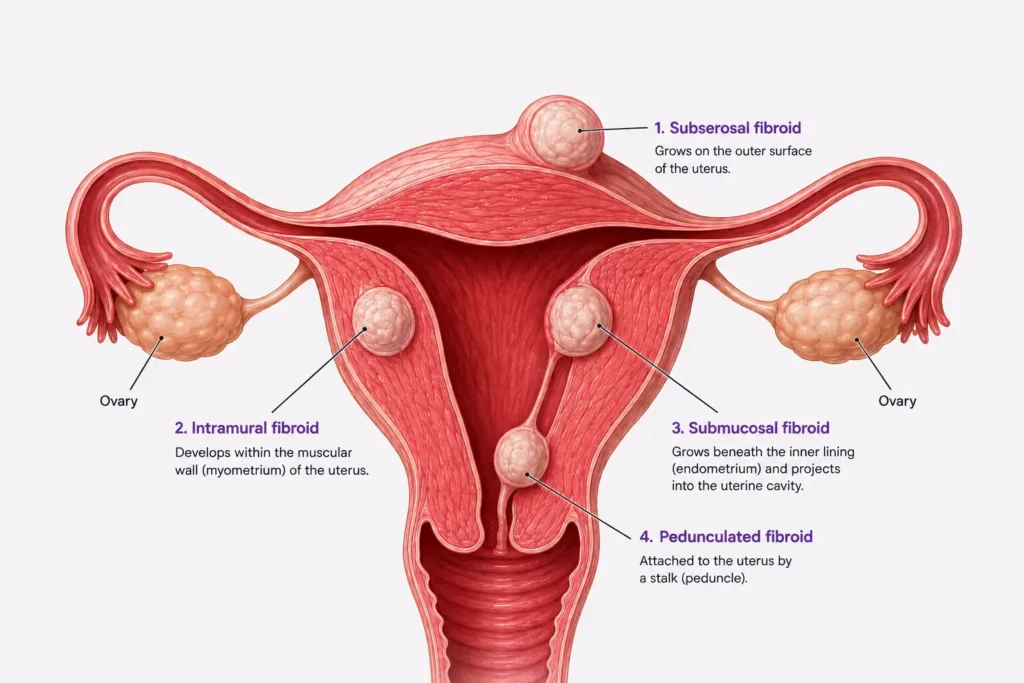
Uterine fibroids are non-cancerous growths that develop in or around the uterus. They’re made of muscle and fibrous tissue and they can be as small as a pea or grow large enough to change the shape of your abdomen.
Doctors also call them myomas or leiomyomas. Whatever the name, the biology is the same: they respond to hormones like estrogen, which is why they often shrink after menopause.
Most women don’t even know they have one until it shows up on a routine ultrasound. That’s a good thing to know, because a fibroid diagnosis by itself is rarely an emergency.
Do All Uterine Fibroids Need Treatment?
No and this is the point most patients get wrong. A fibroid that isn’t causing symptoms and isn’t growing quickly usually just needs monitoring, typically a repeat ultrasound every six to twelve months.
What actually pushes a case toward active treatment is the impact on your life. That includes periods so heavy they cause anemia, pelvic pain that disrupts your week, a visibly swollen abdomen or fibroids that seem to be interfering with pregnancy.
“I tell my patients the fibroid itself is not the enemy, the symptoms are,” says Dr Balvin Kaur Ghai. “A small, silent fibroid and a large, symptomatic one need completely different conversations.”
If your fibroid was found incidentally and you feel fine, that’s usually a reason to breathe easier, not to panic and book surgery right away.
When Do Fibroids Need Surgery?
Surgery becomes a real consideration when other approaches haven’t controlled your symptoms, or when the situation is urgent enough that waiting isn’t sensible. A few common triggers include:
- Heavy or prolonged bleeding that hasn’t improved with medication
- Fibroids growing quickly over a short period
- Pain or pressure severe enough to affect work, sleep or daily routine
- Fibroids distorting the uterine cavity in a way that’s linked to infertility or repeated miscarriage
- A fibroid large enough to press on the bladder or bowel
None of these mean surgery is your only path forward. They simply mean it’s time for a proper consultation with a fibroid doctor in Mohali who can examine your scans and symptoms together, not one in isolation.
What Size of Fibroid Requires Surgery?
This is one of the most common questions we hear and honestly, there’s no single number that decides it. Size matters, but it’s only one part of the picture.
A 6 cm fibroid causing severe bleeding may need surgery sooner than a 9 cm fibroid that’s sitting quietly and causing no symptoms at all. Location matters just as much as size. Fibroids that bulge into the uterine cavity often cause problems even when they’re small.
As a general guide, many specialists start paying closer attention once a fibroid crosses roughly 5 to 6 cm, especially if it’s still growing. But the honest answer is that your symptoms, not a ruler, should guide the decision.
Fibroid Treatment Options in Mohali
There isn’t a single “best” fibroid treatment. There’s a best treatment for your fibroid, your symptoms and your plans. Broadly, uterine fibroid treatment falls into two categories: managing symptoms without surgery and physically removing the fibroids.
Non-Surgical Fibroid Treatment
Can fibroids be treated without surgery? Yes, for many women they can, especially when symptoms are mild to moderate. Non-surgical fibroid treatment options include:
- Hormonal medication to control heavy bleeding and slow fibroid growth
- Tranexamic acid or other medicines specifically for reducing blood loss during periods
- Iron supplementation if bleeding has caused anemia
- Watchful waiting with regular ultrasound monitoring for fibroids that are stable and symptom-free
Lifestyle and dietary changes are sometimes discussed alongside medical care too, though they work best as a support to treatment rather than a replacement for it.
Surgical Fibroid Treatment: Myomectomy vs Hysterectomy
When medication isn’t enough, fibroid surgery in Mohali generally means one of two procedures: myomectomy or hysterectomy. Both are proven, safe options performed regularly, but they serve very different goals.
| Factor | Myomectomy | Hysterectomy |
|---|---|---|
| What it removes | Only the fibroids | The entire uterus |
| Future pregnancy | Possible afterward | Not possible afterward |
| Best suited for | Women who want to conceive later | Women who have completed childbearing |
| Fibroid recurrence | New fibroids can develop | Not possible, since the uterus is removed |
| Recovery approach | Laparoscopic or open, based on size/number | Usually laparoscopic, faster recovery than open surgery |
“Myomectomy preserves the uterus, hysterectomy removes it entirely. That single difference is what most of my consultations with younger patients actually come down to,” explains Dr Balvin Kaur Ghai.
Neither option is universally “better.” A hysterectomy is often the more definitive solution for women who are done having children and want permanent relief from symptoms, while myomectomy is the standard choice when fertility matters.
Which Fibroid Treatment Is Best If You Want to Get Pregnant?
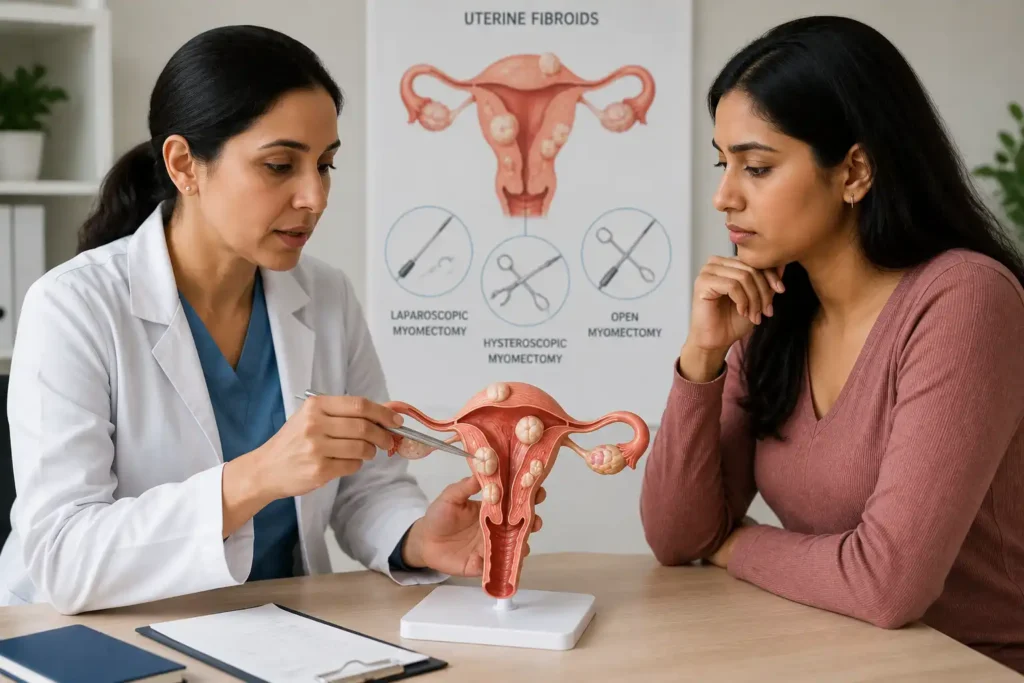
If pregnancy is still part of your plan, myomectomy is typically the recommended route rather than hysterectomy, since the uterus is preserved. The approach used, laparoscopic, hysteroscopic, or open surgery, depends on the size, number and position of your fibroids.
Fibroids that distort the uterine cavity are the ones most closely linked to fertility issues and pregnancy complications, so these are usually prioritized for treatment before you try to conceive. Understanding fibroids and pregnancy is therefore an important part of deciding whether treatment is necessary and which option may be most suitable.
It’s worth having this conversation with your gynaecologist before deciding on any procedure, since fibroid position affects the technique used just as much as it affects your pregnancy chances.
Can Fibroids Come Back After Treatment?
This is a fair and common worry. After a myomectomy, yes, new fibroids can develop over time because the uterus itself is still there and can still respond to hormonal changes.
Recurrence rates vary depending on how many fibroids you had to begin with and how thoroughly they were removed. A hysterectomy, on the other hand, removes the possibility of fibroid recurrence completely, since there’s no uterus left for new fibroids to grow in.
This trade-off is exactly why the decision between myomectomy and hysterectomy isn’t just medical, it’s personal and it deserves an unhurried conversation with your doctor.
How Do I Choose the Right Fibroid Specialist in Mohali?
Choosing a fibroid specialist in Mohali isn’t just about finding someone nearby. A few things are worth checking before you commit to a treatment plan:
- Experience specifically with fibroid cases, not just general gynaecology
- Comfort offering both surgical and non-surgical options, rather than defaulting to surgery
- Access to proper imaging and diagnostic facilities on-site
- A clear, unhurried explanation of why a particular treatment is being recommended for you
- Willingness to discuss fertility preservation if that matters to you
A good specialist should be able to explain your specific case in plain language, not just hand you a treatment plan. If something feels rushed or unclear, it’s completely reasonable to ask more questions or seek a second opinion.
How Long Does It Take to Recover From Fibroid Surgery?
Recovery time depends heavily on the type of surgery. Laparoscopic myomectomy or hysterectomy generally allows women to return to light activity within one to two weeks, with full recovery around four to six weeks.
Open surgery, needed for larger or more numerous fibroids, usually takes longer, often four to six weeks before normal activity and six to eight weeks for complete healing.
Your recovery timeline also depends on your overall health, the number of fibroids removed and how closely you follow post-surgical guidance around rest and activity.
“Every fibroid case that walks into my clinic is different,” I says. “My job isn’t to push every patient toward surgery. It’s to figure out what’s actually causing her symptoms and then find the least invasive way to fix it.”
Getting the Right Fibroid Treatment in Mohali
Fibroids are common and having one doesn’t automatically mean you need surgery. What matters is getting an accurate diagnosis, understanding your specific symptoms and discussing your options with someone who takes the time to explain them clearly.
If you’re dealing with fibroid symptoms or want a second opinion on a treatment plan, book a consultation with Dr Balvin Kaur Ghai at CLAGS, Mohali. Patients from SAS Nagar, Chandigarh, Kharar, Zirakpur, the Tricity, and across Punjab can also get expert guidance on their diagnosis, treatment options, and fertility goals. You can also get in touch to discuss your case directly.
Frequently Asked Questions
1. Do all uterine fibroids need treatment?
No. Most fibroids are small, symptom-free and simply monitored over time. Treatment becomes necessary when fibroids cause heavy bleeding, pain, pressure symptoms, or fertility problems, not simply because they exist.
2. When do fibroids need surgery?
Surgery is usually considered when symptoms haven’t improved with medication, when fibroids are growing rapidly, or when they’re affecting fertility or pressing on nearby organs. It’s a decision made case by case, not from a fixed rule.
3. What size of fibroid requires surgery?
There’s no exact cutoff. Fibroids around 5 to 6 cm and larger tend to draw closer attention, especially if they’re growing, but a fibroid’s position and your symptoms usually matter more than its size alone.
4. Can fibroids be treated without surgery?
Yes, in many cases. Hormonal medication, bleeding-control drugs, iron supplements and regular monitoring can manage fibroids that are mild to moderate in size and symptoms. Surgery becomes the focus only when these options aren’t enough.
5. What are the treatment options for uterine fibroids?
Options include watchful waiting, medication to control bleeding and slow growth and surgical procedures like myomectomy or hysterectomy. The right choice depends on your symptoms, fibroid size and location and whether you want to have children in the future.
6. Which fibroid treatment is best if I want to become pregnant?
Myomectomy is generally preferred over hysterectomy because it removes the fibroids while preserving the uterus. The exact surgical approach depends on how many fibroids you have and where they’re located.
7. Can fibroids come back after treatment?
After myomectomy, yes, new fibroids can develop later since the uterus remains in place. After hysterectomy, recurrence isn’t possible because the uterus itself is removed.
8. What is the difference between myomectomy and hysterectomy?
Myomectomy removes only the fibroids and keeps the uterus intact, so pregnancy is still possible afterward. Hysterectomy removes the entire uterus, which ends fertility but also permanently rules out fibroid recurrence.
9. How do I choose the right fibroid specialist in Mohali?
Look for someone with specific fibroid experience, access to proper imaging and a willingness to explain both surgical and non-surgical options honestly, rather than one who moves straight to surgery. A specialist who takes time to understand your goals is worth prioritizing.
10. How long does it take to recover from fibroid surgery?
Laparoscopic procedures typically allow light activity within one to two weeks and full recovery in four to six weeks. Open surgery takes longer, generally four to six weeks before normal activity and six to eight weeks for complete recovery.