

Many women live with heavy periods, bloating and pelvic pain for years before anyone mentions the word “fibroid.” They blame stress, weight gain or just assume this is normal. But these are often the earliest uterine fibroid symptoms and spotting them early can save you years of pain and worry.
If your periods have suddenly changed, your stomach looks swollen for no reason, or you feel a dull pressure low in your belly, your body may be trying to tell you something. This guide covers all 12 warning signs, explains when even a small fibroid can cause big problems, shows how fibroids differ from endometriosis and tells you exactly when to see a gynecologist.
Key Takeaways
- Common fibroid symptoms include heavy periods, pelvic pain, bloating, frequent urination and lower back pain.
- Fibroids are extremely common. An estimated 70% to 80% of women develop them by age 50, according to a Kaiser Permanente study.
- Size does not always predict severity. A small fibroid in the wrong location can still cause heavy bleeding or sharp pain.
- Women diagnosed with fibroids report heavy bleeding almost twice as often as women without them, per an international survey of over 21,000 women.
- Bloating, pelvic pressure or clot-heavy periods lasting more than seven days are strong reasons to book a gynecology check-up.
- Fibroids and endometriosis share several symptoms but need different tests and treatment plans.
What Are Uterine Fibroids?
Uterine fibroids are non-cancerous growths that form in or around the muscle wall of the uterus. They can be as small as a seed or larger than a grapefruit and some women develop several at once.
Doctors are still studying the exact uterine fibroids causes, but hormones, genetics and age all appear to play a role. What matters most is recognising the signs early, so you can get the right care before symptoms disrupt your daily life.
12 Warning Signs of Uterine Fibroid Symptoms You Shouldn’t Ignore
Not every woman with fibroids feels sick. But when symptoms do show up, they tend to follow a pattern.
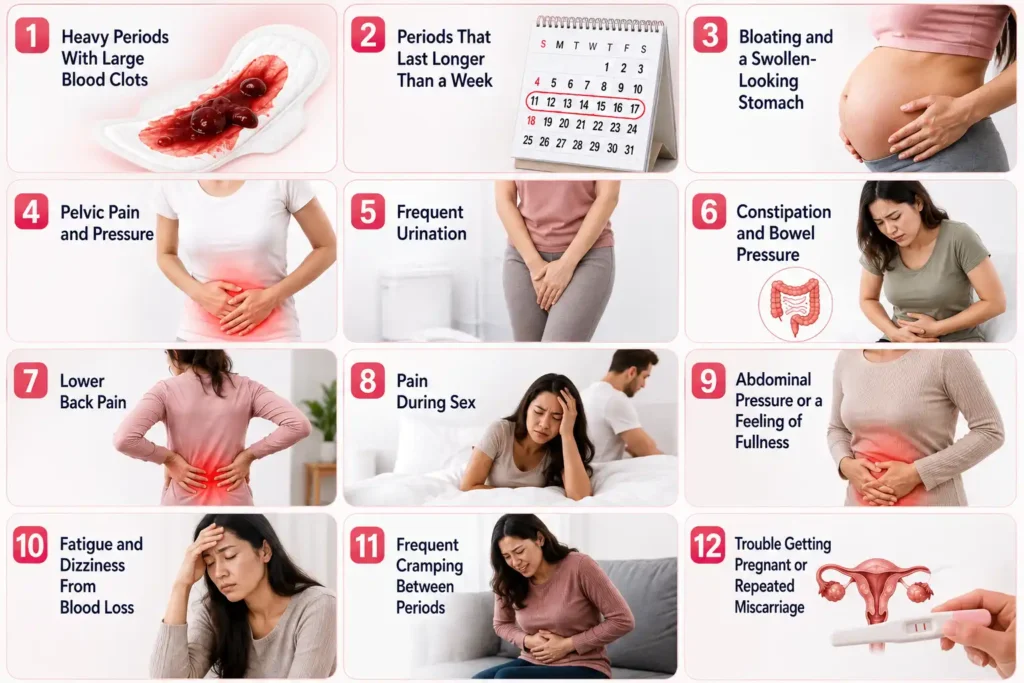
1. Heavy Periods With Large Blood Clots
This is the single most common complaint we hear in clinic. If your periods have suddenly become much heavier, soak through pads within an hour, or come with large clots, fibroids are a leading cause. Heavy bleeding happens because fibroids increase the surface area of the uterine lining and interfere with the muscle contractions that normally control blood flow.
2. Periods That Last Longer Than a Week
A normal period usually lasts four to seven days. Fibroids can stretch that window, leaving you bleeding for ten days or more. Prolonged bleeding is one of the clearest fibroid symptoms and is worth flagging to your doctor even if the flow itself feels manageable.
3. Bloating and a Swollen-Looking Stomach
If your stomach looks swollen even though your weight hasn’t changed, a growing fibroid could be the reason. Large fibroids push outward, giving the lower abdomen a rounded, pregnant-like appearance. We’ve documented several real cases of large fibroids where this was the very first symptom a patient noticed.
4. Pelvic Pain and Pressure
A constant dull ache or heaviness in the pelvis is another classic sign. This happens because fibroids take up space that presses against the surrounding organs and tissue. The pain is usually steady rather than sharp, though it can flare up around your period.
5. Frequent Urination
Fibroids that grow toward the front of the uterus can press against the bladder. This makes you feel like you need to urinate constantly, even when your bladder is barely full. It’s not a bladder problem at all; it’s abdominal pressure from the fibroid sitting close by.
6. Constipation and Bowel Pressure
In the same way fibroids press on the bladder, they can also press against the rectum. This slows digestion and leads to constipation, bloating, or a feeling of fullness after small meals.
7. Lower Back Pain
A fibroid growing on the back wall of the uterus can press against nearby nerves and muscles, causing a dull ache in the lower back. This pain often gets worse right before or during your period and can be mistaken for a muscular or spinal issue.
8. Pain During Sex
Fibroids, especially those near the cervix, can make intercourse uncomfortable or painful. This symptom is often the one women feel most hesitant to mention, but it’s a genuine and common fibroid symptom worth discussing openly with your gynecologist.
9. Abdominal Pressure or a Feeling of Fullness
Beyond visible swelling, many women describe a general sense of abdominal pressure, like something is sitting low in the belly. This can happen even with fibroids that aren’t large enough to be seen from the outside yet.
10. Fatigue and Dizziness From Blood Loss
Heavy, prolonged bleeding drains iron from your body over time. This can lead to anemia, which shows up as tiredness, dizziness, shortness of breath, or pale skin. If you feel wiped out for no clear reason, ask your doctor to check your iron levels alongside a pelvic exam.
11. Frequent Cramping Between Periods
While cramping during your period is common, fibroids can cause cramping at other times of the month too. This happens as the uterus works harder to contract around the growth.
12. Trouble Getting Pregnant or Repeated Miscarriage
Fibroids don’t always affect fertility, but certain types, especially those growing into the uterine cavity, can make it harder to conceive or carry a pregnancy to term. If you’re facing repeated difficulty, read more about fibroids and pregnancy.
Can a Small Fibroid Cause Heavy Bleeding and Severe Pain?
Yes and this surprises many patients. Size isn’t the only factor; location matters just as much. A small fibroid inside the uterine cavity (called a submucosal fibroid) can cause disproportionately heavy bleeding and pain, while a larger fibroid on the outer wall may cause barely any symptoms.
“I’ve had patients with a fibroid smaller than a grape who bled for two weeks straight and others with fibroids the size of an orange who never noticed a thing. Position inside the uterus decides the symptoms far more than size alone.” — Dr Balvin Kaur Ghai
Can You Have Fibroids Without Any Symptoms?
Yes, this is actually very common. Many women carry fibroids for years without knowing it. They’re often discovered by accident during a routine ultrasound or a pregnancy scan. Silent fibroids that aren’t causing pain, bleeding or pressure usually don’t need treatment right away; they just need monitoring.
What Size Fibroid Usually Starts Causing Symptoms?
There’s no single size that guarantees symptoms will appear. Fibroids larger than 4 to 5 centimeters are more likely to cause noticeable bloating or pressure, while fibroids of any size growing inside the uterine cavity tend to cause heavier bleeding sooner. This is why an ultrasound, not guesswork, is needed to confirm size and location.
Fibroids or Endometriosis? How to Tell the Difference
Heavy, painful periods can point to more than one condition and fibroids and endometriosis are commonly confused. Both cause pelvic pain, but the pattern and cause behind each are different.
| Feature | Uterine Fibroids | Endometriosis |
|---|---|---|
| What it is | Non-cancerous muscle growths in the uterus | Tissue similar to the uterine lining growing outside the uterus |
| Pain pattern | Steady pressure, worse around periods | Sharp, often worse just before and during periods |
| Bleeding | Heavy flow, large clots, prolonged periods | Bleeding may be heavy but is not always the main symptom |
| Bowel or bladder symptoms | Common, from pressure against organs | Can occur if tissue grows near the bowel or bladder |
| Fertility impact | Depends on fibroid location and size | Often linked to difficulty conceiving |
| Diagnosis | Pelvic ultrasound or MRI | Ultrasound, MRI and sometimes laparoscopy for confirmation |
Because the symptoms overlap so much, self-diagnosis rarely works. A pelvic ultrasound is usually the fastest way to tell the two apart.
Can Fibroids Cause Tiredness and Dizziness Because of Blood Loss?
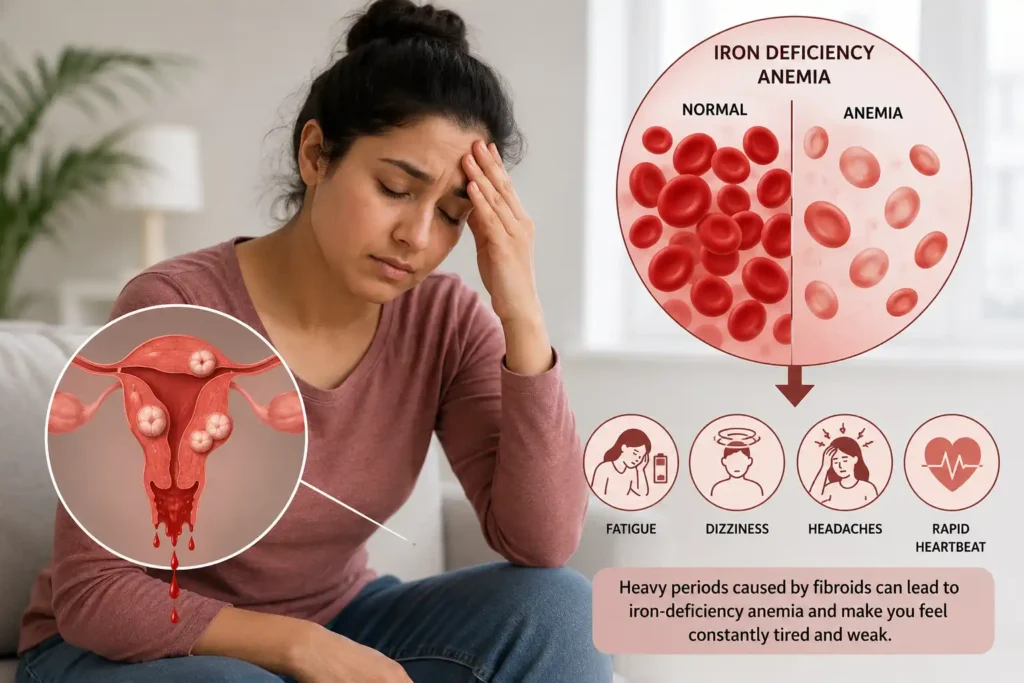
Yes. This is one of the most under-recognised fibroid symptoms. When periods are heavy month after month, your body loses more iron than it can replace through diet alone. Over time, this leads to iron-deficiency anemia, which causes fatigue, dizziness, headaches and a rapid heartbeat with mild activity. If you’re constantly exhausted and your periods are heavy, ask for a simple blood test alongside your gynecology check-up.
When Should You See a Gynecologist for Possible Fibroid Symptoms?
You don’t need to wait until symptoms become unbearable. Book an appointment if you notice any of the following:
- Periods that soak through a pad or tampon every hour for several hours
- Bleeding that lasts longer than seven days
- A visibly swollen or firm lower abdomen
- Pelvic pain that doesn’t ease with rest or basic pain relief
- Constant fatigue, dizziness, or shortness of breath
- Frequent urination with no urinary infection present
Early diagnosis gives you more treatment options and usually means simpler, less invasive care. If cost is a concern, our transparent breakdown of gynaecology surgery cost in the region can help you plan ahead.
How Fibroid Symptoms Are Diagnosed and Managed
Diagnosis usually starts with a pelvic exam followed by an ultrasound, which confirms the size, number and exact location of any fibroids. An MRI may follow for a more detailed picture, especially before surgery is considered.
Treatment depends on your symptoms age and whether you plan to have children. Options range from medication that controls bleeding, to minimally invasive procedures, to surgery for larger fibroids.
“No two fibroid cases look the same in my clinic. That’s why treatment should never be one-size-fits-all. My first goal is always to understand what a patient is feeling, then match the treatment to her body, her plans and her comfort.” — Dr Balvin Kaur Ghai
“Women often wait far too long before speaking up about heavy periods or pelvic pain,” says Dr Ghai. “I want patients to know that these symptoms are common, they’re treatable and there’s no need to suffer through them quietly.”
Final Thoughts
Fibroid symptoms are common, but that doesn’t mean you have to live with them. Heavy periods, bloating, pelvic pressure and fatigue are all signs worth taking seriously, whether they’ve just started or have been building up for months.
The most reliable next step is a proper pelvic ultrasound and a conversation with a gynecologist who takes your symptoms seriously. If you’re in Mohali / SAS Nagar, Chandigarh, Kharar, Zirakpur, or elsewhere across the Tricity and broader Punjab, you can book an appointment with the CLAGS team for a clear diagnosis and personalised treatment guidance.
Frequently Asked Questions
1. My periods have suddenly become much heavier with large blood clots. Could this be fibroids?
Yes, this is one of the most common signs of fibroids. Sudden heavy bleeding with large clots usually means something has changed inside the uterus, and fibroids are a frequent cause. An ultrasound can confirm this quickly, so it’s worth booking a check-up rather than waiting to see if it settles on its own.
2. Why does my stomach look swollen even though I haven’t gained weight? Could fibroids be the reason?
Yes, this is a classic sign, especially with larger fibroids. As fibroids grow, they push the abdomen outward, creating a swollen or rounded appearance that has nothing to do with body fat. Many women mistake this for weight gain for months before realising it’s a fibroid.
3. Can a small fibroid cause heavy bleeding and severe pain?
Absolutely. Location matters more than size. A small fibroid growing inside the uterine cavity can cause far heavier bleeding and more pain than a larger one growing on the outer wall of the uterus.
4. Why do I feel like I need to pee all the time even when my bladder isn’t full?
This usually happens when a fibroid presses against the bladder from the outside, reducing how much space the bladder actually has. It’s a pressure problem, not a bladder infection, though it’s still worth ruling out infection during your visit.
5. Can fibroids cause severe back pain during or before my period?
Yes. Fibroids growing on the back of the uterus can press against nearby nerves and muscles, causing a dull, persistent ache in the lower back that often worsens around your period.
6. How can I tell if my heavy, painful periods are caused by fibroids or endometriosis?
The two conditions share several symptoms, which makes them easy to confuse. Fibroids typically cause steady pressure and heavy bleeding, while endometriosis often causes sharper pain concentrated around the menstrual cycle. A pelvic ultrasound, and sometimes further imaging, is the most reliable way to tell them apart.
7. Can fibroids cause tiredness and dizziness because of blood loss?
Yes. Heavy, ongoing bleeding from fibroids can lead to iron-deficiency anemia over time, which shows up as fatigue, dizziness, and low energy. A simple blood test alongside your gynecology exam can confirm this.
8. Can I have fibroids without having any symptoms?
Yes, this is very common. Many fibroids are discovered by accident during a routine scan and cause no symptoms at all. These often just need regular monitoring rather than immediate treatment.
9. What size fibroid usually starts causing symptoms?
There’s no fixed size that guarantees symptoms. Fibroids larger than around 4 to 5 centimeters tend to cause more noticeable pressure or bloating, but even small fibroids can cause heavy bleeding if they’re positioned inside the uterine cavity.
10. When should I see a gynecologist for possible fibroid symptoms?
See a gynecologist if you notice heavy bleeding, periods lasting longer than seven days, ongoing pelvic pain, visible abdominal swelling, or unexplained fatigue. Early diagnosis usually means simpler, more comfortable treatment options.