
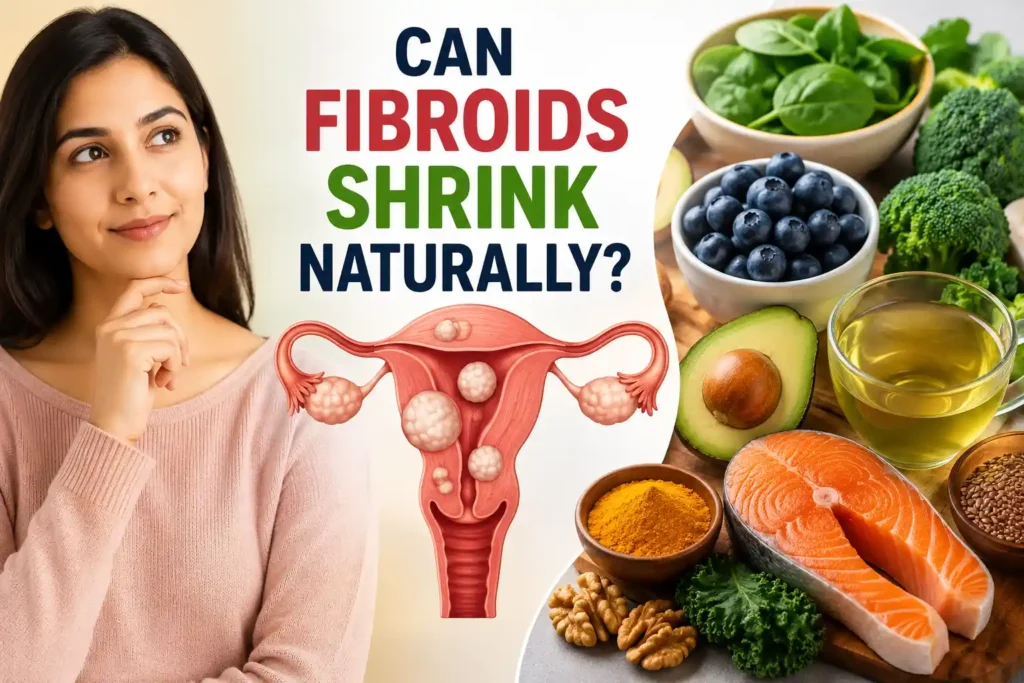
If you were just told you have fibroids, your first question probably wasn’t about surgery. It was simpler: can fibroids shrink naturally, on their own, with no tablets and no operation?
I get asked this almost every week at my clinic in Mohali. Patients come from Chandigarh, Zirakpur, Kharar and across the Tricity. Most arrive with an ultrasound report and a phone full of home-remedy articles. Let’s answer this honestly. The way I would in a real visit, not the way a search engine wants it answered.
Here is the short truth. Fibroids can shrink on their own in certain cases, especially around menopause. But home remedies rarely make an existing fibroid disappear. What they can do is manage symptoms, slow growth and support your body while you and your doctor decide on the right plan.
Key Takeaways
- Fibroids often shrink during and after menopause. This happens because they depend on oestrogen and progesterone to grow.
- Diet, weight control and stress reduction can slow fibroid growth and ease symptoms. They rarely shrink a fibroid that already exists.
- Fibroids are very common, with studies estimating that up to 70–80% of women develop them by age 50.
- Green tea extract, correcting vitamin D levels and an anti-inflammatory diet are among the better-supported home remedies for fibroids.
- Fibroids over 5 cm, or ones causing heavy bleeding, pain, or fertility issues, usually need medical or surgical care, not natural care alone.
What Are Uterine Fibroids, in Plain Words?
Fibroids are non-cancerous growths in or on the wall of the uterus. They are made of muscle and fibrous tissue. They grow because of two hormones: oestrogen and progesterone.
Most fibroids are harmless. Many women carry small fibroids for years and never know it. Problems start when a fibroid grows large. It can then press on nearby organs. It may also cause heavy periods, pelvic pain, or trouble conceiving.
Knowing what feeds a fibroid helps you understand whether it can shrink naturally. For more on why fibroids form, read our guide on uterine fibroid causes.
Do Fibroids Shrink on Their Own, Without Surgery or Medication?
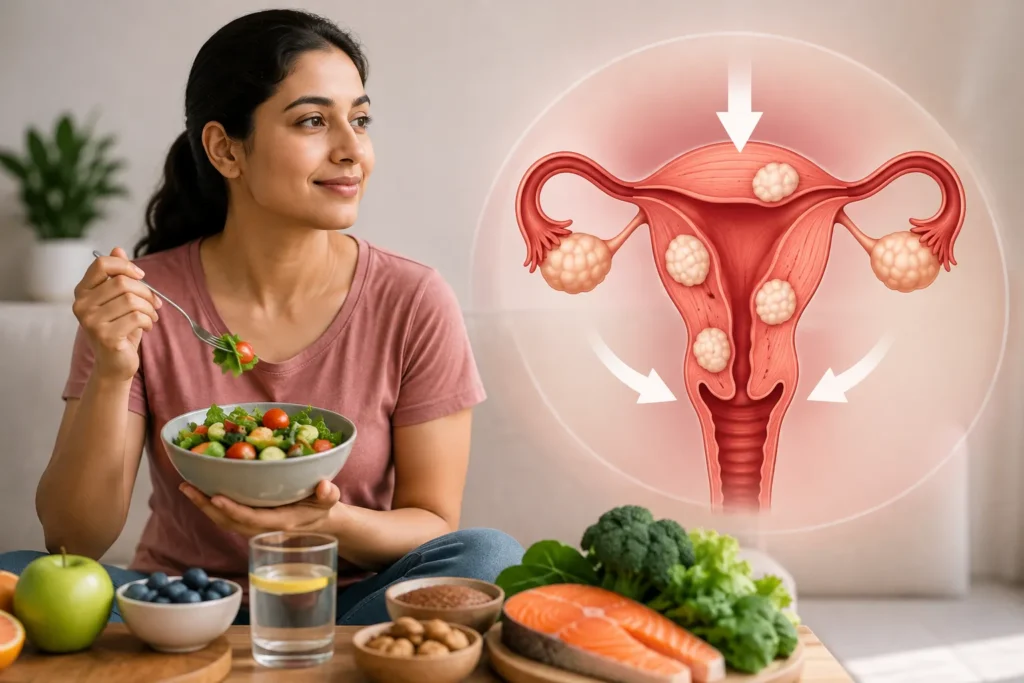
Yes, but with one condition. Fibroids shrink on their own mainly when hormone levels drop. This happens most often around menopause. Outside of that, a fully grown fibroid rarely shrinks from diet or lifestyle changes alone.
Natural steps still have real value. They can:
- Slow down how fast a fibroid grows
- Reduce inflammation and bloating
- Ease heavy bleeding and cramping
- Lower the chance of new fibroids forming
“In twenty years of practice, I have seen lifestyle changes work best as prevention and symptom control, not as a cure. If a fibroid is small and a patient stays consistent, natural steps can truly improve her quality of life. But I never promise a fibroid will vanish through diet alone.” — Dr Balvin Kaur Ghai
This is the honest, middle-ground answer. It is more useful than promises of a miracle cure. It is also more hopeful than being told surgery is your only option.
What Are the Best Home Remedies to Shrink Fibroids Naturally?
Good home remedies target two things: extra oestrogen and chronic inflammation. Here are the approaches with the most support behind them.
1. Green Tea Extract (EGCG)
Green tea contains EGCG, a compound that has shown promise in slowing fibroid growth in early research. A cup or two of green tea a day is a simple, low-risk habit to build.
2. Correcting Vitamin D Deficiency
Several studies link low vitamin D to a higher risk of fibroid growth. Vitamin D deficiency is common across North India due to limited sun exposure and diet. It is one of the first things I check in my patients.
3. Castor Oil Packs and Warm Compresses
These are traditional home remedies for fibroids. They soothe pelvic discomfort and support local blood flow. They will not shrink a fibroid, but many women feel real relief from cramping.
4. Turmeric and Anti-Inflammatory Spices
Turmeric contains curcumin, a natural anti-inflammatory. Adding it to daily cooking, already common in Punjabi kitchens, supports better hormone balance over time.
For a fuller, doctor-reviewed list, read our page on home remedies for fibroids.
Can Diet Changes Help Reduce the Size of Fibroids?
Diet alone will not make a large fibroid disappear. But it plays a real role in fibroid reduction and prevention. Fibroids feed on excess oestrogen. Certain foods raise oestrogen activity in the body, while others lower it.
A fibroid-friendly plate has more vegetables and more fibre. It has less processed food and less red meat. Small, steady changes matter more than short, extreme diets.
What Foods May Help With Fibroid Reduction?
| Foods to Eat More Of | Why They Help | Foods to Limit |
| Leafy greens (spinach, methi, sarson) | High in fibre, help clear extra oestrogen | Red meat and processed meat |
| Cruciferous vegetables (broccoli, cabbage) | Support healthy oestrogen breakdown | High-sugar packaged snacks |
| Whole grains and legumes (dal, rajma) | Keep blood sugar and hormones stable | Refined white flour (maida) |
| Green tea | Contains EGCG, linked to slower growth | Alcohol and excess caffeine |
| Fatty fish or flaxseeds | Anti-inflammatory omega-3s | High-sodium fried foods |
This is not a strict diet plan. Think of it as a direction to move in. Our full fibroid diet guide covers portions and a sample weekly plan for Indian meals.
Can Exercise and Weight Loss Help Shrink Fibroids?
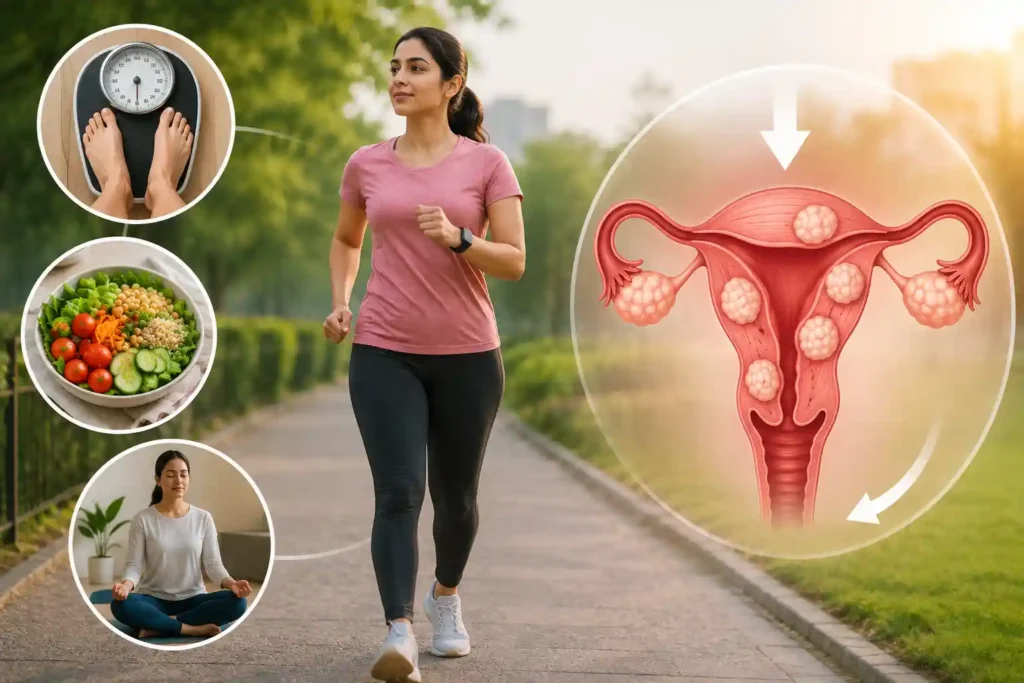
Body fat produces its own oestrogen. Extra weight, especially around the belly, can quietly fuel fibroid growth.
Regular movement helps in three ways. It supports a healthy weight. It lowers inflammation. It improves how your body handles blood sugar. Together, these cut the hormonal fuel behind fibroid growth. Even brisk 30-minute walks, five days a week, make a difference.
Exercise alone will not shrink an existing fibroid. But paired with better food choices, it is one of the most reliable natural treatments for slowing fibroids down.
Are There Natural Treatments That Can Actually Shrink Fibroids?
Many articles either oversell natural remedies or dismiss them completely. The honest answer sits in between. A simple side-by-side view makes it clearer.
| Approach | Can It Shrink Existing Fibroids? | Best Used For |
| Diet and lifestyle changes | Rarely, on its own | Prevention, symptom relief, slower growth |
| Herbal remedies (green tea, turmeric) | Limited evidence, small effect | Supporting other treatments |
| Menopause (natural hormone decline) | Yes, often quite a lot | Women nearing or past menopause |
| Hormonal medication | Yes, but temporarily | Shrinking a fibroid before surgery |
| Minimally invasive procedures | Yes, directly | Symptomatic fibroids needing real reduction |
| Surgery (myomectomy or hysterectomy) | Removes the fibroid fully | Large, painful, or fertility-affecting fibroids |
If your fibroid is small and quiet, natural care may be enough for now, with regular monitoring. If it is large or symptomatic, it helps to know your options early. Read more on fibroid surgery cost and options.
Do Fibroids Shrink Naturally After Menopause?
This is one of the most common questions I hear. The answer is genuinely reassuring. Yes, fibroids often shrink after menopause. Oestrogen and progesterone, the hormones that feed them, drop sharply at this stage.
Many women notice real change. Heavy bleeding and pelvic pressure often ease within one to two years after periods stop. This is not guaranteed for everyone. Shrinkage tends to be slower for women on hormone replacement therapy. Still, it remains the most reliable form of natural fibroid shrinkage there is.
How Long Does It Take for Fibroids to Shrink Naturally?
There is no fixed timeline. Be careful of anyone who promises one. Still, clinical experience gives us a general pattern:
- With lifestyle changes alone, symptoms often ease within two to three months.
- Around menopause, early shrinkage is often visible within six months to a year.
- Full stabilisation after menopause can take one to three years.
Every fibroid behaves differently. Its size, location and blood supply all matter. A small fibroid inside the muscle wall behaves very differently from a large one on the outer surface. To see how differently fibroids can act in real patients, read our page on real cases of large fibroids.
Can Stress or Lifestyle Changes Affect Fibroid Growth?
Yes and this is often overlooked. Chronic stress raises cortisol. Over time, this can throw off the balance between oestrogen and progesterone. That imbalance can encourage fibroid growth. It can also worsen bloating and irregular bleeding.
Simple habits help here. Aim for seven to eight hours of sleep. Stay active. Try yoga or deep breathing for stress relief. None of this shrinks a fibroid overnight. But together, these habits create a body that is less likely to feed fibroid growth.
When Do Fibroids Need Medical Treatment Instead of Natural Remedies?
Natural care has real value, but it has limits. I usually suggest moving beyond home remedies when a patient has any of the following:
- Fibroids larger than 5 cm, or growing fast on repeat scans
- Heavy periods causing anaemia or fatigue
- Pelvic pain that disrupts daily life
- Pressure on the bladder or bowel
- Fertility trouble linked to fibroid location
- Fibroids found during pregnancy planning
If any of this sounds familiar, please don’t wait it out on herbal tea alone. Early evaluation gives you more choices, including ones that protect fertility. Knowing symptoms early also helps. Our guide on early signs of fibroids shows what to watch for.
Where CLAGS Fits Into Your Fibroid Journey
At CLAGS in Mohali, we don’t push every patient straight to surgery. Most visits start with an ultrasound and a proper symptom review. Then we have an honest talk about what fits your case best. That could be natural management, medication, or a procedure.
Patients travel to us from across Punjab, including Chandigarh, Kharar and Zirakpur. We combine advanced laparoscopic and laser gynaecology with a truly personal approach. Fibroids are common and they deserve a plan built around your body, not a generic checklist.
Final Thoughts
Fibroids are common, manageable and rarely an emergency. Some shrink naturally through menopause. Others need medical support along the way. Either way, the most important step is a proper diagnosis. Don’t just guess from symptoms alone.
Are you dealing with fibroid symptoms in Mohali, Chandigarh, or anywhere across the Tricity? Book a visit with our team at CLAGS. We will help you understand your fibroid, your choices and a timeline that makes sense for you.
Frequently Asked Questions
1. Can fibroids shrink without surgery or medication, naturally?
In some cases, yes, mainly around menopause when hormone levels drop on their own. Outside of that, existing fibroids rarely shrink from lifestyle changes alone. These changes can still slow growth and ease symptoms a great deal.
2. What are the best home remedies to shrink fibroids naturally?
Green tea extract and correcting a vitamin D deficiency are two of the best-supported options. A diet full of vegetables and daily stress management also help. These work best for symptom relief and prevention, not for reversing a fibroid that already exists.
3. Can diet changes help reduce the size of fibroids?
Diet changes are better at preventing new fibroid growth and easing symptoms than at shrinking an existing fibroid. Eating less red meat and processed food and more fibre and vegetables, supports healthier hormone balance over time.
4. What foods may help with fibroid reduction?
Leafy greens, cruciferous vegetables, whole grains and legumes are commonly recommended. So are green tea and omega-3 foods like flaxseed and fatty fish. It also helps to limit red meat, refined flour, alcohol and salty fried foods.
5. Can exercise and weight loss help shrink fibroids?
Exercise and healthy weight control lower the extra oestrogen made by body fat, which can slow fibroid growth. They are unlikely to shrink an existing fibroid on their own, but they support overall symptom control.
6. Are there natural treatments that can actually shrink fibroids?
Menopause is the most reliable natural process that shrinks fibroids, since it lowers the hormones they depend on. Herbal remedies like green tea show modest, supporting evidence. But they are not a substitute for a proper checkup on larger fibroids.
7. Do fibroids shrink naturally once menopause begins?
Yes, this is very common. As oestrogen and progesterone fall after menopause, most fibroids shrink step by step. Symptoms like heavy bleeding often improve, or fully resolve, within one to three years.
8. How long does it take for fibroids to shrink naturally?
There is no single timeline. Symptom relief from lifestyle changes can show up within a few months. Natural shrinkage around menopause usually unfolds over six months to three years, depending on fibroid size and hormone levels.
9. Can stress or lifestyle changes affect fibroid growth?
Yes. Chronic stress raises cortisol, which can disturb the balance between oestrogen and progesterone. Poor sleep, high stress and low activity together create conditions where fibroids are more likely to grow.
10. When do fibroids need medical treatment instead of natural remedies?
Medical treatment becomes necessary when fibroids are large or growing fast. It also applies when they cause heavy bleeding, anaemia, real pain, or fertility trouble. In these cases, natural remedies alone are not enough. A proper checkup matters.