
A patient sat across from me last month, ultrasound report in hand, close to tears. She had just been told she had fibroids and assumed her chances of having a baby were over. This is one of the most common fears I hear in my Mohali clinic, and it is almost always bigger than the reality.
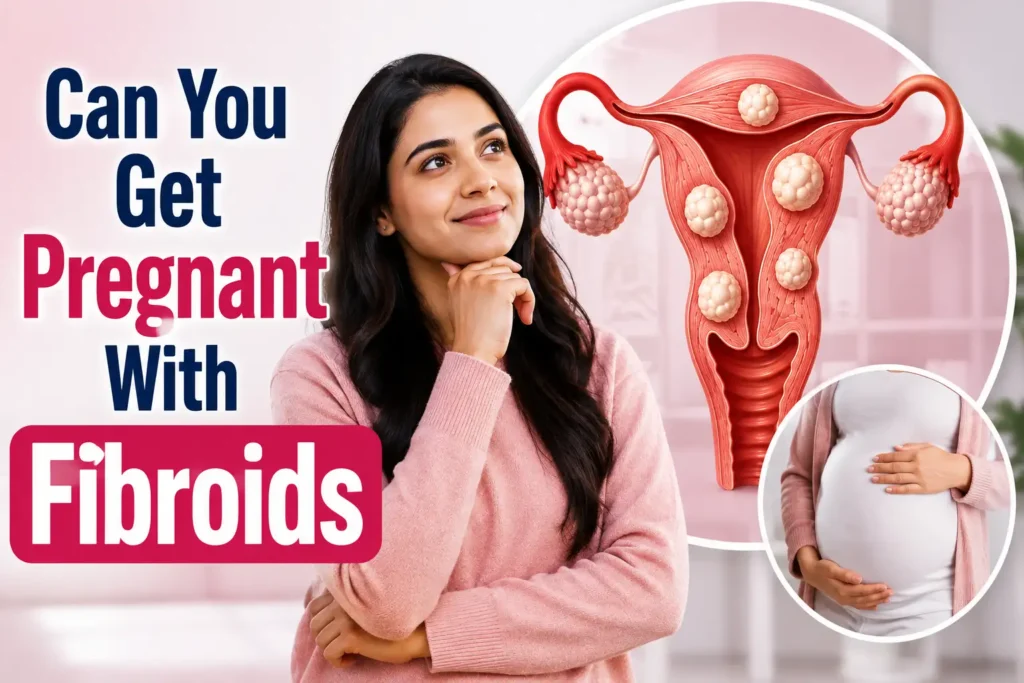
So, can you get pregnant with fibroids? In most cases, yes. Fibroids are extremely common, and a large share of women with them conceive naturally without any treatment at all. What matters is where the fibroid sits, how big it is, and whether it is changing the shape of your uterus. Once we know that, we know what your fertility picture actually looks like.
Key Takeaways
- Getting pregnant with fibroids is possible for most women. Fibroids alone are the sole cause of infertility in only about 2 to 3 percent of cases.
- Location matters more than size. Submucosal fibroids, which grow inside the uterine cavity, cause the most fertility problems. Subserosal fibroids, which grow on the outer wall, usually do not affect fertility at all.
- Removing a submucosal fibroid may roughly double clinical pregnancy rates in women with infertility.
- Fibroids and pregnancy can coexist safely with the right monitoring, though some fibroids raise the risk of miscarriage, preterm labour, or a breech baby.
- A myomectomy does not mean an automatic C-section, and most women are advised to wait a few months before trying to conceive again.
- IVF and fibroids are not automatically incompatible. Many women with fibroids go on to have successful IVF pregnancies once the uterine cavity is assessed.
What Are Uterine Fibroids, in Simple Terms?
Fibroids are non-cancerous growths made of muscle and fibrous tissue that form in or around the uterus. They can be as small as a pea or as large as a melon. Many women in Mohali, Chandigarh, and across Punjab carry fibroids without ever knowing it, because a large number cause no symptoms at all. Doctors group fibroids by where they grow: inside the uterine cavity, within the muscular wall, or on the outer surface. This location is the single biggest factor in whether fibroids affect your fertility.
Can You Get Pregnant With Fibroids Naturally?
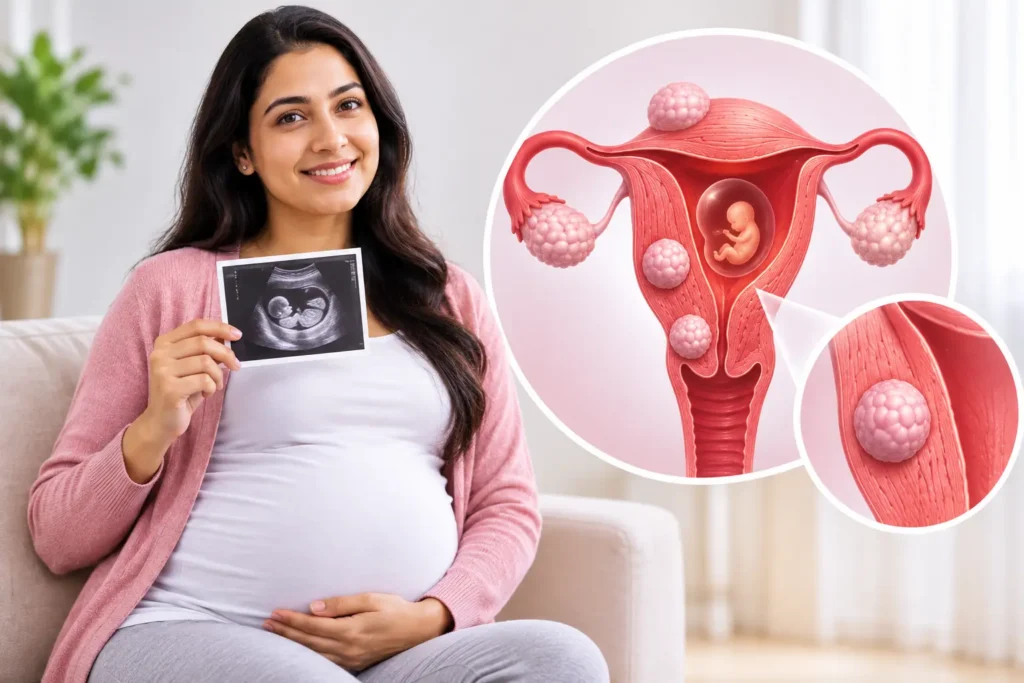
Yes, many women get pregnant with fibroids naturally and never need any intervention. Fibroids are found in a large proportion of women of reproductive age, yet the majority of pregnancies in women with fibroids happen without any fertility treatment. The real question isn’t whether fibroids exist. It’s whether a fibroid is sitting somewhere that blocks the embryo from implanting or interferes with blood flow to the lining of the uterus. A fibroid tucked into the outer muscle wall, away from the cavity, rarely changes your natural chances at all.
Do Fibroids Make It Harder to Get Pregnant?
Sometimes, yes, but not always in the way people assume. Fibroids and infertility are linked mainly when a growth distorts the cavity where the embryo needs to implant, or when it presses on the fallopian tube openings.
“I tell my patients that fibroids don’t automatically mean infertility. What matters is the address of the fibroid, not just its size,” says Dr Balvin Kaur Ghai, gynaecologist at CLAGS, Mohali.
A fibroid can also thicken the uterine lining unevenly, reduce blood supply to the endometrium, or trigger inflammation that makes implantation harder. This is why two women with similarly sized fibroids can have very different fertility experiences.
Which Types of Fibroids Affect Fertility the Most?
If you’re wondering whether you can get pregnant with fibroids at all, the answer usually comes down to this classification. Fibroid fertility outcomes depend heavily on where the growth sits. Here is a simple breakdown we use during consultations at our clinic in Mohali:
| Fibroid Type | Where It Grows | Typical Effect on Fertility | Usual Approach |
|---|---|---|---|
| Submucosal | Inside the uterine cavity | Highest impact, can block implantation | Hysteroscopic removal usually recommended |
| Intramural | Within the muscular wall | Moderate impact, mainly if large or near the cavity | Removed if distorting the cavity or causing symptoms |
| Subserosal | On the outer surface of the uterus | Little to no impact on fertility | Monitored, removed only if symptomatic |
Submucosal fibroids are the ones we watch most closely, because even a small one in the wrong spot can lower implantation rates.
What Size Fibroid Can Prevent Pregnancy?
There isn’t one magic number. A 2 cm submucosal fibroid pressing into the cavity can cause more trouble than a 6 cm fibroid growing quietly on the outside of the uterus. That said, very large fibroids, generally above 5 to 6 cm, can distort the uterine shape enough to affect implantation or crowd a growing pregnancy, even from outside the cavity. We’ve documented some genuinely large cases in our fibroid case files, and size alone rarely tells the full story. An ultrasound or hysteroscopy gives a far more useful answer than any general size chart.
Can You Have a Healthy Pregnancy With Fibroids?
Absolutely, most women do. Pregnancy with fibroids is common, and fibroids often stay stable or even shrink slightly after delivery. Some do grow during pregnancy due to rising oestrogen, which is why we monitor them at each visit rather than assuming nothing has changed. For patients across Mohali, Kharar, Zirakpur, and the wider Tricity area, we usually recommend closer ultrasound monitoring through the second and third trimesters if a fibroid is large or sits near the placenta. You can book a pregnancy checkup if you already know you have fibroids and are planning a pregnancy.
Can Fibroids Cause Miscarriage or Pregnancy Complications?
They can, particularly submucosal fibroids and larger intramural ones. Miscarriage risk rises when a fibroid interferes with the blood supply to the placenta or crowds the space the embryo needs to grow. Other complications linked to fibroids include preterm labour, a baby settling in a breech position, painful fibroid degeneration in the second trimester, and a slightly higher chance of needing a caesarean if a fibroid blocks the birth canal. None of this is meant to alarm you. It simply means fibroid pregnancies deserve closer attention, not panic.
Should Fibroids Be Removed Before Trying to Get Pregnant?
Whether you can get pregnant with fibroids without surgery depends entirely on the type and location. If a fibroid is submucosal or distorting the cavity, most fertility specialists, including our team, recommend a myomectomy before you start trying. If it’s subserosal and causing no symptoms, surgery usually isn’t necessary just for fertility reasons.
“We don’t operate on every fibroid we find. We operate on the ones standing between a patient and a pregnancy,” explains Dr Ghai.
If surgery is recommended, understanding the surgery and cost options beforehand helps couples plan without added stress.
Can You Get Pregnant After Fibroid Removal?
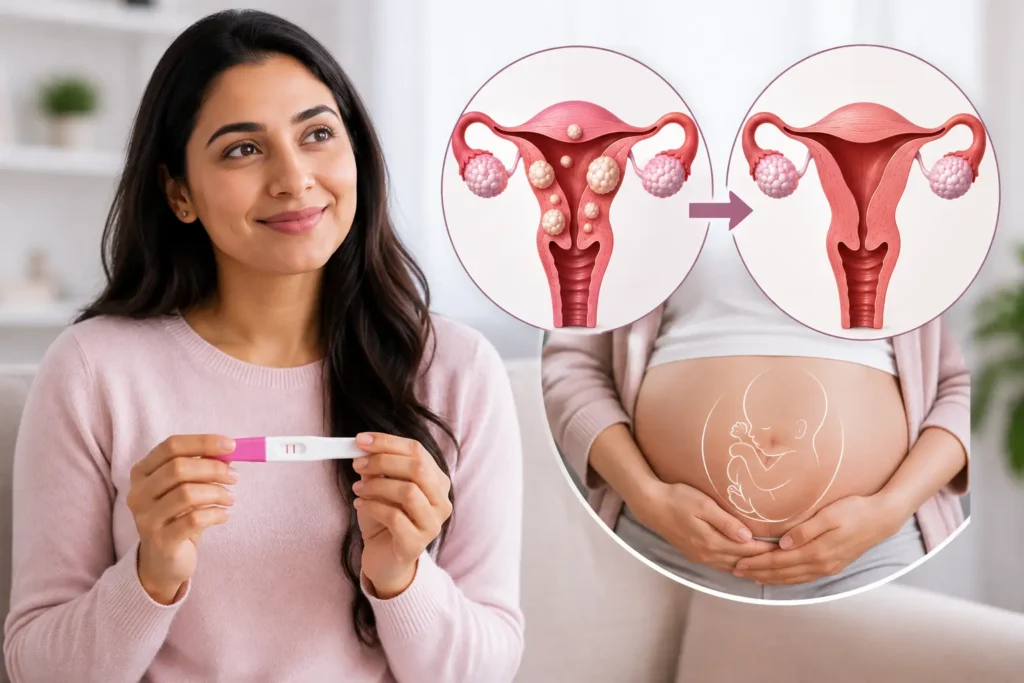
Yes, and for many women this is when their chances actually improve. Removing a cavity-distorting fibroid restores normal uterine shape, which gives an embryo a proper surface to implant on. Studies reviewing hysteroscopic removal of submucosal fibroids found pregnancy rates climbing to well above what they were before surgery.
How Long Should You Wait to Get Pregnant After a Myomectomy?
This depends on how deep the surgery went into the uterine wall.
- After a hysteroscopic myomectomy (fibroid removed through the cervix, no external cuts), many women can try again within one to two menstrual cycles.
- After a laparoscopic or open myomectomy involving the uterine muscle, we generally advise waiting three to six months to let the scar heal fully.
- Your surgeon will confirm healing on ultrasound before giving the go-ahead, since every uterus recovers at its own pace.
Trying too soon after a deeper myomectomy raises the risk of uterine rupture later in pregnancy, so this waiting period isn’t just a formality.
Can IVF Help You Get Pregnant If You Have Fibroids?
Often, yes. IVF and fibroids can work together successfully, but the fibroid’s location still matters just as much as it does with natural conception. Before starting IVF, your specialist will usually check the cavity with a hysteroscopy or saline ultrasound. If a submucosal fibroid is found, removing it first tends to improve implantation and pregnancy rates. Fibroids sitting outside the cavity generally don’t need to be touched before an IVF cycle begins. For couples in Punjab exploring assisted conception, this evaluation step is one of the most important parts of pre-IVF planning.
When Should You See a Fertility Specialist in Mohali?
If you’ve been trying to conceive for over a year, or six months if you’re above 35, it’s worth getting an ultrasound to rule out fibroids or other causes. The same applies if you already know you have fibroids and are planning a pregnancy soon. At CLAGS in Mohali, we assess fibroid type, size, and location before recommending anything, because not every fibroid needs treatment and not every pregnancy plan needs to be delayed. You can book an appointment to get a clear, personalised picture of your fertility rather than guessing from general advice online.
A Final Word
If you take away one thing, let it be this: you can get pregnant with fibroids in most situations, and having them doesn’t mean your pregnancy plans are on hold. The real work is figuring out exactly what type you have and whether it’s in the way. Once we know that, most patients get a far more hopeful, and far more accurate, answer than the one they walked in fearing.
Frequently Asked Questions
1. Can you get pregnant with fibroids naturally?
Yes. Most women with fibroids conceive naturally, especially when the fibroid is outside the uterine cavity.
2. Do fibroids make it harder to get pregnant?
Sometimes. It depends on whether the fibroid distorts the uterine cavity or affects blood flow to the lining.
3. Which types of fibroids affect fertility the most?
Submucosal fibroids, which grow inside the cavity, cause the most fertility problems. Subserosal fibroids rarely affect fertility.
4. What size fibroid can prevent pregnancy?
There’s no fixed size. Location matters more, though fibroids above 5 to 6 cm are more likely to cause trouble regardless of type.
5. Can you have a healthy pregnancy with fibroids?
Yes, with regular monitoring. Most fibroid pregnancies go smoothly with a few extra ultrasounds along the way.
6. Can fibroids cause miscarriage or pregnancy complications?
They can, particularly submucosal or large intramural fibroids, which is why closer monitoring is recommended.
7. Should fibroids be removed before trying to get pregnant?
Only if they’re distorting the cavity or causing significant symptoms. Not every fibroid needs surgery.
8. Can you get pregnant after fibroid removal?
Yes, and pregnancy rates often improve once a cavity-distorting fibroid is removed.
9. How long should you wait to get pregnant after a myomectomy?
One to two cycles after a hysteroscopic procedure, or three to six months after a deeper laparoscopic or open myomectomy.
10. Can IVF help you get pregnant if you have fibroids?
Yes, particularly once a submucosal fibroid is removed. IVF success improves once the uterine cavity is clear.
11. Can fibroids affect ovulation or menstrual cycles?
Fibroids usually do not directly stop ovulation. However, they can cause heavy or prolonged periods, pelvic pressure, and menstrual changes. If you are having irregular cycles or difficulty conceiving, other causes of ovulation problems should also be evaluated.
12. Can fibroids grow during pregnancy?
Fibroids can change in size during pregnancy, particularly during the early stages when hormone levels increase. However, growth is unpredictable, and not every fibroid becomes larger. Some women experience fibroid-related pain during pregnancy.
13. What are the chances of getting pregnant after fibroid surgery?
Pregnancy is possible after fibroid surgery, but there is no single success rate for everyone. Fertility depends on factors such as age, ovarian reserve, fibroid location and size, other fertility conditions, and the type of surgery performed.
14. Can fibroids affect fertility even if there are no symptoms?
Yes, although many asymptomatic fibroids have little or no effect on fertility. A fibroid may be symptom-free but still affect fertility if it distorts the uterine cavity or interferes with implantation.
15. When should you see a gynecologist if you have fibroids and want to get pregnant?
Consider discussing your fibroids with a gynecologist before trying to conceive, especially if you have large or multiple fibroids, previous fertility problems, recurrent miscarriage, heavy periods, or a fibroid that affects the uterine cavity. A fertility evaluation can help determine whether treatment is necessary.