

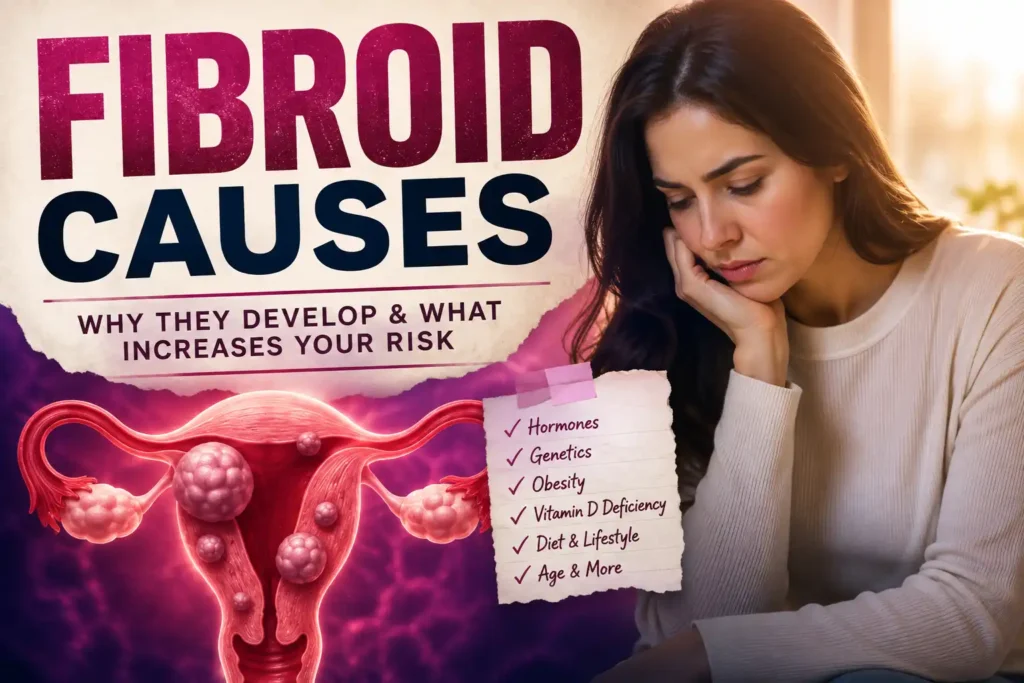
You’re staring at an ultrasound report with a word on it you’ve never seen before: fibroid. The next thought is almost always the same one. What did I do to cause this?
Here’s the honest answer. Fibroid causes come down to a mix of hormones, genes, and biology, most of which was never in your hands. I’ll walk you through what drives fibroid growth, what raises your risk, and what you can actually do about it.
Key Takeaways
- Fibroids are the most common non-cancerous growths in the female reproductive system. Up to 80% of women develop them by age 50, according to Mayo Clinic.
- The exact fibroid causes are still being researched, but hormonal imbalance, particularly excess estrogen and progesterone activity, is the strongest known driver.
- Genetics matters. Women with a maternal history of fibroids face a notably higher risk, according to a 2024 JAMA study.
- Obesity, vitamin D deficiency, early periods, and a diet high in red meat are all linked to a greater risk of fibroids.
- Fibroids are not caused by anything you did wrong. Most risk factors are biological, not behavioural.
What Exactly Are Uterine Fibroids?
Fibroids are firm, non-cancerous growths made of muscle and fibrous tissue that form in or around the uterus. They can be as tiny as a seed or as large as a melon.
Some women carry fibroids their entire life without ever knowing. Others deal with heavy bleeding, pelvic pressure, or fertility struggles. The size and location decide how much trouble they cause, not the fact that they exist.
What Causes Fibroids? The Honest Answer
Here’s something I tell every patient: medical science still doesn’t have one single, confirmed cause of fibroids. What we do have is decades of research pointing to a cluster of hormonal, genetic, and lifestyle factors that work together.
Think of fibroid causes less like a single trigger and more like a recipe. Several ingredients need to combine before a fibroid actually forms and grows.
“In my 20 years of practice, I’ve treated women with completely different lifestyles, diets, and body types, and all of them had fibroids. That tells us something important. Fibroid causes are rarely about one bad habit. They’re about how your hormones, genes, and body composition interact over years.” — Dr Balvin Kaur Ghai
1. Hormonal Imbalance: Estrogen and Progesterone
This is the factor researchers agree on the most. Fibroids are sensitive to hormones. Estrogen and progesterone, the two hormones that control your monthly cycle, also appear to fuel fibroid growth.
Fibroids tend to grow during the reproductive years, when estrogen and progesterone levels are highest. They usually shrink after menopause, when hormone levels drop. This pattern is one of the strongest pieces of evidence linking hormonal imbalance to uterine fibroid causes.
Some fibroids even have more estrogen and progesterone receptors than the healthy uterine tissue around them, which means they respond more strongly to hormonal signals than normal muscle does.
2. Genetics and Family History
Fibroids often run in families, and this is one of the most consistent causes of fibroids we see in clinical practice. If your mother or sister had fibroids, your own risk goes up meaningfully.
Genetic changes within the muscle cells of the uterus are thought to trigger the abnormal growth pattern that eventually becomes a fibroid. Researchers have identified several gene variations linked to fibroid development, and studies continue to uncover more.
This is also why one of the most common questions I get is “can fibroids run in families?” The honest answer is yes, though having a family history doesn’t guarantee you’ll develop them too.
3. Obesity and Excess Body Weight
Fat tissue doesn’t just store energy. It also produces estrogen. This means women carrying excess weight, particularly around the abdomen, tend to have higher circulating estrogen levels, which can encourage fibroid growth.
Obesity is one of the few genuinely modifiable causes of fibroids on this list, which is why weight management is often part of the conversation when I counsel patients on prevention.
4. Vitamin D Deficiency
This one surprises most patients. Low vitamin D levels are strongly associated with a higher fibroid risk and larger fibroid size. Since a large portion of women, especially those who spend most of the day indoors, run low on vitamin D, this deserves far more attention than it usually gets.
Getting your vitamin D levels checked is a simple, inexpensive step that’s often overlooked in fibroid workups.
5. Age and Reproductive History
Fibroids are rare before puberty and after menopause. They’re most commonly diagnosed in your 30s and 40s, which lines up with the years your hormone levels are at their peak.
Starting your periods early, never having been pregnant, and having your first child later in life have all been linked to a somewhat higher risk. Pregnancy itself appears to have a slightly protective effect, though it’s not fully understood why. If you’re managing fibroids and planning a family, it’s worth reading more about fibroids and pregnancy before you make treatment decisions.
6. Race and Ethnicity
Fibroids are diagnosed more often, and at a younger age, in women of African descent compared to other ethnic groups. Researchers believe this is a combination of genetic and hormonal factors, though the exact mechanism is still under study.
7. Diet and Lifestyle Factors
What you eat doesn’t directly cause fibroids to appear out of nowhere, but certain dietary patterns are linked to a higher risk. Diets heavy in red meat and low in green vegetables and fruit have shown a consistent association with fibroid development in multiple studies.
On the other hand, a diet rich in fibre, leafy greens, and phytoestrogen-balanced foods may support hormonal balance. If you want a practical starting point, our detailed fibroid diet guide breaks down exactly what to eat and what to limit.
Modifiable vs Non-Modifiable Fibroid Risk Factors
Not every risk factor is within your control, and understanding the difference helps you focus your energy where it actually counts.
| Risk Factor | Can You Change It? | What You Can Do |
|---|---|---|
| Genetics / family history | No | Get regular pelvic checkups if fibroids run in your family |
| Age | No | Track symptoms as you enter your 30s and 40s |
| Race / ethnicity | No | Stay proactive with screening regardless of background |
| Obesity | Yes | Work toward a healthy weight through diet and activity |
| Vitamin D deficiency | Yes | Get tested; supplement if levels are low |
| Diet | Yes | Reduce red meat; add more fibre and vegetables |
| Stress levels | Partially | Build stress-management habits into your routine |
Can Stress Actually Cause Fibroids?
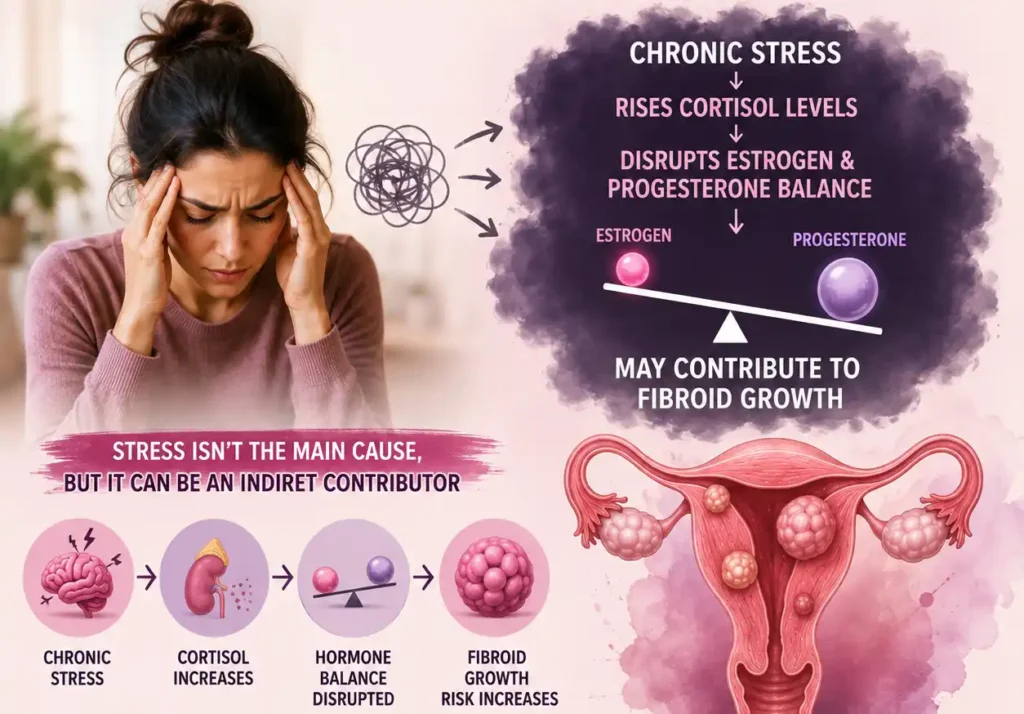
This is a question I get almost every week. Stress alone doesn’t create a fibroid the way genetics or hormones do, but chronic stress does raise cortisol levels, and cortisol can disrupt the delicate balance between estrogen and progesterone.
So while stress isn’t a direct cause, it can be an indirect contributor, especially when it’s long-term and unmanaged. Managing stress won’t guarantee you avoid fibroids, but it’s good for your hormonal health regardless.
Why Do Fibroids Suddenly Seem to Grow?
Patients often describe a fibroid that stayed the same size for years, then suddenly grew. A few things typically explain this.
Pregnancy hormones can cause rapid, temporary fibroid growth. Perimenopause, with its hormone fluctuations, can also trigger growth spurts before things settle down. In rare cases, a fibroid outgrows its blood supply and degenerates, which can cause sudden pain even without further growth.
If you notice new or worsening symptoms, it’s worth reviewing the early symptoms of fibroids so you know what to watch for and when to get checked.
Did I Do Something to Cause My Fibroids?
I want to address this directly because so many women carry unnecessary guilt over their diagnosis. No, you did not cause your fibroids by something you did or didn’t do.
Fibroids develop from a mix of genetics, hormone biology, and factors largely outside your control, like your age and family history. Lifestyle choices can influence your risk level, but they are not the root cause. Please don’t blame yourself for a condition your own body’s biology set in motion.
Reducing Your Risk: What Actually Helps
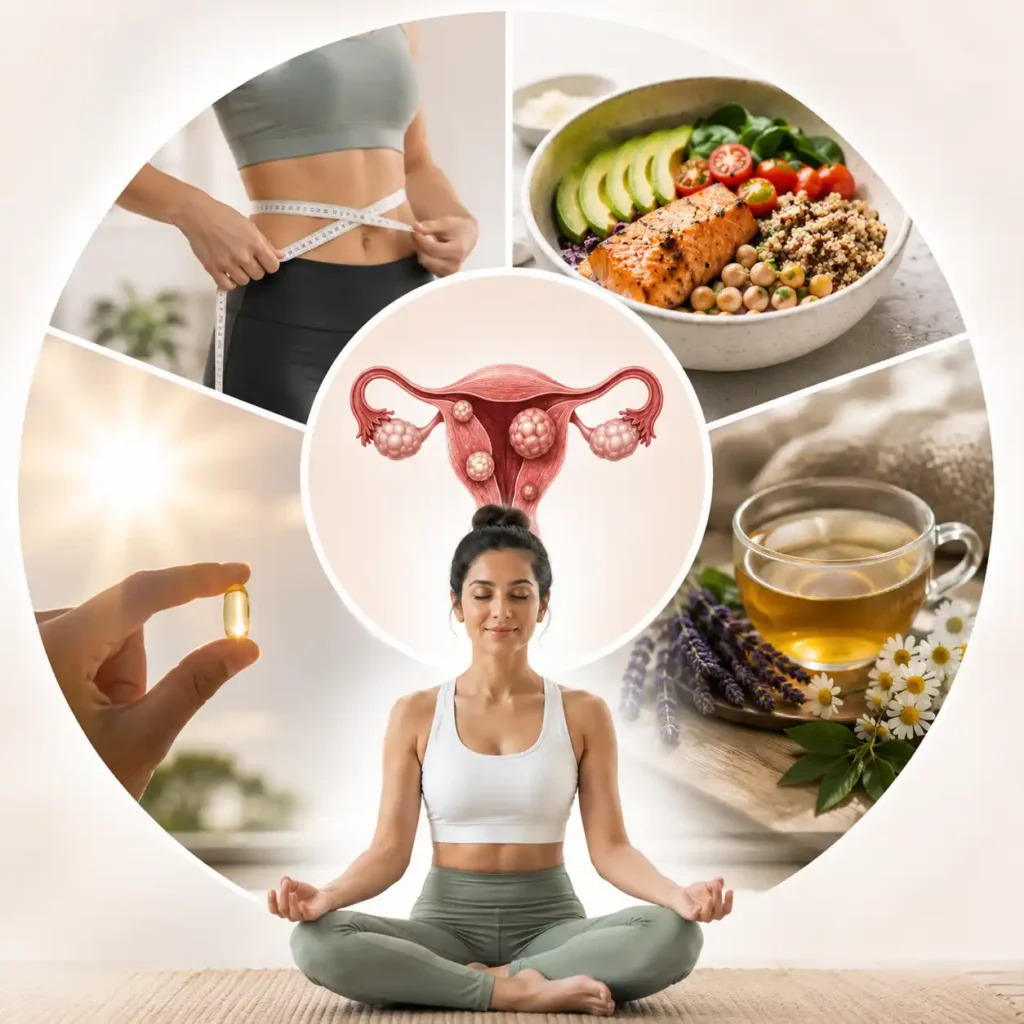
While you can’t change your genes or your age, there’s a meaningful amount you can influence. Maintaining a healthy weight, correcting a vitamin D deficiency, eating a balanced diet, and managing chronic stress are all backed by research as genuinely useful steps.
Many patients also ask about natural approaches alongside medical care. If that interests you, our guide on home remedies for fibroids covers safe, evidence-informed options you can discuss with your doctor.
When Should You See a Gynaecologist?
Not every fibroid needs treatment. Many small, symptom-free fibroids are simply monitored over time. But you should book an appointment if you notice heavy or prolonged periods, pelvic pain or pressure, frequent urination, or difficulty conceiving.
At CLAGS, we assess each case individually, from watchful waiting to minimally invasive procedures. If you’re exploring your choices, our page on fibroid treatment options walks through what’s available and what each approach typically costs.
Final Thoughts
Fibroid causes are complex, and that’s actually reassuring news. It means your diagnosis isn’t the result of one mistake or one bad habit. It’s the outcome of hormones, genetics, and biology working together over time, most of which was never in your hands to control.
What is in your hands is how you respond now. Understanding your personal risk factors, getting the right tests done, and working with a gynaecologist who takes your symptoms seriously can make all the difference in how fibroids affect your life going forward.
If you’d like a personalised assessment, our team at CLAGS is here to help you understand your fibroids and your options, without judgment and without guesswork.
Frequently Asked Questions
1. What causes fibroids in the uterus?
Fibroids form when muscle cells in the uterine wall grow abnormally, multiplying into a firm, rounded mass. This abnormal growth is driven mainly by hormonal imbalance, particularly estrogen and progesterone, combined with a genetic tendency in the muscle cells themselves. No single cause explains every case, which is why doctors describe it as a multi-factor condition rather than one triggered by a single event.
2. Why do uterine fibroids develop?
Uterine fibroids develop when a single muscle cell in the uterus undergoes a genetic change that causes it to divide repeatedly, forming a distinct growth. Hormones then act like fuel, encouraging that growth to continue during your reproductive years. This is why fibroids are almost never seen before puberty and typically shrink after menopause, when hormone levels drop.
3. Can fibroids run in families?
Yes. If your mother or sister has had fibroids, your own risk is meaningfully higher than average. Researchers believe this connection comes from inherited genetic variations that affect how uterine muscle cells grow and how your body processes estrogen and progesterone. That said, family history raises risk; it doesn’t guarantee you’ll develop fibroids too.
4. Can hormonal imbalance cause fibroids?
Hormonal imbalance is considered one of the leading fibroid causes. Fibroids contain more estrogen and progesterone receptors than normal uterine tissue, which makes them especially responsive to hormonal signals. Conditions or life stages involving higher or fluctuating hormone levels, like the reproductive years or certain hormonal therapies, are associated with fibroid growth.
5. Can stress cause uterine fibroids?
Stress isn’t a direct, standalone cause of fibroids, but it isn’t harmless either. Chronic stress raises cortisol, which can disrupt the balance between estrogen and progesterone over time. This makes stress an indirect contributor for some women rather than a primary trigger on its own.
6. Can being overweight increase the risk of fibroids?
Yes, and this is one of the more modifiable risk factors. Fat tissue produces its own estrogen, so carrying excess weight, especially around the abdomen, can raise your overall estrogen exposure. This is one reason maintaining a healthy weight is often part of a fibroid-prevention conversation.
7. Can vitamin D deficiency cause fibroids?
Low vitamin D levels are strongly linked to both a higher risk of developing fibroids and to larger fibroid size once they form. Since vitamin D deficiency is common, particularly among women who get limited sun exposure, it’s a factor worth testing for and correcting where possible.
8. Can diet cause or worsen fibroids?
Diet doesn’t single-handedly cause fibroids, but certain eating patterns are associated with higher risk. Diets high in red meat and low in vegetables and fruit have shown a consistent link to fibroid development. A diet built around fibre, leafy greens, and whole foods may support better hormonal balance instead.
9. Why do fibroids suddenly grow?
Sudden growth is usually tied to a hormone shift. Pregnancy, for example, can cause temporary rapid growth due to surging hormone levels. Perimenopause, with its unpredictable hormonal swings, can also trigger noticeable changes. Occasionally, what feels like sudden growth is actually a fibroid outgrowing its blood supply, which causes pain rather than true size increase.
10. Did I do something that caused my fibroids?
No. This is one of the most important things I tell my patients. Fibroids are driven by genetics and hormone biology, factors that are simply part of how your body works, not choices you made. While healthy habits can influence your risk level, they are not the reason fibroids formed. Please don’t carry guilt over a diagnosis that was never within your control to prevent entirely.