
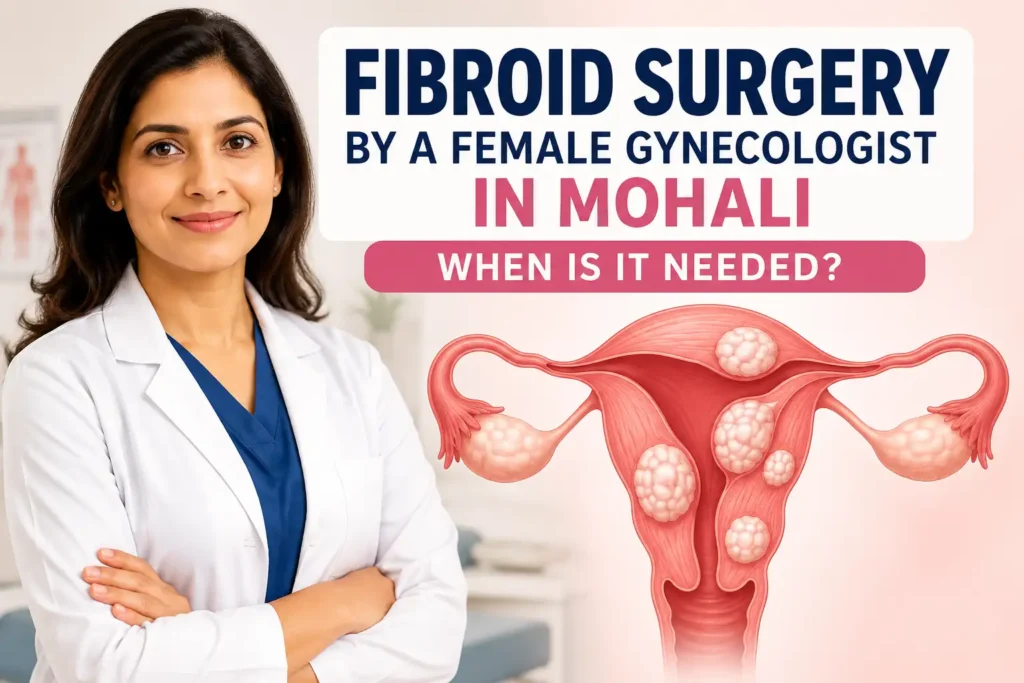
Most women I meet at my Mohali clinic have lived with fibroid symptoms for months, sometimes years, before booking an appointment. They tell me the heavy bleeding “runs in the family” or the bloating is “just weight gain.” Often, it is neither.
If you are researching fibroid surgery by a female doctor in Mohali, you are probably somewhere between worried and hopeful. Worried because a scan showed something you did not expect. Hopeful because you want answers from someone who will explain your options, not just schedule an operation.
The honest truth is: not every fibroid needs surgery. Many can be watched safely or managed with medicine. But some fibroids do reach a point where surgery is the safer, smarter choice. This guide walks you through how that decision gets made, what causes fibroids in the first place, and why so many women across Mohali, Chandigarh, Kharar, and Zirakpur now specifically look for a female fibroid surgeon in Mohali.
Key Takeaways
- Uterine fibroids affect up to 70% of white women and more than 80% of Black women by age 50, making them one of the most common gynaecological conditions worldwide.
- Women with fibroids are far more likely to have low vitamin D levels than women without them, and sufficient vitamin D is linked to a lower fibroid risk.
- Surgery is usually considered only when fibroids cause heavy bleeding, severe pain, pressure symptoms, rapid growth, or fertility problems that have not responded to other treatment.
- Laparoscopic fibroid surgery in Mohali offers smaller cuts, less blood loss, and quicker recovery compared with open surgery, for suitable cases.
- A myomectomy removes fibroids while keeping the uterus, while a hysterectomy removes the uterus entirely. The right choice depends on your age, fertility wishes, and fibroid size.
Understanding Uterine Fibroids: The Basics
Fibroids are non-cancerous growths that form in or around the uterus, made of muscle and fibrous tissue. They range from pea-sized to as large as a melon.
Most grow slowly, and some cause no symptoms at all. Others bring heavy periods, pelvic pressure, back pain, or a swollen lower abdomen. Read more about early fibroid symptoms and what to watch for.
The exact cause of fibroids is still not fully understood. What we do know is that oestrogen and progesterone, the two main female hormones, feed fibroid growth. This is why fibroids often shrink after menopause, when hormone levels drop. Genetics, age, and certain lifestyle factors also play a role, which I have covered in detail on our page about what causes fibroids.
Stress does not directly cause fibroids to form. But chronic stress raises cortisol and can disturb your hormonal balance, which may indirectly encourage fibroid growth in women who already have them. Managing stress is good general health advice, though it is not a substitute for medical monitoring.
Diet, Weight, and Vitamin D: What Actually Matters
Patients often ask me if diet alone can shrink a fibroid. It cannot, but diet does influence risk. Diets high in red meat and low in fruit and green vegetables have been linked to a higher fibroid risk in several studies.
Being overweight raises oestrogen levels in the body, since fat tissue produces its own oestrogen. This is one reason obesity is considered a genuine risk factor for fibroid development. Steady, healthy weight loss can help lower this added hormonal load, though it will not remove an existing fibroid.
Vitamin D deserves special mention here. Research shows women with fibroids are considerably more likely to be vitamin D deficient than women without them, and low vitamin D may allow fibroid cells to grow faster. A simple blood test can tell you where you stand. For food-based strategies, see our detailed fibroid diet guide.
“I tell my patients that food and vitamin D support your hormonal health, but they are not a cure. If your fibroid is already large or symptomatic, lifestyle changes work alongside treatment, not instead of it.” — Dr Balvin Kaur Ghai
Fibroids, Fertility, and Pregnancy
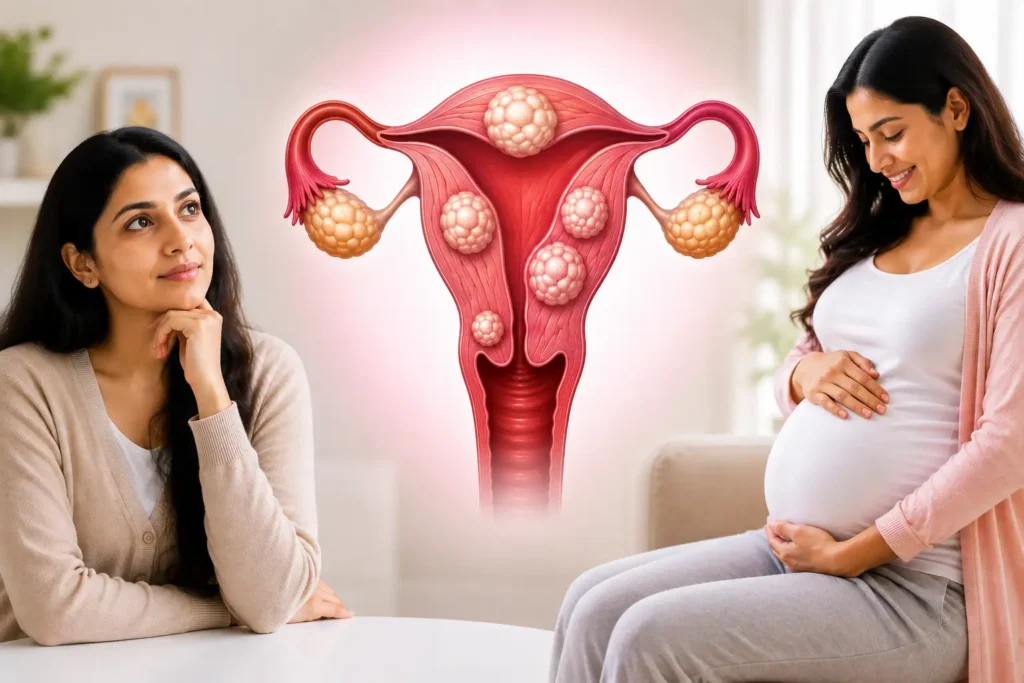
Fibroids can affect fertility, but this depends heavily on their size and, more importantly, their location. Fibroids that push into the uterine cavity, called submucosal fibroids, are the ones most likely to interfere with implantation and pregnancy. Fibroids sitting on the outer wall usually cause fewer fertility problems.
Fibroids often grow during pregnancy because of the surge in oestrogen and progesterone, especially in the first trimester. Some stay the same size, and a few even shrink after delivery once hormone levels settle. Every pregnancy with fibroids needs individual monitoring, which we discuss further in our article on fibroids and pregnancy.
Birth control pills do not cause new fibroids to form. Current evidence actually suggests combined pills may slightly lower fibroid risk over time, though some women report mild growth in existing fibroids. This response varies from person to person, so it is worth discussing your specific pill and fibroid history with your gynaecologist.
Does Age Affect Fibroid Risk?
Yes, age is one of the strongest risk factors. Fibroid risk rises steadily through your thirties and forties, peaks around the late reproductive years, and then declines sharply after menopause as oestrogen levels fall. This is exactly why fibroids are so common in women aged 40 to 50, and why regular pelvic checks matter more as you get older.
When Does Fibroid Surgery by a Female Doctor in Mohali Become Necessary?
This is the question I get asked most often, and there is no single answer that fits every woman. As a female gynecologist for fibroid surgery, I look at five things before recommending an operation.
Symptom severity. Bleeding heavy enough to cause anaemia, fatigue, or repeated pad changes every hour is a red flag that monitoring alone is not enough.
Size and growth rate. A small, stable fibroid found on a routine scan can often just be watched. A fibroid that has grown rapidly over a few months needs closer attention, sometimes surgery, to rule out unusual growth. Some real patient examples of how large fibroids can become, and how they were managed, are shared on our page about large fibroid cases.
Fertility goals. If you are trying to conceive and a fibroid is distorting your uterine cavity or blocking a fallopian tube, surgery may improve your chances rather than delay them.
Pain and pressure. Constant pelvic pain, painful periods that stop you from working, or pressure on the bladder and bowel are valid reasons to move to surgical treatment.
Failed medical treatment. If hormonal medication or minimally invasive options have not controlled your symptoms after a fair trial, surgery becomes the next logical step, not a last resort.
Myomectomy vs Hysterectomy: Comparing Your Options
Once surgery is on the table, the next decision is which procedure fits your situation. Myomectomy by a female doctor is usually the first choice for women who want to keep their uterus and fertility. Hysterectomy is considered when fibroids are extensive, symptoms are severe, and the patient does not wish to preserve fertility.
| Factor | Myomectomy | Hysterectomy |
|---|---|---|
| Uterus preserved | Yes | No |
| Future pregnancy possible | Usually yes | No |
| Best suited for | Women wanting fertility | Women done with childbearing, severe cases |
| Recurrence of fibroids | Possible in future | Not applicable |
| Recovery (laparoscopic) | 1 to 2 weeks | 2 to 3 weeks |
| Typical hospital stay | 1 to 2 days | 2 to 4 days |
Both procedures can often be performed through laparoscopic fibroid surgery in Mohali, using small keyhole incisions instead of a large open cut. Laparoscopic approaches generally mean less pain, a shorter hospital stay, and a faster return to daily life for suitable candidates. For a full cost breakdown, visit our page on fibroid surgery costs.
How a Female Doctor in Mohali Chooses the Right Fibroid Surgery
Choosing the right fibroid surgery is not about picking the most advanced technique available. It is about matching the procedure to your body, your symptoms, and your future plans.
When a patient comes to me for fibroid removal surgery in Mohali, I start with a detailed ultrasound, sometimes an MRI, to map the exact number, size, and position of every fibroid. This mapping decides almost everything that follows.
Next, we talk. I ask about your bleeding pattern, pain levels, fertility plans, and how symptoms affect your daily life and work. A 24-year-old planning a first pregnancy needs a very different conversation than a 48-year-old who has completed her family.
“Surgery should never feel like a factory decision. Every fibroid case I see is mapped individually, because a treatment plan that works for one woman can be completely wrong for another.” — Dr Balvin Kaur Ghai
From there, we discuss whether a minimally invasive approach is realistic, what anaesthesia involves, expected recovery time, and honest success rates. I believe informed patients recover better, both physically and emotionally, because they know what to expect at every step.
Why Women Across Mohali and the Tricity Choose a Female Fibroid Surgeon
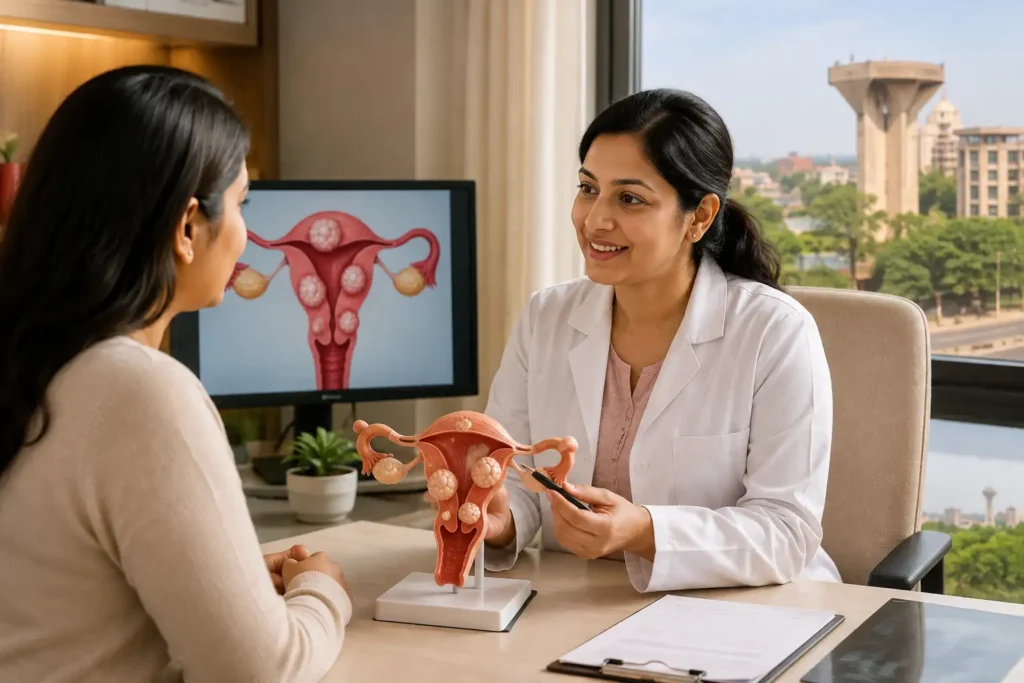
Many patients tell me they specifically searched for a female fibroid surgeon in Mohali because gynaecological concerns feel deeply personal. There is comfort in discussing bleeding patterns or body image worries with a doctor who understands these conversations from a woman’s perspective.
At CLAGS, we see patients travelling from Chandigarh, Kharar, Zirakpur, and across Punjab, not just Mohali itself. Being part of the wider Tricity healthcare network means we regularly manage complex referral cases alongside routine consultations, which keeps our surgical experience broad and current.
Every consultation includes time for questions, a clear explanation of findings, and a written treatment plan you can take home and think over. You are never rushed into signing a consent form on your first visit.
Final Thoughts
Living with fibroid symptoms is exhausting, and too many women push through years of heavy bleeding and pain before seeking help. You do not have to accept that as normal.
Whether your fibroid needs watching, medication, or surgery, the right first step is an accurate diagnosis and an honest conversation about your options. If you are searching for fibroid surgery by a female doctor in Mohali, I would be glad to review your scans and walk you through what genuinely makes sense for your body and your goals, not just the fastest option on the table.
Frequently Asked Questions
1. What causes uterine fibroids?
The exact cause is unknown, but fibroids develop from a single muscle cell that grows abnormally under the influence of oestrogen and progesterone. Genetics, age, and hormone exposure all play a part.
2. Can hormonal imbalance cause fibroids to grow?
Yes. Oestrogen and progesterone directly fuel fibroid tissue. Higher or prolonged hormone exposure tends to encourage growth, while lower levels after menopause usually slow it down.
3. Do fibroids run in families or have a genetic cause?
They can. If your mother or sister had fibroids, your risk is higher. Specific genetic changes have been found in fibroid tissue, though family history alone does not guarantee you will develop them.
4. Can stress cause fibroids or make them grow faster?
Stress is not a direct cause, but chronic stress affects cortisol and hormonal balance, which may support fibroid growth in women already prone to them. Managing stress is worthwhile regardless.
5. Can an unhealthy diet increase the risk of fibroids?
Yes. Diets heavy in red meat and processed food, with little fruit and green vegetables, are linked to higher fibroid risk. A balanced, plant-rich diet is one of the few modifiable risk factors we know of.
6. Can losing weight help prevent or manage fibroid growth?
Gradual, healthy weight loss can reduce excess oestrogen produced by fat tissue, which may slow new fibroid growth. It will not shrink an existing large fibroid on its own.
7. Is obesity linked to a higher risk of uterine fibroids?
Yes. Extra fat tissue produces additional oestrogen, and this added hormonal load is believed to increase both the likelihood and growth rate of fibroids.
8. Can vitamin D deficiency contribute to fibroids?
Research strongly suggests a link. Women with fibroids are considerably more likely to have low vitamin D, and adequate levels appear to slow fibroid growth. A simple blood test can tell you where you stand.
9. Can fibroids affect my chances of getting pregnant?
They can, particularly fibroids that grow into the uterine cavity or block a fallopian tube. Fibroids on the outer uterine wall usually cause fewer fertility problems.
10. Can fibroids grow during pregnancy?
Often, yes. The surge in pregnancy hormones can enlarge fibroids, especially in the first trimester. Growth then usually slows, and some fibroids shrink again after delivery.
11. Can birth control pills cause fibroids or make them grow?
Birth control pills do not cause new fibroids. Evidence suggests combined pills may even lower long-term risk, though a few women notice mild changes in existing fibroids while on the pill.
12. Does pregnancy make fibroids smaller or larger?
It varies. Many fibroids grow during pregnancy due to rising hormones, some stay stable, and a portion shrink after childbirth. Your obstetrician will track size at each scan.
13. Does age affect the risk of developing fibroids?
Yes. Risk climbs through your thirties and forties, peaks in the later reproductive years, and drops after menopause. This is why regular pelvic checks matter more from your forties onward.
14. When do fibroids need surgery instead of medication or monitoring?
Surgery becomes appropriate when fibroids cause heavy bleeding with anaemia, severe pain, rapid growth, pressure on the bladder or bowel, fertility problems, or when medical treatment has already failed.
15. How can a female doctor in Mohali choose the right fibroid surgery for me?
She will map your fibroids with ultrasound or MRI, review your symptoms and fertility plans, and match you to myomectomy, hysterectomy, or continued monitoring based on your specific case, not a standard protocol.